
Search engines have changed – have you changed your SEO strategy?
Not long ago, getting a page to rank was all about picking the right keywords and sprinkling them through your content. Today, it’s a whole different ballgame. Search engines like Google are way smarter now. They don’t just look at the exact words you type; they try to figure out what you mean and what you really want. In other words, Google isn’t just matching keywords anymore – it’s using AI to interpret intent, context, and even how people behave after they search.
What does that mean for those of us trying to optimize websites? It means that doing SEO the old-fashioned way (focusing only on exact keywords and rankings) might make you miss the mark. Two searches that look nearly identical can actually mean very different things to the people searching. And if you’re only looking at the keywords on the surface, you could end up optimizing for the wrong terms, targeting the wrong audience, or simply missing what people actually want to find.
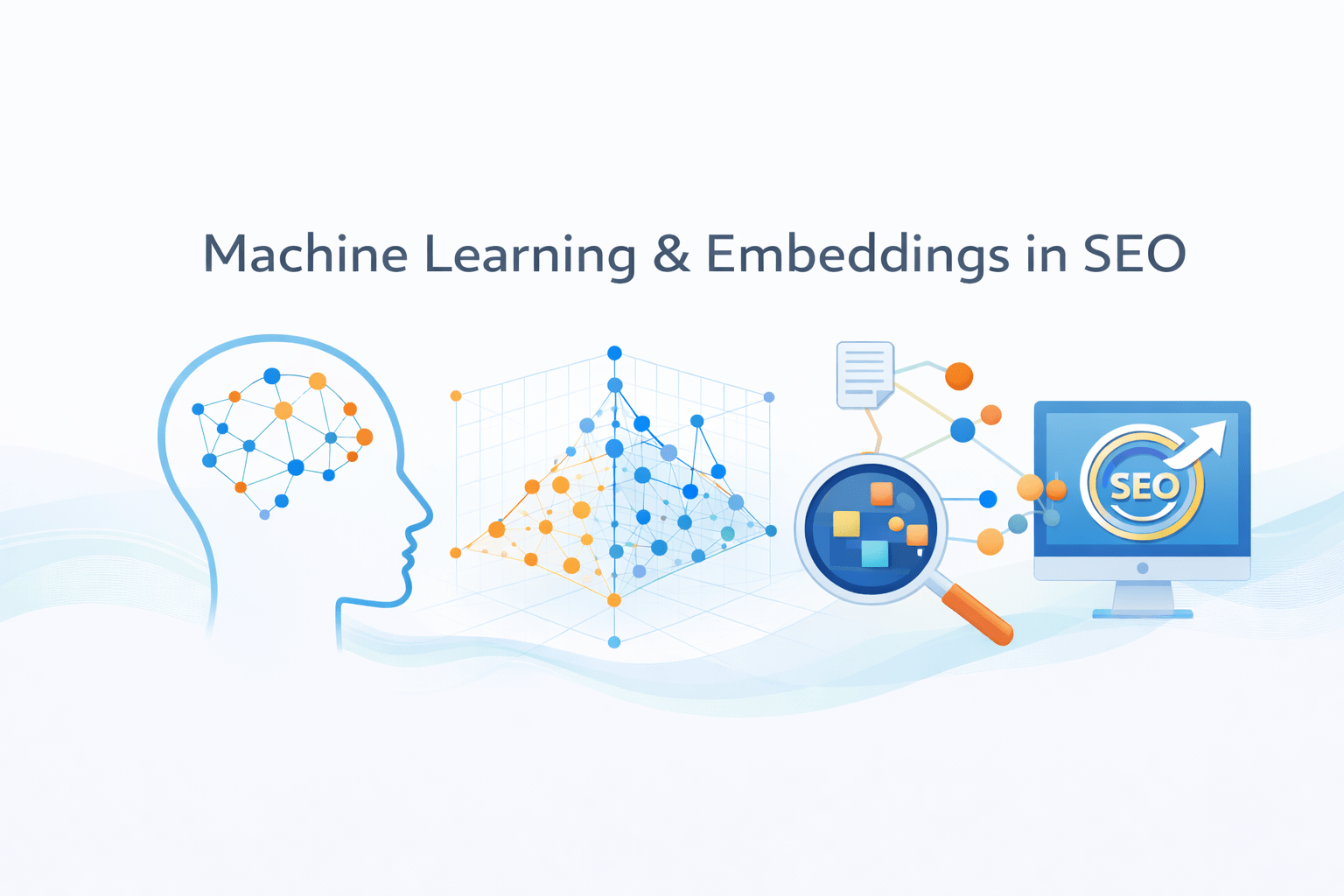
To stay competitive in this new landscape, we need to tap into machine learning. One of the key advances is using machine-learned vector embeddings to understand the relationships between keywords, pages, and user behavior at a deeper level. Instead of treating words and pages as isolated bits, modern SEO tools can map them in a meaning-based space. This helps reveal how users truly think and navigate the web, going far beyond what surface-level keyword tricks can tell us.
What Exactly Are Vector Embeddings (and Why Should SEOs Care)?
Let’s pause for a second and demystify that term: embeddings. In simple terms, an embedding is just a fancy word for a way to represent text (like a search query or a webpage) as a bunch of numbers (a vector). But here’s the cool part: those numbers are arranged in such a way that similar meanings end up with similar representations. Think of it like plotting every word or page on a huge multi-dimensional map. If two things are close together on this map, it means they’re related in meaning or context.
For example, say we have the search phrases “best running shoes” and “top sneakers for jogging.” They don’t share any exact words, but an embedding model would place them close together in that vector space map, because it knows both searches are essentially about the same concept. Similarly, the pages that people frequently click on for those searches would also sit near each other in this space. In contrast, a query like “running shoe store near me” might live in a different neighborhood on the map, because the intent (finding a local store) is not the same as researching the best shoes.
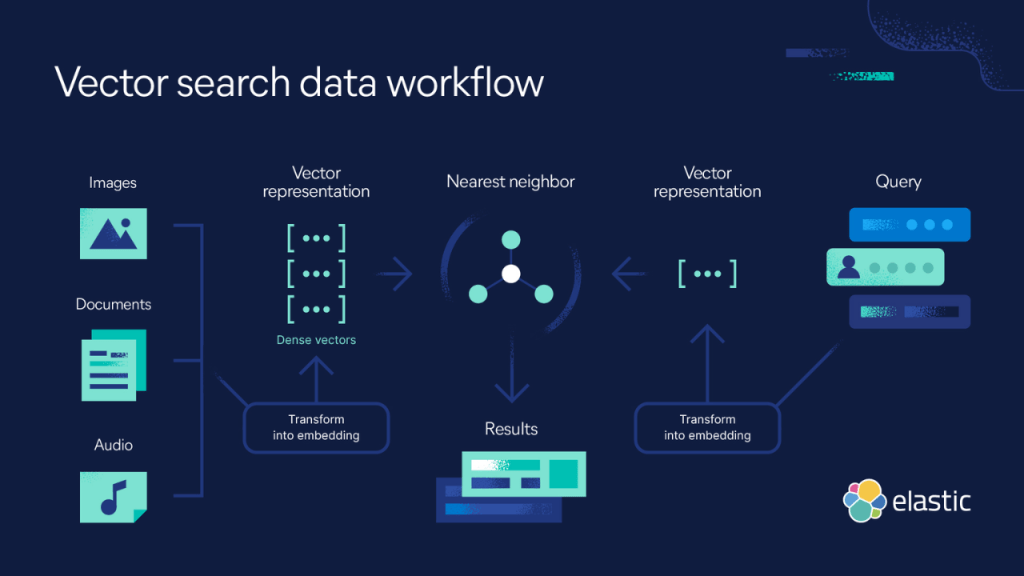
Traditional keyword tools don’t do this – they would see “shoes” vs “sneakers” vs “jogging” as totally separate terms. But vector embeddings capture the semantic relationships – the meaning behind the words. In fact, Google’s RankBrain algorithm was built on this idea: it embeds words and phrases into vectors so it can recognize when different queries are related. And Google’s later BERT model (introduced in 2018) took things further by learning to understand words in context, considering the whole sentence to grasp what a query really means. For SEO folks, using embeddings means we can start to align with how Google “thinks” about content – focusing on broader topics and intent, not just isolated keywords.
And here’s one more twist: the most powerful embeddings for SEO don’t just consider language in a vacuum, they factor in user behavior signals. That means the models learn from real people’s search journeys – the sequences of queries they type, the links they click, the pages they visit. By training on this kind of clickstream data (essentially, anonymized records of how users navigate search results), the embeddings can capture not just what words mean, but what people actually do when searching. For instance, if a lot of users who search “best laptops for gaming” tend to click on a certain product page, then the model will learn to place that page near the “best gaming laptops” query in the vector space. It’s learning from behavior, not just vocabulary.
How Machine Learning and User Signals Are Reshaping SEO
So, what difference do these smart embeddings make in practice? In a nutshell: they turn SEO from guesswork into a more scientific, user-centered process. By analyzing millions of real search journeys, machine learning can uncover patterns that we’d never see by just eyeballing keyword lists. Instead of guessing what content might rank, we can use these insights to know what content does rank and why.
Here are a few big ways this shift is changing the game:
- Content and Keywords by Intent: Rather than grouping keywords just by similar wording, we group them by what the user is trying to do. Are they looking to learn something, to compare options, or to buy right now? Embeddings help cluster search terms by intent, so we can tell if “how to train for a marathon” is an informational query (the user wants to learn) versus “best running shoes for marathon” which is more commercial (the user might be ready to buy). Knowing the intent lets us create the right kind of content for that query – whether it’s a how-to guide, a comparison piece, or a product page in an online store.
- Discovering Hidden Connections: Semantic embeddings can reveal related topics that traditional research might miss. You might think your niche is just “running shoes,” but the data might show that people interested in running shoes also frequently look for information on “running injuries” or “marathon training diets.” Those topics could be closely connected in the vector space, telling you that maybe your running shoe website should also have content on preventing injuries or on nutrition for runners, because that’s what your audience is interested in.
- No More One-Size-Fits-All Pages: In the old days, two searches that looked similar (like “cheap phones” vs “affordable phones”) might make you think one page can target both. But machine learning insights might show that people searching “cheap phones” behave differently (maybe they click a lot of review sites) compared to those searching “affordable phones” (who might click more shopping sites). If user behavior differs, that’s a signal that Google might rank different kinds of results for those two queries. With that insight, you wouldn’t try to force one page to rank for both terms; instead, you might create distinct content tailored to each intent.
In short, SEO is becoming less about pleasing an algorithm and more about pleasing the user (which, in turn, pleases the algorithm!). Google is increasingly measuring success by looking at what users engage with – did they find the result they wanted, or did they bounce back and click something else? Those user signals feed back into rankings, creating a loop where understanding and serving user intent is the key to climbing the ranks.
Now, let’s dive into some concrete examples of how you can apply this intent-driven, embedding-powered approach in your SEO work.
Real-World SEO Applications of Vector Embeddings
1. Smarter Keyword Research (Find What You’re Missing)
Keyword research isn’t just about finding high-volume terms anymore. With embeddings, you can uncover semantically related search terms that you might be missing, even if they don’t share obvious words with your main targets. In other words, you can find the topics hiding between the lines of your keyword list.
Here’s what this approach can do for you:
- Uncover “hidden” keywords: Find related phrases your competitors rank for that use different wording. For example, if you’re targeting “eco-friendly baby wipes,” an embedding-based analysis might reveal that people are also searching for “natural newborn wipes” or “biodegradable diapers” – terms you haven’t explicitly covered yet but which belong to the same theme.
- Spot topic clusters: Instead of treating each keyword separately, see which queries naturally group together. You might realize that “running shoes,” “running socks,” and “blister prevention” form a cluster of interests for marathon runners. That insight could inspire a whole section of your site or blog dedicated to that cluster (covering footwear, apparel, and injury prevention together).
- Prioritize by real potential: Traditional keyword tools give you search volumes, but embeddings add another layer by showing how closely a keyword is related to your niche or existing content. If two keywords have similar volume, but one sits in a cluster that’s highly relevant to your site’s focus (or has proven user engagement), that’s the one to tackle first.
Example: Imagine you discover your competitor’s blog is drawing traffic with an article about “eco-friendly baby wipes.” Using an embedding approach, you might find they’re also pulling in visitors searching for things like “plastic-free diaper alternatives” or “organic baby skincare tips.” These terms might not have been on your radar because they’re phrased differently, but they represent real interests of your target audience. Now you have a roadmap for new content that covers these angles – capturing traffic your competitor was getting, while genuinely addressing your audience’s needs.
By using embeddings for keyword research, you’re basically getting a cheat sheet of what your audience is talking about, even if they use different words for it. This leads to content that matches user intent better – and as a result, stronger SEO performance.
2. Finding Hidden Competitors
Your toughest SEO competitors might not be who you expect. Sure, you know the obvious rivals in your industry, but what about all the other sites stealing attention in search results? Vector embeddings can reveal these “hidden” competitors by showing which domains and pages are popping up in the same context as yours.
Here’s how embeddings help expose them:
- Find content that serves the same intent: You might discover that a forum thread, a Quora Q&A, or a niche blog post ranks for the very questions you’re trying to answer. They might not sell anything or look like your business rivals, but if they’re satisfying the search intent, they’re your competition for eyeballs.
- See who’s sharing your “topic space”: Even among known competitors, embeddings might highlight specific pages that overlap with yours in content. For example, maybe a general tech site has a high-ranking “best budget smartphones” article that is semantically right next to your e-commerce page in the vector space. That’s a page you need to be aware of (and maybe outrank).
- Spot long-tail traffic siphoners: Perhaps there’s a small personal blog capturing a lot of long-tail searches (very specific queries) related to your field. Individually those queries are low-volume, but together they add up. Embeddings can cluster those together and reveal that, say, “photography tips for indoor lighting” and “how to shoot night portraits” are both leading to the same little photography blog that’s quietly pulling traffic that could have been yours.
Example: Suppose you run an online store for outdoor gear. You might assume your main competition is big retailers or brands. But an embedding analysis could show that for searches like “best hiking backpack for beginners,” a popular Reddit thread or a blog by an avid hiker is appearing alongside your site in the results. That Reddit thread on “budget hiking backpacks” might not be a traditional competitor (it’s a community discussion, after all), but it’s answering the question many searchers have – and getting their click instead of yours.
Armed with this knowledge, you can adjust your strategy. Maybe you’ll write a new post on “Top Budget Hiking Backpacks – Reddit’s Favorites vs. Ours” or make sure your existing content is more enticing than the crowd-sourced answers. At the very least, you know where and why you’re losing some visitors, and you can take steps to win them back. Plus, analyzing those hidden competitors’ content can give you ideas: If that hiker’s blog is doing well with a casual, story-telling style, perhaps your site could incorporate some of that vibe to engage the audience better.
3. Search Intent Clustering
Not all traffic is equal – people can land on your site for very different reasons, even if their search queries look superficially similar. Search intent clustering means grouping keywords by the underlying goal of the user, rather than just by keyword similarity. Vector embeddings make this process more accurate because they naturally sort queries by these intent signals.
Why bother with this? Because once you understand why someone is searching, you can serve them better. Here’s how to use intent clustering:
- Map queries to user journey stages: Figure out if a set of keywords indicates that the user is just learning the basics, comparing options, or ready to buy. For example, searches containing “what is” or “how to” are usually informational (early stage), whereas searches like “best” or “top 10” might indicate someone comparing options (middle stage), and searches with “buy” or specific product names often indicate a decision or transactional intent (late stage).
- Create content that fits the intent: If you know a cluster of queries is informational, you’ll craft a thorough guide or tutorial. If another cluster is transactional, you’ll make sure you have a product page or a clear offer. One size doesn’t fit all – intent clustering prevents you from trying to answer a “How do I...” question with a sales page, or vice versa.
- Separate conflicting intents: Sometimes, two intents don’t belong on one page. If embeddings show that “beginner photography tips” clusters separately from “buy beginner DSLR camera,” you shouldn’t force those into one piece of content. They serve different needs, and splitting them can help each page rank better for its specific intent. In practice, you might have an educational blog post for the tips, and a product category or review page for the camera buying queries.
By organizing keywords this way, you’re essentially building an SEO strategy that mirrors the customer’s thought process. You’re ensuring that at each step – whether they’re just curious, weighing options, or ready to act – your site has the right content waiting for them. This kind of alignment can significantly boost both your search rankings and your user satisfaction (which, again, feeds back into rankings).
Want a deeper look at how people are blending AI tools with traditional search engines? Read our blog : Search Habits & AI Trust: Consumer Behavior in 2026
4. Content Optimization and Topic Grouping
Have you ever read an article or landing page and felt “Wow, this covers everything I wanted to know!” – that’s the goal of content grouping using embeddings. The idea is to make each piece of content as comprehensive and focused as it needs to be, covering all the subtopics that naturally belong together, and leaving out those that don’t.
Embeddings provide a sort of blueprint for this:
- Identify subtopics to include: When you know which concepts tend to cluster together, you can make sure to cover them all in one go. If you’re writing about electric cars, for instance, vector analysis might surface related terms like battery range, charging speed, EV tax incentives, and range anxiety as being closely connected to that main topic. Including those subtopics in your article will make it much more comprehensive and satisfying to someone interested in electric cars.
- Keep unrelated stuff out: Clustering isn’t just about what to put in, but also what to leave out (or save for another page). If the data shows that “electric car maintenance” is in a different cluster than “EV charging infrastructure,” that’s a sign those might be best addressed separately. By not mixing disparate topics, you make each page more focused. This clarity helps search engines understand your content better and can improve your rankings, because each page is clearly about one thing rather than many loosely related things.
- Structure your site logically: On a bigger scale, these insights can guide how you organize content across your site. You might create main “pillar” pages for big topics and then have supporting pages for each subtopic, all interlinked. This not only helps users navigate your content easily (since it mirrors how they think about the topic), but also sends strong signals to search engines about which pages cover which themes thoroughly.
Example: Let’s say you have a cooking website and you want to publish the ultimate guide to homemade pasta. Through embeddings, you find that terms like “semolina vs all-purpose flour,” “how to dry fresh pasta,” “gluten-free pasta making,” and “sauces for fresh pasta” are all closely related to the core topic of making pasta at home. These are hints to include sections covering each of those points in your guide. Meanwhile, something like “history of pasta in Italy” might show up as its own separate cluster – interesting, but not directly tied to the hands-on process of making pasta. You might decide to exclude that or give it a separate post of its own. The result is that your ultimate guide stays tightly focused on the practical aspects your readers care about, and it becomes a one-stop resource that both newbies and search engines will recognize as authoritative on the topic.
In summary, grouping content by topic clusters makes your site more user-friendly and SEO-friendly. Users get a richer experience (all the info they need, none of what they don’t), and search engines can clearly see what each page is about and how your content pieces relate to each other.
The New SEO Era: Embrace the AI and User-Signal Approach
AI-driven search isn’t a future concept – it’s happening right now, shaping how users discover and engage with content. Search engines have already made the leap from simply matching keywords to actually interpreting what the user means (their intent, the context of the query, and even user behavior). To stay competitive, our SEO strategies have to leap as well.
The big takeaway is this: to succeed in SEO today, you need to think less about “gaming” the search engine and more about truly serving the user. Ironically, those two goals have become one and the same. As Google’s algorithms get more sophisticated, they’re essentially trying to mimic a human perspective – rewarding content that people find useful and engaging. That means tactics like keyword stuffing or churning out thin content just to hit certain terms won’t get you far. Instead, you’ll win by understanding what your audience is looking for and giving it to them in the best way possible.
The good news is that you don’t have to build all this AI stuff yourself to ride this wave. There are tools and platforms available that leverage clickstream data (aggregate information about how millions of users search and click) to provide you with these embedding-based insights. Many modern SEO software suites, for example, offer features for topic clustering, content gap analysis, or semantic similarity. These are all driven by the kind of machine learning tech we’ve been talking about – and they’re getting more accessible even to folks who aren’t data scientists.
By embracing these AI-driven, user-centric approaches, you’re essentially future-proofing your SEO. As search evolves into a "multi-layered journey" where brands must be visible across AI overviews, chats, and traditional results, understanding the broader landscape becomes vital. For a deeper look at what’s at stake, this analysis on the future of SEO highlights exactly what brands risk losing without a proactive AI strategy.
To wrap it up, the shift from a keywords-first mindset to a user-first mindset is a game-changer for SEO. It can feel like a lot – and it does involve learning new tools and concepts – but it’s also liberating. You get to focus on making genuinely good content that helps people, and the SEO part starts to take care of itself. Those who adapt to this new reality will not only rank better, but also earn the trust and loyalty of their audience. And at the end of the day, that’s what sustainable SEO is all about: connecting people with the information (or products or answers) they’re searching for, in the most satisfying way possible. Embrace the change, and you’ll be set to thrive in the new era of search.
The Future of SEO: What Brands Lose Without an AI SEO Strategy
This video provides a strategic overview of how AI and machine learning are fundamentally shifting SEO from simple keywords to complex brand authority and intent, which directly supports your blog's message.
FAQs
1. What are vector embeddings and why do they matter for SEO?
Vector embeddings are a way of representing words, queries, or content as numbers in a multi-dimensional space based on meaning. They help search engines understand the context and intent behind different phrases, allowing them to rank results more semantically rather than by exact keyword match.
2. How does machine learning change traditional keyword research?
Machine learning models now analyze user behavior and search intent, making SEO more about understanding why people search than just matching words. Tools powered by these models can cluster related terms, surface new content opportunities, and reveal what kinds of content actually satisfy user intent.
3. Can semantic SEO still help with rankings on Google?
Absolutely. Google’s algorithms, including RankBrain and BERT, rely on semantic understanding. Creating content that addresses broader topics, answers user intent, and is structured clearly helps AI-powered systems identify your content as relevant and authoritative.
4. How do vector embeddings help identify new content opportunities?
Embeddings uncover hidden relationships between topics. They can show which pages and queries are related based on user behavior, not just language. This helps you find content gaps, discover unexpected competitors, and create pages that serve user needs more comprehensively.