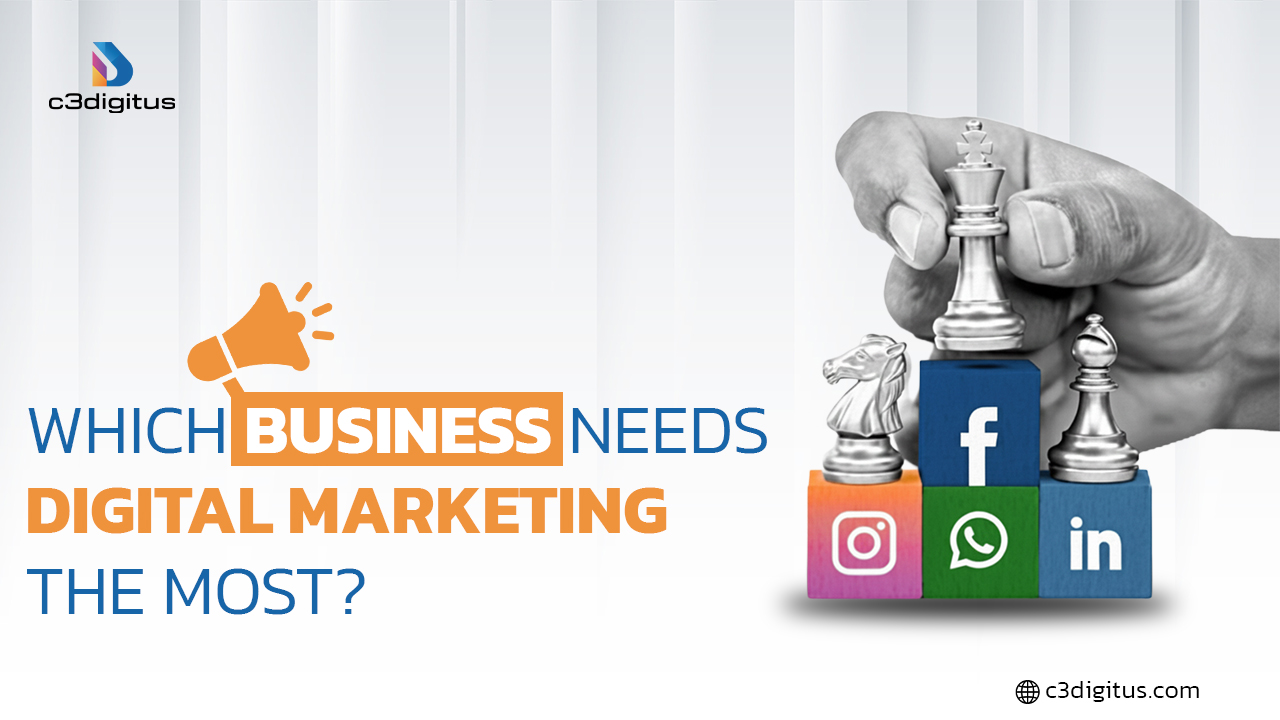
At its core, digital marketing is the set of tactics and channels businesses use to promote goods, services, or ideas through electronic devices and the internet. It includes search engine optimization (SEO), paid advertising (PPC), social media, content marketing, email marketing, affiliate marketing, video, analytics, and more. Unlike many traditional channels, digital channels are measurable, targetable, and optimizable in real time.
Why open with a definition? Because a clear answer to what is digital marketing helps decision-makers identify which parts of their business map to which channels and why some companies will rely on digital marketing more heavily than others.
What this post will do: explain why digital marketing matters, why certain businesses depend on it more, identify the industries that need it the most, and unpack the practical strategies and solutions to use — with guidance geared for both big companies and digital marketing for small businesses.
Why Digital Marketing Matters for Businesses?
- Increases online visibility where customers start their journeys
Most buying journeys begin with a search or a social media lookup. If your business isn’t discoverable online (organic search, local maps, social profiles), you miss the majority of modern buyers. Digital marketing places your brand on the channels customers already use. - Cost-effectiveness and measurable ROI
Compared to many traditional channels, digital marketing offers lower entry costs and precise measurement. You can test campaigns with small budgets, measure performance (CPL, CPA, ROAS), and scale what's working—especially helpful for small businesses. - Precision targeting
Use demographic, behavioral, interest, and geographic targeting to reach the customers most likely to convert. For example, a local dentist can target a 10–15 km radius with ad creative aimed at new-patient specials—something impossible with many offline channels. - Speed and flexibility
Launch a paid campaign, adjust creatives, swap audiences, or A/B test landing pages in hours. This agility lets businesses respond to market shifts, seasonal demand, or competitor actions quickly. - Data-driven optimization
Analytics let you trace which channels, creatives, and messages deliver real outcomes. This data informs long-term strategy and budgeting decisions. - Better customer experience and personalization
From personalized email sequences to remarketing ads, digital marketing supports tailored messaging that improves conversion rates and customer satisfaction.

Stats: A 2025 compilation of digital marketing stats notes that global internet users increased by about 1.8% in 2024, again to 5.35 billion, reinforcing that a growing share of any audience is reachable primarily via digital channels.
Why Some Businesses Depend More on Digital Marketing?
Not all businesses need the same mix of digital tactics. Some industries rely on digital marketing as a primary growth engine because of these structural factors:
- Audience location (online-first vs offline-first): If a business’s customers live online (SaaS, digital subscriptions, e-commerce), digital channels are primary. A bakery with only local foot traffic might rely more on signage and walk-ins — unless it wants to scale or take orders online.
- Purchase process complexity: Products that require research, comparison, or involve multiple stakeholders (e.g., real estate, B2B software) benefit from content marketing, SEO, and email nurturing. Digital marketing supports that long decision cycle with touchpoints.
- Speed-to-lead requirements: Service-based businesses (plumbers, urgent care) often need immediate leads. Paid search and local SEO deliver quick visibility to people actively searching right now.
- Competitive intensity: In saturated markets (fashion e-commerce, fitness apps), digital visibility and constant campaign optimization are necessary to maintain market share.
- Scalability needs: Startups aiming for rapid customer acquisition scale rely on paid channels and growth experiments to move fast.
- Dependence on reviews and social proof: Healthcare, hospitality, legal, and educational services are heavily influenced by online reputation, making digital reputation management and review acquisition vital.
Expert Opinion:
“Industries like healthcare, education, retail, and hospitality are now controlled by digital reputation. Your Google reviews, website content, and social presence matter more than physical storefronts.”
— David Lin, Consumer Behavior Analyst
Businesses That Need Digital Marketing the Most
Below are the business types that most rely on digital marketing, with practical tactics tailored to each.
1. Small and Medium-Sized Businesses (SMBs)
Why: Tight budgets, local audiences, high need for discoverability.
Top channels: Local SEO, Google Business Profile, targeted social ads, Facebook/Instagram, email marketing, simple SEO.
Tactics & examples:
- Claim and optimize Google Business Profile (GBP) — add photos, services, hours, and posts.
- Local keyword optimization: “[service] near me” + city.
- Use simple PPC campaigns with geo-targeting and call extensions for direct conversions.
- Run monthly promotions and capture leads with short email welcome flows.
Digital marketing for small businesses tip: Start with one measurable goal (e.g., 30 new leads/month) and choose two channels — local SEO + search ads — before expanding.
Statistics:
- Around 64% of consumers say it is important or very important for small businesses to have strong online reviews if they want to attract and retain customers.
- Roughly 71–73% of small businesses now have their own website, with newer reports indicating 73% of U.S. small businesses had a website in 2025.
2. Startups
Why: Need fast traction, limited brand recognition, urgency to validate product-market fit.
Top channels: Paid search, social ads for user acquisition, content for credibility, referral & affiliate programs.
Tactics & examples:
- Run conversion-focused experiments with small budgets and optimize for CAC.
- Use product-led content (case studies, how-to videos) to demonstrate value.
- Implement analytics and cohort tracking to measure retention and LTV.
Startup tip: Use growth hacks — referral incentives and targeted influencers — to lower acquisition costs early.
3. Local Businesses (restaurants, salons, clinics)
Why: Customers are geographically near and search before visiting.
Top channels: Local SEO, GBP, review management, localized social ads, scheduling/booking integrations.
Tactics & examples:
- Optimize site with schema for local business and service pages.
- Encourage Google and Facebook reviews; respond quickly to both praise and concerns.
- Use “reserve/book now” CTAs and integrate with scheduling tools.
Measure: Track phone calls, booking conversions, and footfall uplift after campaigns.
4. E-commerce Businesses
Why: Entirely dependent on online traffic and conversion funnels.
Top channels: SEO (product & category), Google Shopping, dynamic remarketing, social commerce (Instagram/Facebook/Meta), content marketing.
Tactics & examples:
- Implement strong product feeds for Shopping campaigns with clear product titles and GTINs.
- Use abandoned cart email flows and dynamic retargeting ads.
- Test product page elements (reviews, free shipping thresholds) to lift conversion rates.
Scale tip: Prioritize customer retention with loyalty programs and post-purchase email sequences.
5. Service-Based Businesses (lawyers, realtors, contractors)
Why: Revenue relies on leads and appointments rather than product purchases.
Top channels: Paid search (intent-driven), LinkedIn (B2B services), content marketing for trust-building.
Tactics & examples:
- Build landing pages optimized for specific services and keywords (e.g., “emergency plumber [city]”).
- Use lead magnets (free consults, downloadable checklists) to capture contact info.
- Deploy remarketing to keep prospects engaged while they decide.
Conversion focus: Call tracking and lead scoring to identify high-value prospects.
6. B2B Companies
Why: Long sales cycles and high-value contracts need tailored nurturing.
Top channels: LinkedIn, content (whitepapers, webinars), account-based marketing (ABM), email automation.
Tactics & examples:
- Create gated research or reports to capture decision-maker leads.
- Use ABM: target specific companies with personalized ad creative and outreach.
- Implement multi-touch attribution to track how content influences pipeline.
Measurement: Track MQL → SQL → Opportunities and tie digital efforts to pipeline value.
7. Education & Coaches (online tutors, institutes)
Why: Enrollment decisions often start online; authority and trust are crucial.
Top channels: Organic search for course queries, YouTube for explainer videos, paid search during admission windows.
Tactics & examples:
- Produce content that answers “how to choose” questions and showcases outcomes (alumni success).
- Use remarketing to re-engage visitors who checked curriculum or fees.
- Offer webinars and recorded sessions as conversion tools.
Seasonal tip: Increase ad spend during peak enrollment periods; use email sequences for applicants.
8. Healthcare & Wellness (clinics, fitness centers)
Why: High trust sensitivity and locality; online reputation affects patient choice.
Top channels: Local SEO, reputation management, targeted search ads, social proof.
Tactics & examples:
- Optimize service pages for symptoms + location (e.g., “knee pain specialist [city]”).
- Use content to answer FAQs (procedures, insurance) to reduce friction.
- Encourage reviews post-visit and ensure HIPAA-compliant communications where needed.
Trust-building: Case studies, patient testimonials (with consent), and clear clinician bios.
4. Travel & Hospitality
Why: Travel decisions are highly visual and review-driven; bookings are made online.
Top channels: Social media (visual), metasearch (OTAs), remarketing, review platforms.
Tactics & examples:
- Showcase experiences on Instagram and YouTube.
- Use meta-search and dynamic pricing for high-intent travelers.
- Capture email addresses for future offers and seasonal retargeting.
Reputation: Manage TripAdvisor, Google reviews, and timely responses to guest feedback.
How does Digital Marketing help each Business Type?
Every business has unique goals, audiences, and buying journeys. This means the digital marketing strategy that works for one industry may not work for another.
Below is a detailed breakdown of how each major digital marketing channel helps different business types achieve their goals. Let’s dive deep:
Search Engine Optimization (SEO)
What it is:
SEO is the process of optimizing your website so that it ranks higher in Google, Bing, and other search engines.
Who benefits most:
- E-commerce stores
- Local businesses (clinics, salons, restaurants)
- B2B companies
- Service-based businesses (lawyers, electricians, accountants)
- Education institutes and coaches
How SEO helps:
- Brings long-term traffic without paying for ads: Once your pages rank, you get consistent visitors without daily ad spend.
- Builds trust and credibility: People trust businesses that appear on Page 1 for relevant searches.
- Targets customers at the exact moment they need you: If someone searches “emergency plumber near me,” SEO helps you appear instantly.
- Increases conversions from high-intent visitors: Search visitors already know what they want — they just need to find the right business.
Pay-Per-Click Advertising (PPC)
What it is:
Paid ads on platforms like Google Ads, Facebook Ads, LinkedIn Ads, and Instagram.
Who benefits most:
- Startups needing quick visibility
- Service providers (plumbers, lawyers, AC repair)
- E-commerce businesses
- Real estate agencies
- Medical clinics
How PPC helps:
- Instant visibility: You appear at the top of search results within hours.
- Precise targeting: Reach people based on keyword, location, age, interest, income, or behavior.
- Budget-friendly and measurable: You control daily spend and track conversions (calls, leads, sales).
- Perfect for testing marketing ideas fast: PPC helps startups test product demand or pricing quickly.
Social Media Marketing
What it is:
Using platforms like Facebook, Instagram, LinkedIn, YouTube, and TikTok to reach customers.
Who benefits most:
- Restaurants, salons, gyms
- Fashion & lifestyle brands
- E-commerce businesses
- Travel & hospitality
- Coaches and online educators
- Personal brands
How social media helps:
- Builds brand personality and trust: Customers see what you offer and how people interact with your brand.
- Boosts engagement & awareness: Reels, stories, and posts help you reach thousands organically.
- Supports customer service: Responds to inquiries, reviews, and complaints quickly.
- Generates leads & sales: Platforms offer lead forms, shop features, and retargeting options.
Content Marketing
What it is:
Creating valuable blogs, videos, guides, case studies, reels, and infographics to attract and educate customers.
Who benefits most:
- B2B companies
- Real estate
- Educational institutions
- Doctors and healthcare brands
- Startups needing to build credibility
How content marketing helps:
- Educates customers before they contact you: Helps users trust your expertise.
- Improves SEO: More useful content = higher chance to rank.
- Supports long buying cycles: Perfect for industries where customers research heavily.
- Boosts lead generation: Strong content encourages people to share details or book calls.
Email Marketing
What it is:
Sending automated or manual emails to customers/leads.
Who benefits most:
- E-commerce brands
- SaaS/software
- Coaches and online courses
- Local businesses
- Travel agencies
How email helps:
- Builds long-term relationships: Newsletters, offers, and updates keep your business on top of their mind.
- Great for retaining existing customers: Retention is cheaper than acquisition.
- Automates sales: Welcome emails, abandoned cart flows, and product recommendations boost conversions.
- Personalized communication: You can send content based on behavior (browsing, purchasing, interests).
Deep Dive: For a step-by-step breakdown on building your list and driving revenue, check out our email marketing complete guide for business growth.
Conversion Rate Optimization (CRO)
What it is:
Improving website, landing pages, or funnels to get more leads/sales from the same traffic.
Who benefits most:
- E-commerce brands
- SaaS websites with signup flows
- Real estate websites with forms
- Service-based businesses with landing pages
How CRO helps:
- Increases revenue without increasing traffic: Small design or copy tweaks can boost results by 20–80%.
- Fixes drop-offs: Helps you identify why customers aren’t converting.
- Improves user experience: Faster, cleaner, mobile-friendly websites convert better.
Influencer & Affiliate Marketing
What it is:
Using influencers or affiliate partners to promote your product.
Who benefits most:
- Beauty & lifestyle brands
- Food & beverages
- Fitness trainers
- Travel businesses
- Tech gadgets or niches
How influencers help:
- Creates trust instantly: Audiences rely on influencer recommendations.
- Expands reach quickly: A single video can create massive awareness.
- Improves product discovery: Especially useful for new brands.
Marketing Automation
What it is:
Automating repetitive marketing tasks using tools (HubSpot, Klaviyo, Mailchimp, Zoho, etc.)
Who benefits most:
- E-commerce
- SaaS
- Service providers
- Real estate
- B2B companies
How automation helps:
- Reduces manual work: Automatically sends emails, reminders, follow-ups.
- Improves lead nurturing: Guides prospects through the buying process.
- Saves cost and increases efficiency: One tool can replace multiple team members.
Key Digital Marketing Strategies Businesses Should Use
A robust digital marketing strategy is a roadmap that connects business goals to channel tactics, budgets, and metrics. Here’s a step-by-step approach:
- Define clear business objectives: Example objectives: 100 new leads/month, 20% increase in online sales, reduce CAC by 15%.
- Identify target audience & customer personas: Map demographics, pain points, where they spend time online, and purchase triggers.
- Audit current digital presence: Review website health, SEO baseline, ad accounts, analytics, and conversion tracking.
- Select channels and prioritize: Use the channel-to-goal mapping above. For small budgets, pick 1–3 channels and master them.
- Build content and creative calendar: Plan SEO content, paid ad creative, social posts, email flows, and landing pages.
- Implement tracking & attribution: Set up Google Analytics (GA4), conversion events, UTM parameters, and call tracking if relevant.
- Launch measurable experiments: Start with hypothesis-driven tests (A/B test landing pages; try new ad creatives) and use data to scale.
- Optimize & scale: Reallocate budget to best-performing campaigns, refine targeting, and expand to complementary channels.
- Report on KPIs regularly: Weekly for performance campaigns, monthly for strategic shifts. Tie digital outcomes to sales or revenue when possible.
- Invest in customer retention: Acquisition is only half the story — email nurturing, loyalty programs, and retargeting improve LTV.
“Most businesses fail not because digital marketing doesn’t work, but because they don’t follow a clear strategy. A strong digital marketing strategy aligns audience insights, messaging, and channels into one cohesive plan.”
— Samuel Rogers, Strategic Marketing Advisor
Choosing the Right Digital Marketing Solutions tools & vendors
Choosing solutions depends on scale and needs. Whether you are looking for software or a partner to manage your growth, it is vital to vet your options thoroughly. If you are considering external help, make sure you know the right questions to ask a digital marketing agency to ensure they align with your specific business goals.
- Website & CMS
- Tools: WordPress, Shopify (e-commerce), Wix for simpler sites.
- Criteria: speed, SEO-friendliness, integrations (CRM, email).
- Tools: WordPress, Shopify (e-commerce), Wix for simpler sites.
- SEO tools
- Tools: Ahrefs, SEMrush, Google Search Console.
- Use for keyword research, backlink audits, and content gaps.
- Tools: Ahrefs, SEMrush, Google Search Console.
- Advertising platforms
- Platforms: Google Ads, Meta Ads, LinkedIn Ads, TikTok Ads depending on audience.
- Pick platforms where your customers are present.
- Platforms: Google Ads, Meta Ads, LinkedIn Ads, TikTok Ads depending on audience.
- Email & CRM
- Tools: Mailchimp, Klaviyo (e-commerce), HubSpot (B2B).
- Use for automation, segmentation, and lifecycle campaigns.
- Tools: Mailchimp, Klaviyo (e-commerce), HubSpot (B2B).
- Analytics & tracking
- Tools: Google Analytics 4, Hotjar (behavior), GA4 + server-side tracking for advanced use.
- Ensure accurate conversion tracking.
- Tools: Google Analytics 4, Hotjar (behavior), GA4 + server-side tracking for advanced use.
- Local listing & reputation
- Tools: Moz Local, BrightLocal, Google Business Profile.
- Monitor reviews and local citations.
- Tools: Moz Local, BrightLocal, Google Business Profile.
- Conversion & landing pages
- Tools: Unbounce, Leadpages, custom landing pages in CMS.
- A/B test CTAs and forms.
- Tools: Unbounce, Leadpages, custom landing pages in CMS.
- Creative & automation
- Tools: Canva for visuals, Zapier for integrations, video tools for short-form content.
Conclusion
Every business benefits from digital marketing—but the degree of dependence varies. Businesses that are online-first, operate in competitive markets, rely on fast lead generation, or are scaling rapidly (e-commerce, startups, local service providers, healthcare, education, hospitality, B2B) often depend on digital marketing to survive and grow.
If you’re a small-to-medium business asking what digital marketing is and where to start, begin with a simple, measurable plan: pick the channels that reach your customers, set a clear goal, implement tracking, and iterate based on data. The right digital marketing strategy and selection of digital marketing solutions will pay for themselves through consistent leads, better ROI, and customer growth.