Two global manufacturers doing it right:
Caterpillar showcases its equipment in real-world applications on social media, giving customers a firsthand look at performance and capabilities.
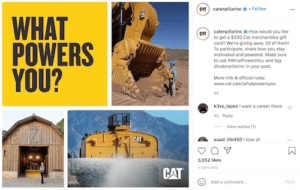
Source: Evenbound
Siemens regularly shares engineering insights, industry perspectives, and technology updates on LinkedIn, reinforcing its reputation as a trusted voice in the industrial sector.
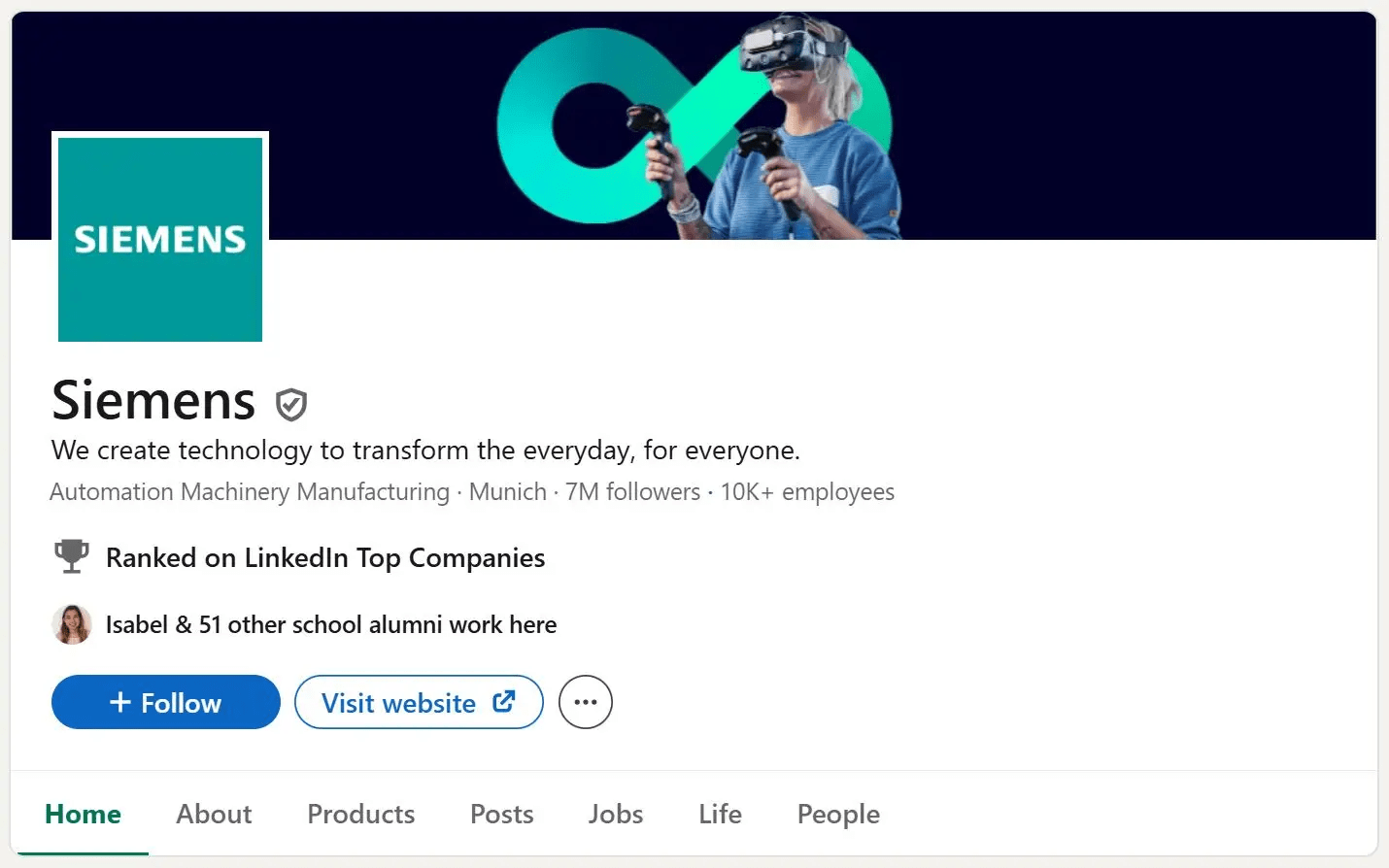
Source: The Simons Group
Here is what has actually shifted in the past few years:
Social media has become a search and validation tool. Younger engineers and procurement professionals do not just Google specifications — they search LinkedIn for companies and thought leaders in their category, watch YouTube to see products in action, and check Reddit to find out what other industry professionals actually think. If your brand does not appear in any of those places, you lose credibility before a conversation even starts.
Many manufacturers are already using social media to support business growth. While most manufacturers do not have the resources of global brands, the principle remains the same: educational, informative, and authentic content helps build trust long before a sales conversation begins.
Supply chain transparency now influences supplier selection. After years of disruption, industrial buyers care deeply about who their suppliers are, how they operate, and what their facility looks like. Social media — particularly video — gives manufacturers a direct way to communicate that story between trade shows and sales visits. Companies that show their process, their team, and their standards are easier to trust than those that do not.
The talent shortage makes employer branding a business problem. We are not just talking about marketing to customers. The skilled labor shortage — machinists, welders, automation technicians, quality engineers — means manufacturers are competing for talent as hard as they compete for customers. Social media is one of the most effective tools for making your company look like a place worth working.
How to Choose the Right Social Media Platforms
There is no one-size answer for which platforms work best for every manufacturer. A company making custom industrial enclosures has a different audience and different content opportunities than one making precision machined components or industrial control hardware. The right digital marketing strategy for your manufacturing company has to start with your specific buyers, not a generic best-practices list.
Before committing to any platform, answer three questions honestly:
- Who are you trying to reach? Procurement managers? Design engineers specifying components? MRO buyers? Plant operations directors? Channel distributors? Each of these audiences behaves differently online. LinkedIn is where procurement and engineering decision-makers spend professional time. YouTube is where engineers go to evaluate and learn. Instagram is where potential employees form impressions of your company culture. Start with the audience — not the platform.
- What action do you want them to take? Submit an RFQ? Download a spec sheet? Book a demo? Apply for a job? Every platform you choose should map to a real business outcome, not just visibility. If you cannot connect a platform to a result you care about, it is not the right investment right now.
- What can your team realistically sustain? This is where most manufacturers go wrong. They launch on three platforms with good intentions, run out of steam in six weeks, and end up with dormant accounts that undermine credibility. A consistent presence on one platform beats an inconsistent presence on four. Be honest about your internal capacity before committing.
Social Search Optimization: Where Social Media and SEO Intersect
Search behavior has evolved. Engineers, procurement professionals, and operations leaders still use Google, but they are also searching directly within platforms like LinkedIn, YouTube, Instagram, and Reddit when researching suppliers, products, and industry topics.
For manufacturers, this means your social media content should be created with discoverability in mind. The same technical terms and buyer-focused topics that support your website’s SEO strategy can also help your social content reach the right audience.
Instead of using generic captions like “Another successful project completed,” consider describing the work more specifically. Mention the processes, applications, industries, or capabilities involved. Terms such as precision machining, industrial automation, control panel manufacturing, custom fabrication, or food processing equipment provide context for both potential buyers and platform algorithms.
Video content deserves special attention. Titles, descriptions, captions, and even on-screen text can help platforms understand what your content is about. A product demonstration with a clear title and detailed description is far more likely to appear in relevant searches than one with vague or generic language.
Hashtags can still support discoverability, but they work best when paired with informative, keyword-rich descriptions. The goal is not to stuff content with industry terms — it is to clearly communicate what you do in the language your buyers use when searching for solutions.
As social platforms continue to function more like search engines, manufacturers that align their social content with their broader SEO strategy will be better positioned to increase visibility and attract qualified prospects.
LinkedIn: The Most Important Platform for Manufacturing Companies
If you are a B2B industrial manufacturer and you are only going to invest in one social media platform, it is LinkedIn. No other platform comes close to matching where your buyers — procurement managers, supply chain directors, controls engineers, operations VPs — are spending their professional attention.
We have seen this work firsthand with industrial B2B clients. LinkedIn is not just a place to post company updates. When it is used with intention, it becomes a lead generation engine, a credibility platform, and a sales enablement tool all at once. The companies that treat it seriously — consistent posting, active executive profiles, content built around real buyer problems — consistently outperform those that do not.
Here is what LinkedIn does better than any other platform for manufacturers:
It builds credibility with the exact people who buy from you. When your engineering director or VP of Sales consistently shares insight on industry challenges — component sourcing decisions, automation adoption, supply chain risk — they become known voices in their category. That visibility generates inbound interest that no cold outreach campaign can replicate.
It enables precision targeting that is unmatched for B2B. LinkedIn’s advertising platform lets you reach procurement officers at specific company types, engineers by function and seniority, or operations leaders in a specific region. Manufacturers can use sponsored content to promote technical resources, product demonstrations, case studies, and educational content such as whitepapers directly to the audiences most likely to influence purchasing decisions.
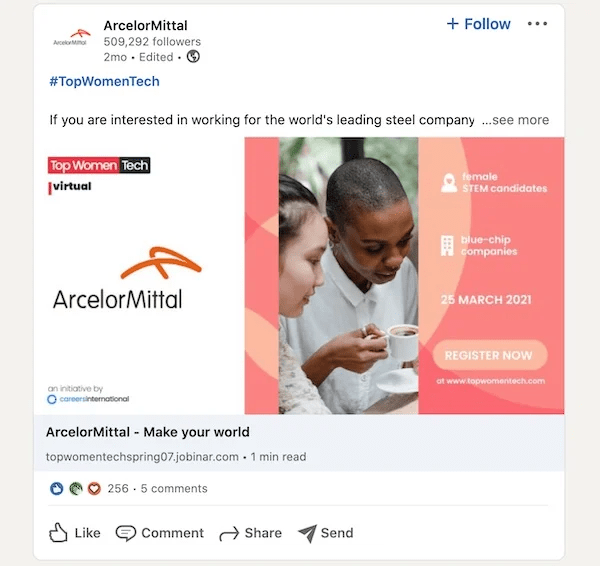
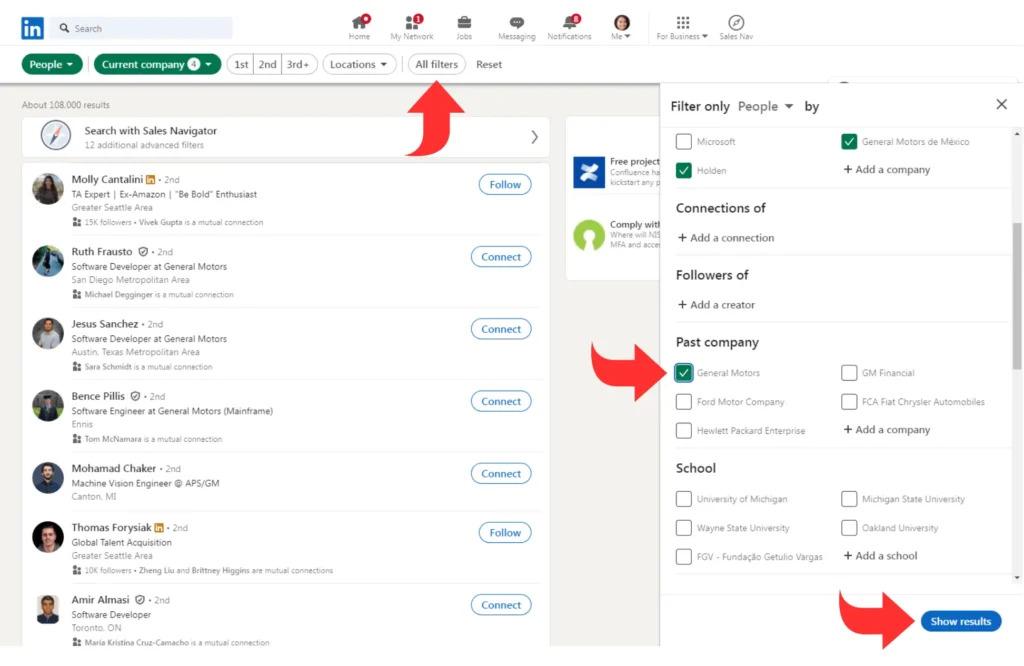
For industrial manufacturers running account-based marketing programs — targeting a defined list of high-value companies rather than casting a wide net — LinkedIn is essential infrastructure. Your sales team can use it to map buying committees, warm up contacts before outreach, and stay visible to prospects over long sales cycles.
Source: Konstruct Digital
It creates compounding returns over time. Unlike paid advertising that stops the moment you stop spending, LinkedIn content builds an audience that grows with each piece you publish. A manufacturer who posts consistently for 12 months has a fundamentally different market position than one who does not — and that gap widens every month.
What to Post on LinkedIn as a Manufacturer
The content that performs consistently well for industrial manufacturers on LinkedIn is not complicated. What it requires is relevance — content that actually speaks to the problems and decisions your buyers deal with.
Application and project spotlights. “We supplied [component type] for a [customer type] application that required [specific challenge].” Results-focused, technically grounded posts like this get attention from engineers and procurement teams dealing with similar challenges. They do not need to be case studies — a short paragraph and a photo can be enough.
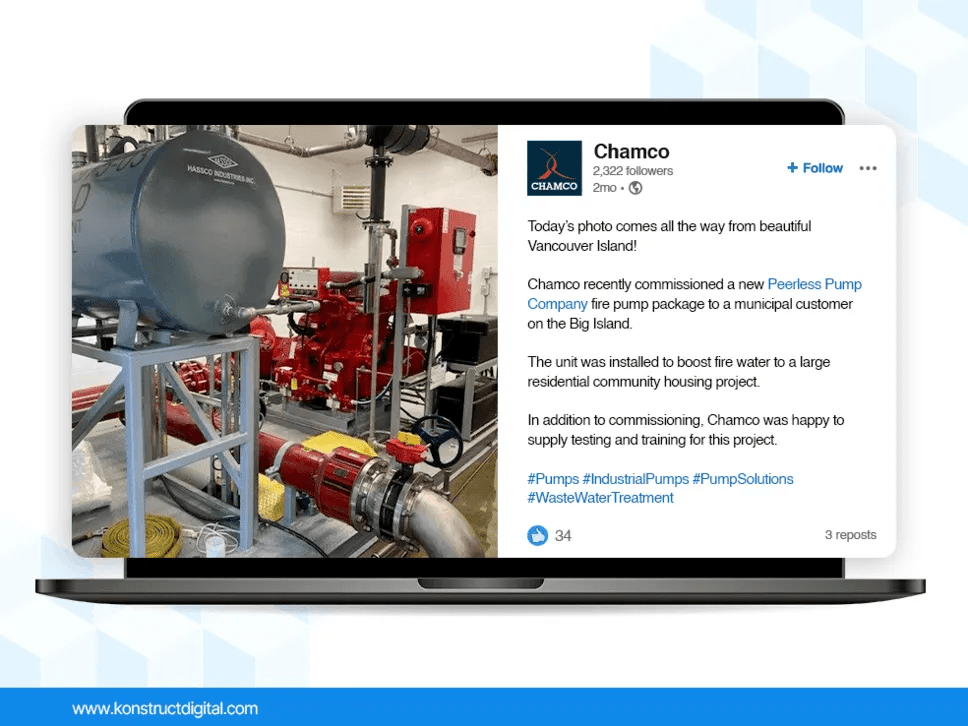
Process and capability content. A short video of your production line, a photo of a finished assembly, a before-and-after of a complex fabrication — this kind of content builds confidence in your capabilities faster than any spec sheet. Industrial buyers want to see that you can actually make what they need.
Technical insight from your engineering team. If your applications engineers or product specialists regularly answer the same questions from customers, those questions are LinkedIn content waiting to happen. A post that answers “when should you use [Component A] vs [Component B]” will get shared and saved by engineers who face that decision every day.
Industry commentary and trends. Automation adoption, supply chain changes, new safety standards, evolving certifications — your leadership team has opinions worth sharing. Posts that engage with what is happening in your industry consistently outperform pure product content.
Trade show and event content. IMTS, Fabtech, Automate, PackExpo — before, during, and after these events, LinkedIn activity extends the life of your investment and keeps your brand visible to people who were not in the booth.
Posting Frequency and Profile Activation
For company pages, three to four posts per week is a sustainable and effective cadence. More important than hitting a number is the consistency — showing up reliably every week matters more than a perfect content calendar.
The bigger unlock for most manufacturers is activating individual profiles. LinkedIn’s algorithm gives significantly more reach to posts from personal profiles than company pages. When your CEO, sales directors, or engineering leads are posting even once or twice a week, that reach multiplies. We have seen clients get more traction from three employees posting regularly than from doubling their company page output.
YouTube: The Best Platform for Demonstrating Expertise
LinkedIn builds credibility. YouTube proves it.
For industrial manufacturers, YouTube solves a problem that no other platform can: how do you show a complex, technical product or process to a buyer who cannot visit your facility? A two-minute product demonstration video answers questions that a 10-page brochure never could — and it does it on the buyer’s schedule, not yours.
YouTube is also the world’s second-largest search engine, and that matters enormously for manufacturing companies. When a controls engineer searches for a product demonstration video, when a maintenance technician looks for a setup walkthrough, or when a procurement manager wants to compare supplier approaches, they are often turning to YouTube for answers.
A well-optimized product demonstration video can generate views, leads, and supplier consideration for years after it is published, unlike a social post that disappears from feeds in a matter of days. Clear, descriptive titles, detailed video descriptions, and relevant keywords help ensure your content appears when engineers, technicians, and buyers search for solutions online.
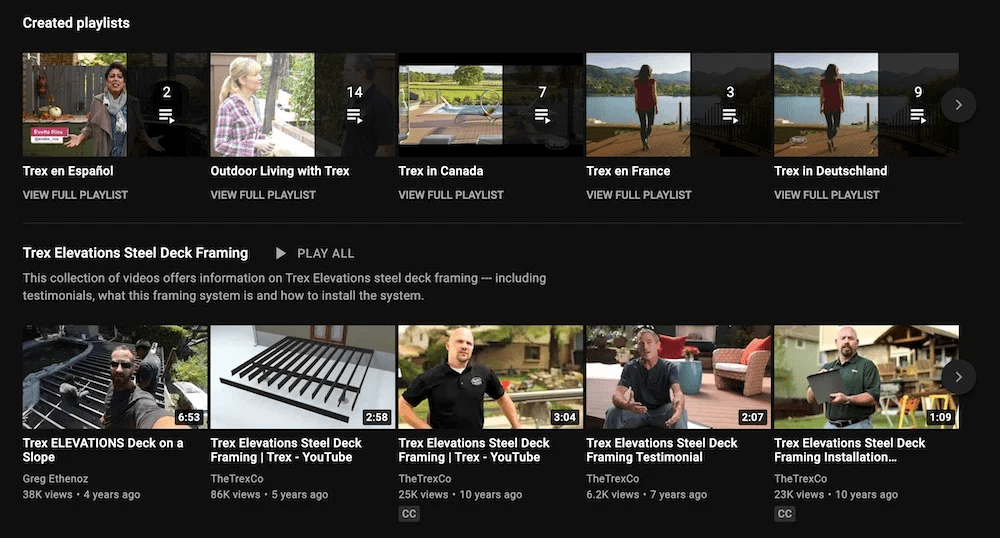
Content That Works on YouTube for Manufacturers
Product demonstrations. In real conditions — not a polished studio setup, but actual operating environments. Engineers evaluating industrial components want to see real performance, real tolerances, real integration. The more honest and specific the demo, the more useful it is to the buyer.
Process and capability walkthroughs. Take a viewer through your production process step by step. For buyers evaluating a new supplier, this kind of transparency is enormously reassuring. It answers the implicit question every industrial buyer has: “Can they actually make what I need, at the quality I require?”
Technical education content. Some of the most valuable YouTube content a manufacturer can produce does not directly promote a product — it helps buyers make better decisions. “How to select the right [component] for [application type].” “What to look for when evaluating [process] suppliers.” “The difference between [standard A] and [standard B] for industrial applications.” This content positions your team as the most knowledgeable voice in your category, which is exactly where you want to be when a buyer is ready to specify a supplier.
Training and support content. YouTube can also play an important role after the sale. Setup guides, troubleshooting videos, maintenance best practices, and installation walkthroughs give customers a self-service resource they can access whenever they need help. These videos improve the customer experience while reducing routine support requests for your team.
Customer application stories. A short video showing how a customer solved a specific problem using your product — ideally with the customer on camera — carries far more weight than any written testimonial.
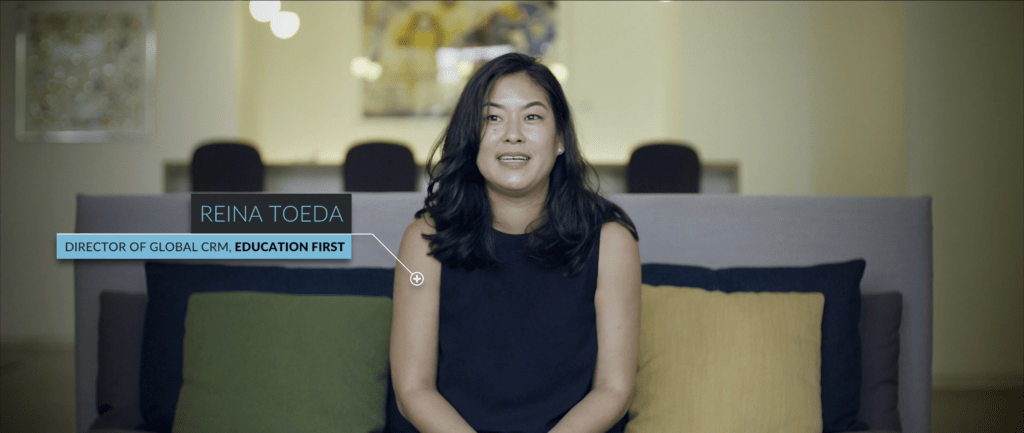
Facility and capability tours. For international buyers or customers evaluating a new supplier relationship, a well-produced facility tour can accelerate the trust-building process significantly.
Hyundai Motor Manufacturing Alabama Plant Tour
We have found that two to four videos per month is a realistic and effective cadence for most manufacturers. Consistency tends to outperform volume, especially when content is focused on answering real customer questions and demonstrates your expertise. Use specific, search-friendly titles that clearly describe the video’s topic and purpose.
To maximize the value of each video, embed relevant content on product pages, resource centers, and blog articles. A single video can support your website, sales conversations, email campaigns, and multiple social media channels long after it is published.
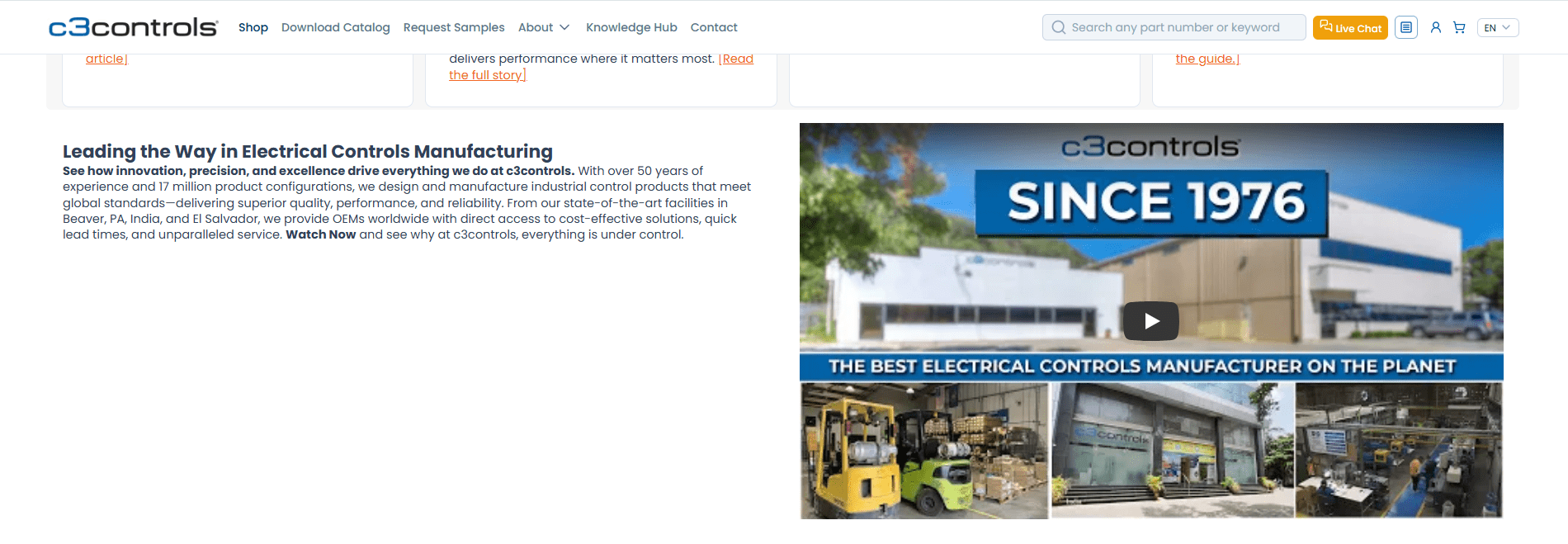
Instagram: A Valuable Platform for Employer Branding
Instagram often gets dismissed by manufacturers as a consumer platform — and that is a mistake, particularly when it comes to employer branding and showcasing the people behind your business.
The skilled labor shortage is real. Welders, machinists, quality technicians, automation engineers, and maintenance professionals are in high demand. Many of these potential candidates spend time on Instagram outside of work, making it an effective platform for shaping how they perceive your company long before they see a job posting.
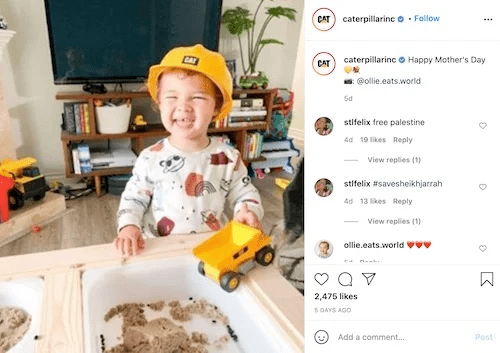
Instagram gives manufacturers an opportunity to tell their story visually. Photos and videos of your facility, equipment, team members, and day-to-day operations help potential employees and customers see what makes your company different. A strong presence can make someone think, “I would want to work there” before they ever submit an application.
The manufacturers that see the best results on Instagram focus on authentic content rather than highly polished marketing campaigns. Behind-the-scenes shop floor footage, employee spotlights, team celebrations, community involvement, and short process videos often outperform highly polished marketing content because they feel genuine and relatable.
Short-form video is particularly effective for manufacturers. Robotic automation, machining operations, assembly processes, fabrication work, and production lines naturally create visually engaging content. A 15-to-60-second Reel showing a process in action can generate attention while giving viewers a better understanding of your capabilities and culture.
Industry-relevant hashtags, location tags, and consistent posting can help increase discoverability and expose your content to potential employees, customers, and partners who may not already be familiar with your brand.
Instagram will not be your primary lead-generation channel. Think of it as your recruiting funnel and brand culture layer. When a candidate checks your Instagram before an interview, or a prospect wants a closer look at your company, the impression they form can influence how they view your business.
Facebook: Still Relevant for Some Manufacturers
Facebook’s relevance for B2B manufacturing has declined — it is no longer a primary channel for reaching procurement professionals or industrial buyers. But for manufacturers with a regional focus or a consumer-adjacent product line, it can still provide value in specific situations.
Local brand awareness remains one of Facebook’s strongest use cases. Manufacturers can use Facebook to stay connected with their communities, promote company news, highlight milestones, and maintain visibility among customers, partners, and prospective employees. Its advertising platform also offers cost-effective options for reaching audiences within specific geographic areas.
We have seen Facebook remain an effective recruiting channel for many manufacturers, particularly when hiring skilled tradespeople, operators, and production workers. Many tradespeople, technicians, operators, and production workers are active on Facebook but may not regularly use LinkedIn. Job postings, hiring campaigns, and career-focused content can help manufacturers connect with potential candidates where they are already spending time online.
Facebook can also help manufacturers showcase company culture and community involvement. Photos from employee events, volunteer initiatives, training programs, facility celebrations, and team activities often generate strong engagement because they highlight the people behind the business.
Niche Facebook Groups for manufacturing trades, local business communities, and industry associations can also offer value when approached authentically. Rather than using these groups for promotion, manufacturers can participate in discussions, answer questions, and build relationships with industry professionals and local stakeholders.
For most manufacturers, Facebook is a supporting channel in 2026 — not a primary investment. Maintain an active presence, share relevant company updates and culture-focused content, leverage recruiting opportunities, and use targeted advertising when appropriate.
Emerging and Niche Platforms: TikTok, Reddit, and WhatsApp
These three platforms sit outside the core manufacturing social media stack — but each one serves a real purpose for the right manufacturer.
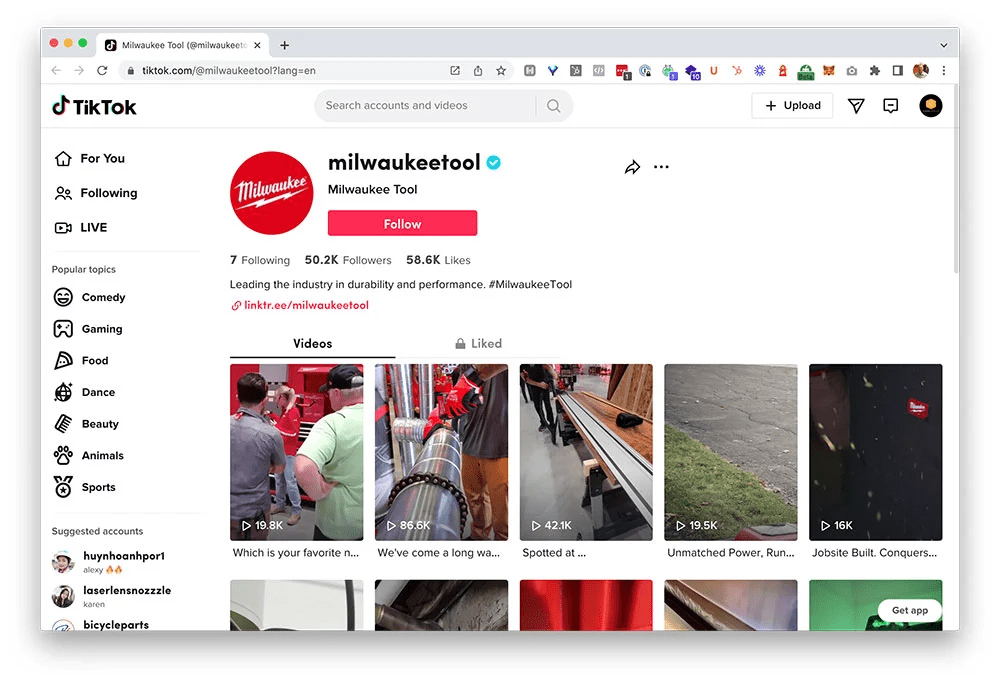
TikTok
TikTok has produced some genuine surprises in the industrial space. Manufacturing accounts focused on CNC machining, metal fabrication, and precision production have built audiences of hundreds of thousands with nothing but short process videos — satisfying, visually compelling clips of parts being turned, cut, welded, or finished.
The direct B2B lead generation potential is limited, but for recruiting younger tradespeople and building brand awareness with an audience that skews toward hands-on technical work, TikTok is underpriced right now. If your facility has visually interesting processes and you have someone willing to shoot vertical video on a phone, it is worth a 90-day test. If your content is primarily spec sheets and technical documentation, it is not the right fit.
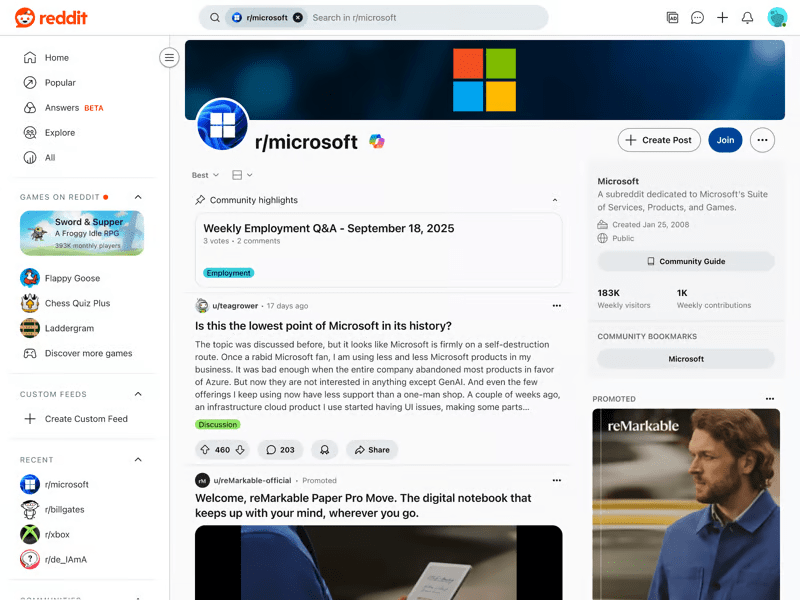
Reddit is the platform most manufacturers ignore and most industrial buyers actually use. Subreddits like r/manufacturing, r/PLC, r/electrical, r/machinists, and r/mechanical_engineering are active communities where engineers and technical buyers ask real questions, share recommendations, and evaluate suppliers — with zero tolerance for marketing speak.
The play here is not advertising. It is having your technical people participate authentically: answer questions your engineers deal with every day, monitor conversations for competitive intelligence, and occasionally share a genuinely useful resource. Done consistently over time, it builds the kind of credibility that is almost impossible to manufacture through traditional marketing.
Common Mistakes Manufacturing Companies Make on Social Media
We see the same patterns repeatedly across industrial B2B accounts — and they are worth naming directly.
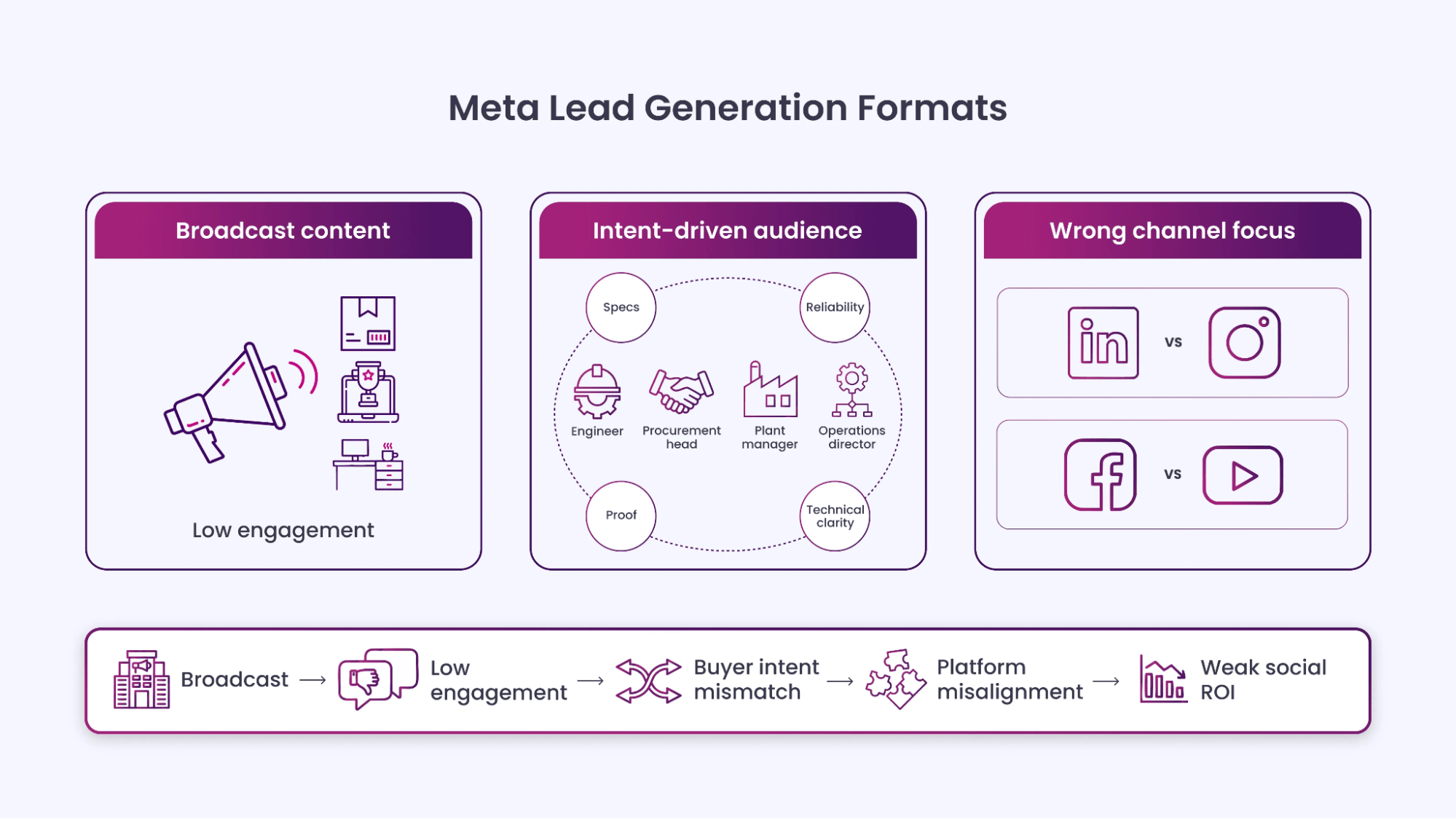
Posting like a product catalog. Announcing new SKUs, sharing spec sheet links, publishing “we are proud to introduce” posts week after week. Buyers follow brand pages for insight and value, not advertising. When every post is a product push, engagement drops and reach collapses. Lead with content that helps your buyers think, decide, or learn — and your commercial posts will actually get seen.
Going silent after a strong start. Many manufacturers launch a LinkedIn or YouTube presence with real energy, then go quiet when internal priorities shift. Inconsistency is more damaging than starting late. Both algorithms and audiences reward reliability. If you cannot commit to a cadence, narrow your scope until you can.
Leaving conversations unanswered. When an engineer comments a question on your product demo video or a procurement manager replies to a LinkedIn post, that is a warm lead. Ignoring it is the digital equivalent of walking away from a prospect at a trade show booth. Every comment and message deserves a timely response — and it should come from a real person, not a generic reply.
Recycling the same content across every platform. A 600-word LinkedIn post does not belong on Instagram. A formal case study is not a TikTok. The underlying message can be consistent, but the format, tone, and length need to fit each platform’s context. Repurpose thoughtfully — do not just copy-paste.
Optimizing for vanity metrics. Follower counts and impressions feel good but they do not pay the bills. The manufacturers getting real value from social media tie their activity to leads generated, RFQs received, candidates hired, or named accounts influenced. If you cannot trace social activity to a business outcome, you are producing content without a strategy.