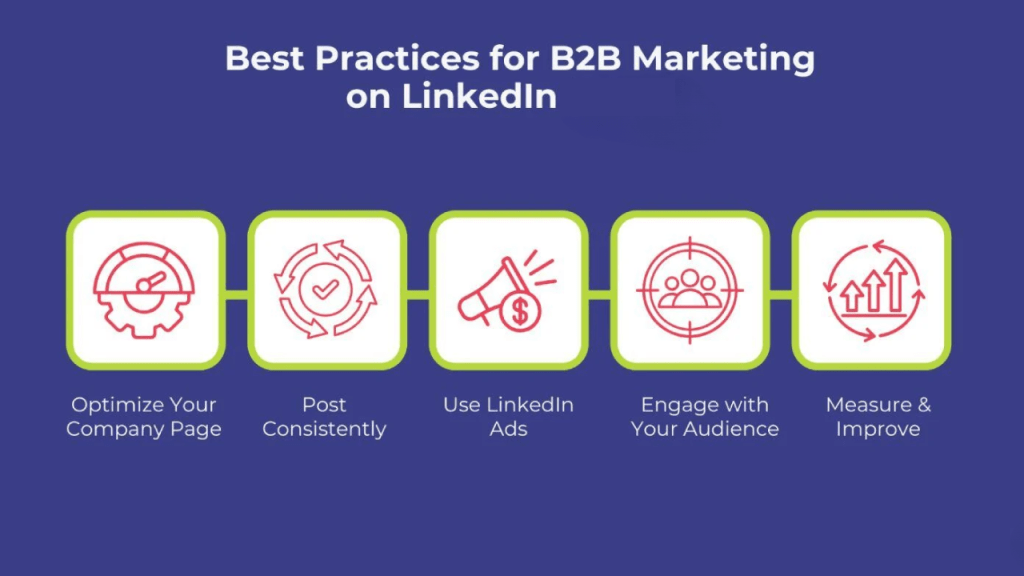
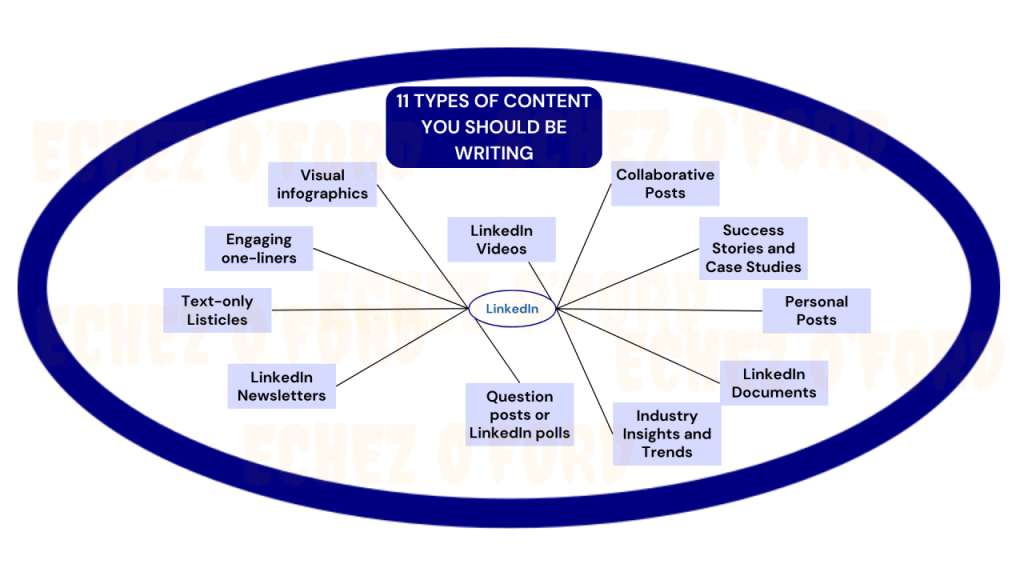
Source: https://www.linkedin.com/pulse/11-types-content-post-linkedin-now-you-want-beat-algorithm-o-ford/
Below are the key content types that consistently perform well on LinkedIn.
1. Thought Leadership and Industry Insights
B2B audiences actively seek expertise. Sharing perspectives on industry trends, market developments, and emerging challenges positions a company as a knowledgeable authority rather than just a service provider.
For example: instead of writing ‘Our product helps finance teams save time,’ write ‘Three things I’ve noticed CFOs getting wrong about data reconciliation — and what’s actually working in 2026.’ One is a sales pitch. The other is a reason to follow you.
Thought leadership content demonstrates credibility and encourages decision-makers to view a brand as a reliable source of insights.
B2B deals influenced by thought leadership content: 88% of decision-makers (Edelman/LinkedIn B2B Thought Leadership study)
2. Educational and Problem-Solving Content
Content that helps audiences solve real challenges tends to generate the highest engagement. This includes:
- Practical guides and frameworks
- Best practices and actionable tips
- Explainers on complex industry topics
- How-to insights relevant to business operations
Such content strengthens trust and makes it easier for businesses to use LinkedIn for B2B lead generation by addressing real audience needs.
3. Case Studies and Success Stories
B2B buyers rely heavily on proof of results. Case studies showcasing measurable outcomes, client success, and real-world applications provide powerful social validation.
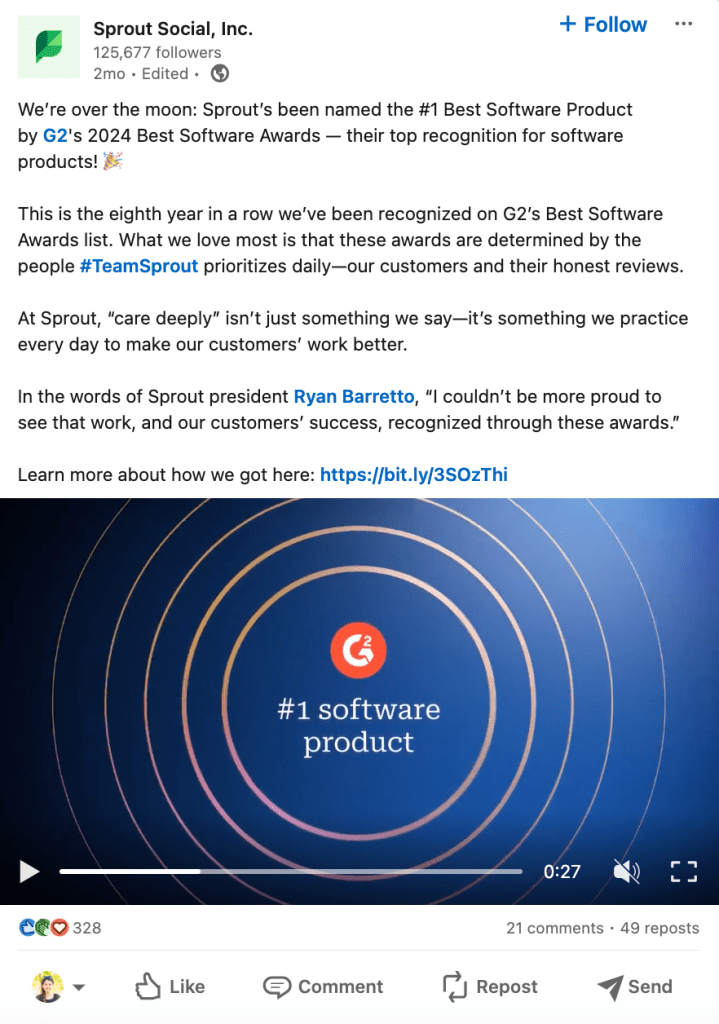
Source: https://sproutsocial.com/insights/linkedin-post-ideas/
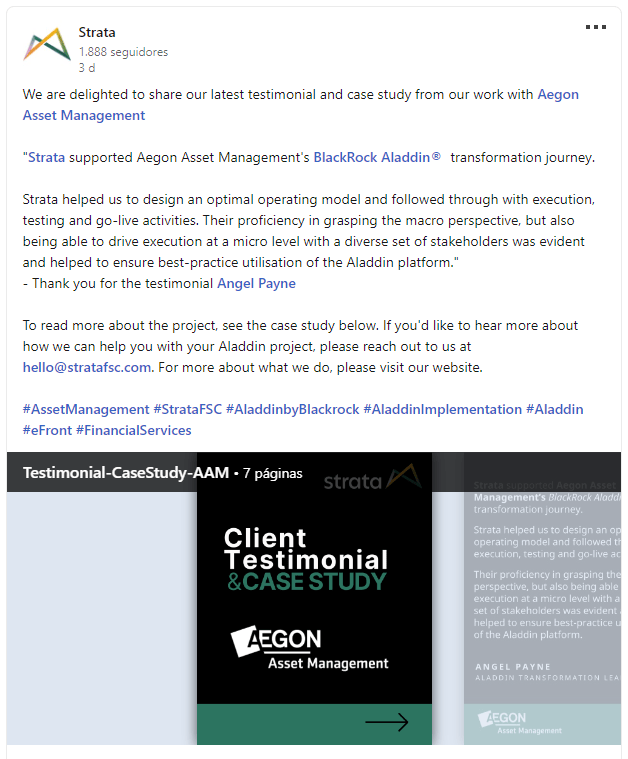
Source: https://www.oktopost.com/blog/linkedin-post-examples/
The most effective case study posts on LinkedIn often lead with the result first: ‘We helped a 50-person logistics company reduce customer churn by 34% in 90 days — here’s exactly what we did.’ That’s the difference between a case study people read and one they scroll past.
These narratives help prospects understand how a company’s expertise translates into tangible business value.
4. Visual and Interactive Content
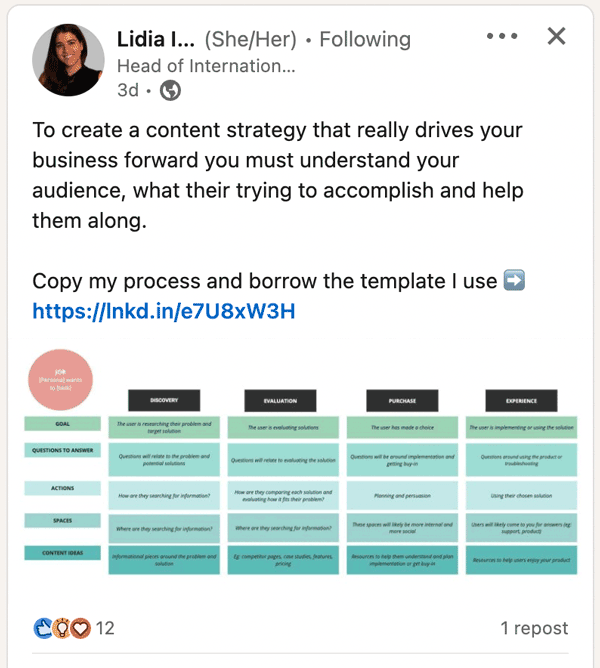
While LinkedIn is a professional platform, visually engaging formats significantly enhance content performance. Posts that incorporate visual elements often achieve higher reach and engagement.
Source: https://www.writing-skills.com/knowledge-hub/your-linkedin-content-strategy-8-post-types-and-the-smartest-ways-to-use-them/
Effective formats include:
- Carousel posts presenting insights step by step
- Short videos explaining concepts or trends ( LinkedIn video posts reach 3x more people than text posts, according to study.)
- Infographics summarising key information
Visual storytelling simplifies complex topics and boosts engagement.
5. Employee Advocacy Content
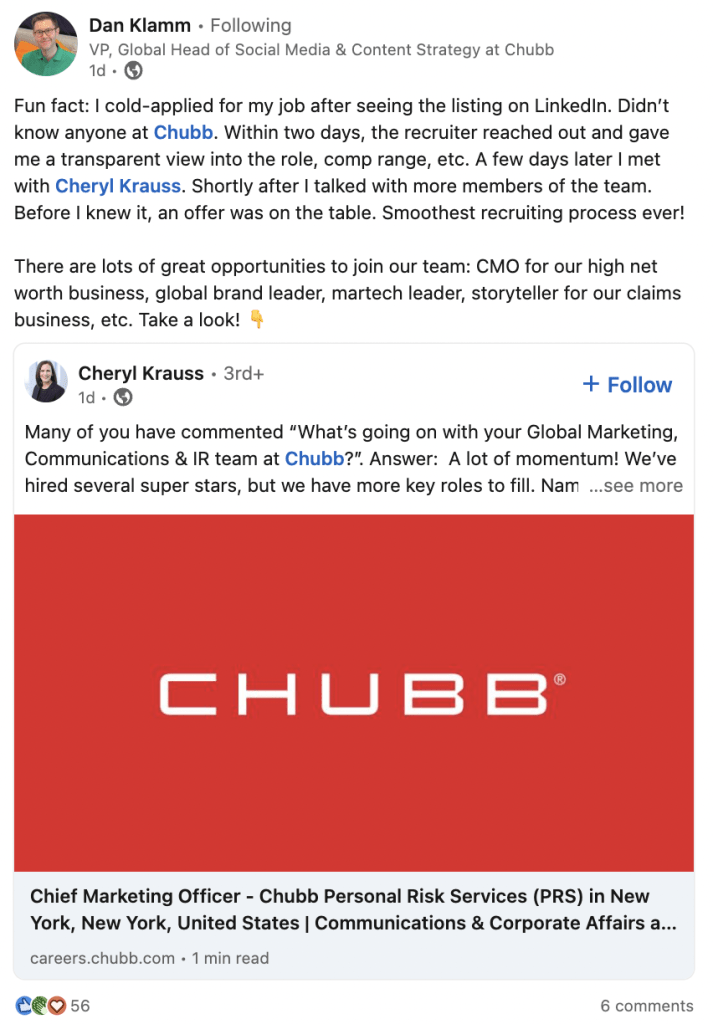
One of the most powerful ways to extend your reach on LinkedIn is through employee advocacy. Consider this: if your organisation has 20 employees and each maintains around 100 professional connections, that instantly creates a potential network of 2,000 touchpoints — all without additional advertising spend. When employees share company updates or insights from their work, brand visibility expands organically and credibly.
Source: https://sproutsocial.com/insights/linkedin-employee-advocacy/
You can encourage advocacy through simple, practical steps:
Offer LinkedIn training: Help teams understand how their professional presence supports both personal branding and company growth.
Create reshare-friendly content: Provide ready-to-use graphics, short videos, or concise insights that employees can easily post.
Recognise active participation: Introduce appreciation or incentive programmes to encourage consistent and meaningful engagement.
As employees become active voices, the brand benefits from wider reach, stronger trust, and more authentic industry connections.
6. Conversational and Engagement-Focused Posts
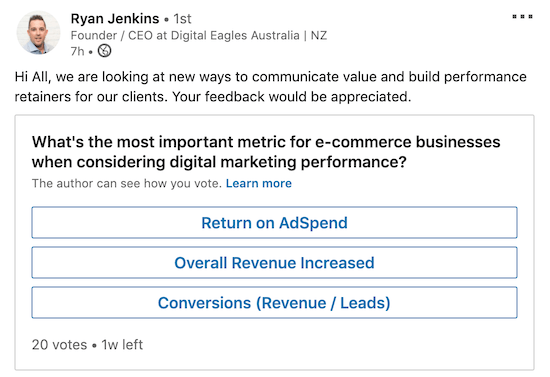
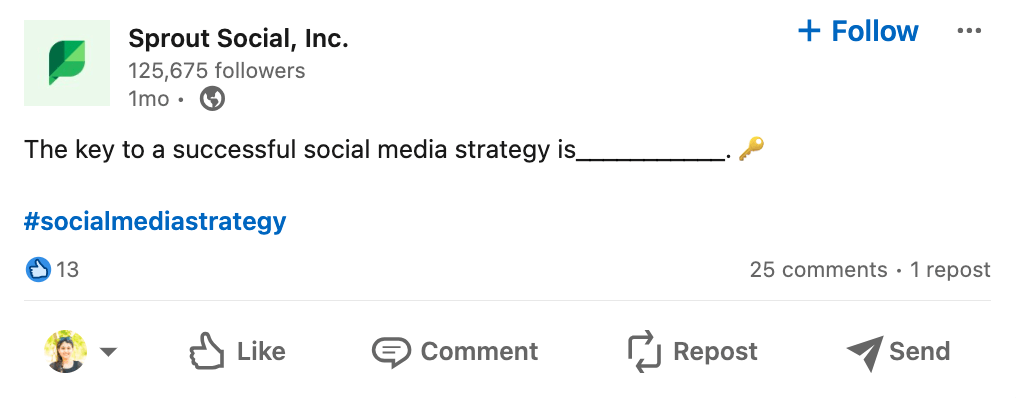
Content that invites dialogue often performs exceptionally well. Questions, opinion polls, and discussion prompts encourage audiences to participate rather than passively consume information.
Source: https://www.socialmediaexaminer.com/how-to-use-linkedin-polls-for-business-9-ideas/
Source: https://sproutsocial.com/insights/linkedin-post-ideas/
This interaction helps businesses build relationships and remain visible within professional networks.
7. LinkedIn Newsletter
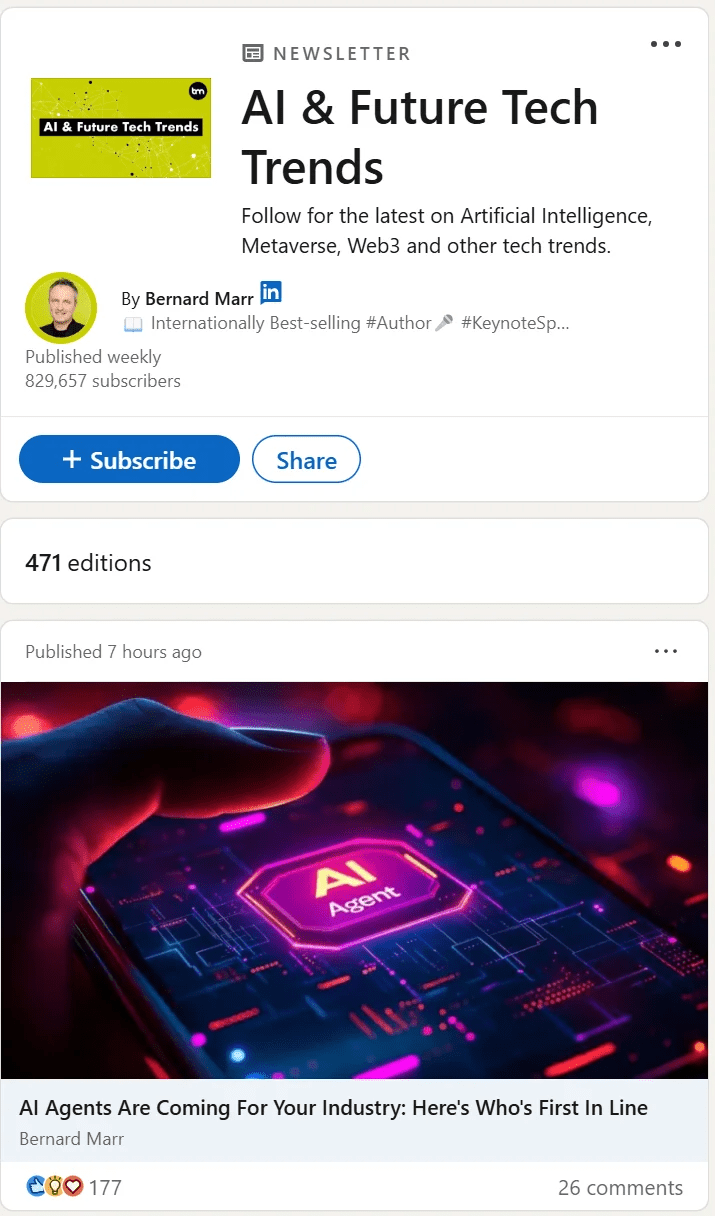
One of the most underused yet high-impact content formats on LinkedIn right now is the LinkedIn Newsletter. Unlike regular posts that disappear from feeds within hours, newsletters are delivered directly to your subscribers’ inboxes and LinkedIn notifications — giving your content a second life and a guaranteed audience.
Source: https://www.sociablekit.com/linkedin-newsletter-examples/
What makes LinkedIn Newsletters particularly powerful for B2B is the subscriber model. Every time someone subscribes, they opt in to hear from you regularly. That’s not a passive follower — that’s an engaged reader who has actively chosen your content over everything else on the platform.
Here’s what makes it worth adding to your content mix:
- Direct inbox delivery: Your newsletter lands in subscribers’ email inboxes and LinkedIn notifications simultaneously — double the touchpoints without double the effort.
- Long-form depth: Unlike posts limited by attention spans, newsletters let you go deeper on topics, share original analysis, and build a genuine editorial voice that positions you as a go-to expert.
- Compounding subscriber base: Every new subscriber is notified of future editions automatically. Unlike feed posts where reach resets each time, your newsletter audience grows and stays.
- SEO discoverability: LinkedIn newsletters are indexed by search engines, meaning your content can be found by people searching relevant topics outside of LinkedIn entirely.
A useful approach: treat your newsletter as your flagship content — one well-researched edition every 2–4 weeks that goes deeper than your regular posts. Think of your posts as teasers; the newsletter is the full story.
Over time, this builds a loyal readership that sees your brand as a trusted source, not just another feed account.
What NOT to Post (Just as Important)
Knowing what to avoid saves you from undermining good work. Skip: overly polished corporate announcements that feel like press releases, motivational quotes with no original insight, self-congratulatory ‘we won an award!’ posts without context, and content that could live on any platform — because LinkedIn audiences expect professional relevance, always.
7. Consistency Over Volume
Perhaps the most important factor in LinkedIn marketing for B2B growth is consistency. Posting regularly ensures sustained visibility and keeps a brand relevant in industry conversations.
A steady stream of valuable content builds familiarity, reinforces expertise, and supports long-term trust.
Why Measurement Matters in B2B LinkedIn Marketing
B2B marketing cycles are typically longer and more complex than consumer journeys. Prospects interact with multiple pieces of content before taking action, which makes it crucial to monitor performance across different touchpoints.
Measuring results helps organisations:
- Identify high-performing content types
- Understand audience behaviour and preferences
- Improve targeting precision
- Optimise campaign budgets
- Strengthen overall LinkedIn marketing strategy
Key Metrics to Track
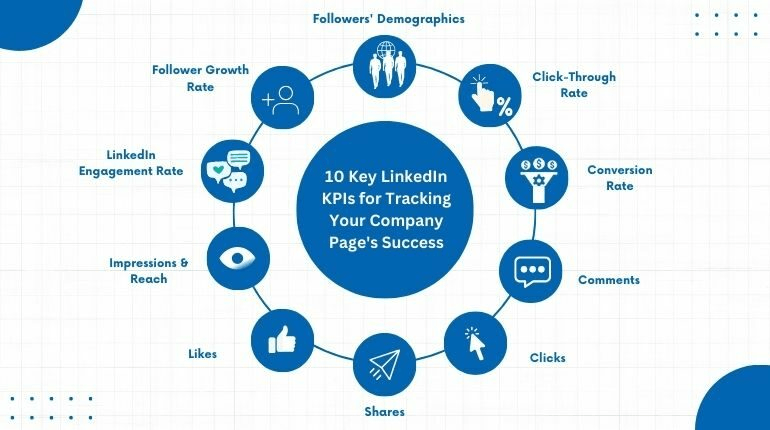
To evaluate success effectively, focus on a balanced set of performance indicators rather than relying on a single metric.
Source: https://powermetrics.co.uk/blog/linkedin-kpis-measure-company-page-success/
1. Engagement Metrics
These metrics reflect how audiences interact with content and indicate its relevance.
Important indicators include:
- Likes, comments, and shares
- Engagement rate per post
- Follower growth trends
- Profile visits
High engagement typically signals strong brand awareness on LinkedIn and growing audience trust.
A quick benchmark to calibrate your expectations: the average engagement rate on LinkedIn organic posts sits around 2–5% for B2B brands. If you’re consistently hitting above that, your content is resonating. Below it? That’s a signal to experiment with format, topic, or posting time — not to post more of the same.
2. Reach and Visibility Metrics
Understanding how many people see content helps businesses assess overall brand exposure.
Key measures include:
- Impressions and reach
- Content distribution trends
- Audience demographics
These insights help determine whether messaging is reaching the intended professional audience.
3. Lead Generation Metrics
For organisations aiming to use LinkedIn for B2B lead generation, conversion-focused metrics are particularly important.
These include:
- Click-through rates (CTR)
- Form submissions and enquiries
- Cost per lead (for paid campaigns)
- Conversion rates from LinkedIn traffic
Tracking these metrics allows companies to evaluate the true business impact of their LinkedIn activities.
One metric most B2B marketers overlook: profile views after a post goes live. A spike in profile visits 24–48 hours post-publish often means people are checking you out — even if they didn’t engage publicly. That’s an early-stage pipeline forming silently. Keep an eye on it.
4. Content Performance Insights
Not all content performs equally. Analysing post-level data helps businesses refine their content strategy.
Look for patterns such as:
- Which topics generate the most engagement
- Best-performing formats (video, carousels, text posts)
- Optimal posting times
- Audience response trends
This information enables organisations to make informed adjustments rather than relying on assumptions.
5. Using Insights to Refine Strategy
Measurement is only valuable when it leads to action. Regularly review your performance data to refine your approach.
Common optimisation steps include:
- Adjusting content themes based on audience interest
- Improving targeting criteria for campaigns
- Increasing focus on high-performing formats
- Testing different messaging styles
- Aligning content with evolving industry trends
This iterative process ensures that LinkedIn marketing for B2B growth remains effective and adaptable.
Monthly review cadence suggestion:
Week 1- Check engagement by content type.
Week 2- Review follower growth and demographics.
Week 3- Analyse lead quality from LinkedIn traffic.
Week 4- Adjusts next month’s content plan based on findings.
This turns measurement from a reporting exercise into an actual growth tool.
Common Mistakes to Avoid
While LinkedIn offers immense potential for B2B growth, many organisations fail to see meaningful results simply because they approach the platform with the wrong mindset or inconsistent execution.
Avoiding the following common mistakes can significantly improve performance and ensure long-term success.
1. Treating LinkedIn Like a Traditional Social Platform
One of the most frequent errors businesses make is using LinkedIn the same way they use consumer-focused platforms. Promotional posts, overly casual messaging, or entertainment-driven content often fail to resonate with professional audiences.
Scenario: A company reposts their Instagram Reel (product unboxing, upbeat music, lifestyle visuals) to LinkedIn and wonders why it gets three likes. The content wasn’t wrong — it was just in the wrong room. LinkedIn is the conference room; Instagram is the cocktail party.
On LinkedIn, users expect value-driven content that supports learning, problem-solving, and industry awareness. Businesses that align with this expectation are far more likely to build credibility and engagement.
2. Focusing Too Much on Selling
B2B buyers rarely respond positively to constant promotional messaging. A feed filled only with product advertisements or sales-driven content can quickly reduce audience interest.
A useful ratio to keep in mind: aim for roughly 80% educational or insight-led content, 20% promotional. If you find yourself pitching more than you’re teaching, pull back — your audience will.
Prioritise education, insights, and thought leadership. Sales conversations tend to follow naturally when trust has already been established.
3. Inconsistent Posting and Engagement
Visibility on LinkedIn depends heavily on consistency. Posting irregularly or engaging sporadically makes it difficult for audiences to recognise and remember a brand.
A steady presence through regular content sharing and active interaction helps maintain brand awareness on LinkedIn and keeps businesses relevant in professional discussions.
4. Ignoring Audience Targeting
Another common mistake is adopting a broad, generic approach to messaging. Without clear audience targeting, even high-quality content may fail to reach the right professionals.
A strong LinkedIn marketing strategy should always begin with a clear understanding of the ideal audience — including their roles, challenges, and decision-making priorities.
5. Neglecting Employee Advocacy
Many organisations underestimate the influence of their employees’ professional networks. Relying solely on a company page limits reach and reduces opportunities for authentic engagement.
Encouraging employees to share insights and participate in conversations can significantly amplify visibility and credibility.
6. Overlooking Analytics and Performance Data
Posting content without reviewing performance metrics is a missed opportunity. Without analysing engagement trends, lead quality, and audience behaviour, you can’t refine your strategy effectively.
Regular performance evaluation ensures that LinkedIn marketing for B2B growth remains aligned with business objectives and audience expectations.
7. Expecting Immediate Results
LinkedIn is not a platform for quick wins. It never has been. B2B relationships are built slowly — through repeated visibility, consistent value, and the kind of trust that only accumulates over time. But when it compounds? The returns are significant.
Realistic timeline for new LinkedIn presences: Months 1–2 are about optimising profiles and finding your content voice. Months 3–4 you’ll start seeing consistent engagement patterns. Month 5–6 is typically when inbound enquiries or meaningful relationship-building begins. Treat it like compound interest: slow at first, then powerful.
Businesses that approach LinkedIn with a long-term perspective tend to achieve more sustainable results.
Future Trends in LinkedIn B2B Marketing
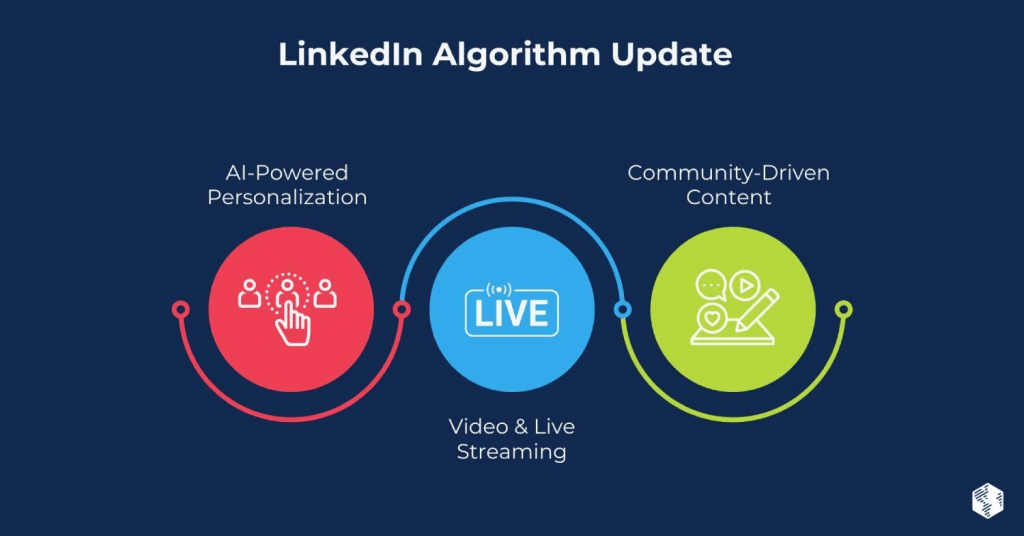
The brands winning on LinkedIn in the next two years won’t be the ones posting the most — they’ll be the ones who adapted earliest to how the platform is shifting. Here’s what you should be watching and, more importantly, what you should be doing about it now.
Source: https://oneims.com/blog/how-to-use-linkedin-for-b2b-marketing
1. Rise of AI-Driven Personalisation
Artificial intelligence is increasingly shaping how content is delivered and consumed. Beyond the feed, automation is also transforming how brands interact with prospects; for instance, AI-powered chatbots are fundamentally changing social media marketing by providing instant, personalized responses at scale.
For businesses, this means focusing on:
- Tailored messaging for specific audience segments
- Industry-specific insights
- Content aligned with audience interests and engagement patterns
2. Increased Importance of Video Content
Professional audiences are increasingly engaging with short-form video content. Videos provide a more dynamic way to share insights, explain complex topics, and showcase expertise.
Future LinkedIn strategies will likely include:
- Short educational videos
- Thought leadership video snippets
- Behind-the-scenes industry insights
- Quick expert commentary
Video content not only increases engagement but also strengthens brand recall.
3. Expansion of Employee Advocacy
Employee voices are becoming one of the most trusted forms of communication on LinkedIn. Professionals often engage more with posts shared by individuals than with traditional brand messaging.
Organisations are expected to invest more in:
- Encouraging employees to share expertise
- Training teams on professional content creation
- Supporting personal branding initiatives
This trend significantly enhances brand awareness on LinkedIn while building authenticity.
4. Greater Focus on Community Building
LinkedIn is gradually evolving from a broadcasting platform into a community-driven ecosystem. Businesses that actively participate in conversations, host discussions, and engage within niche industry groups will gain stronger visibility.
Community engagement strategies may include:
- Hosting live discussions and webinars
- Participating in industry conversations
- Creating collaborative content initiatives
This approach helps build deeper relationships rather than one-time interactions.
5. LinkedIn as a Direct Revenue Channel
LinkedIn is quietly becoming a full sales funnel — not just a top-of-funnel awareness tool. With features like LinkedIn Sales Navigator, native lead gen forms, and direct messaging becoming more sophisticated, B2B teams are starting to close deals entirely within the platform. If your sales and marketing teams aren’t collaborating on LinkedIn strategy today, that gap will be more costly by 2026.
6. Data-Led Marketing Decisions
As analytics capabilities become more advanced, businesses will rely increasingly on performance data to guide strategy decisions. Understanding audience behaviour, content effectiveness, and conversion patterns will be essential for optimising campaigns.
Data-driven insights will help organisations refine their efforts to use LinkedIn for B2B lead generation more efficiently.
7. Shift Toward Authentic Thought Leadership
B2B audiences are placing greater value on authenticity and transparency. Overly polished or purely promotional content is becoming less effective, while genuine insights and honest perspectives are gaining traction.
Brands that focus on real experiences, expert viewpoints, and meaningful discussions will continue to build stronger trust.
8. Thought Leader Ads — The New Frontier of B2B Advertising
LinkedIn’s Thought Leader Ads, introduced in 2024, are one of the most significant shifts in B2B advertising in recent years — and most brands haven’t caught on yet.
Unlike traditional Sponsored Content that runs from a company page, Thought Leader Ads amplify posts made by individual employees or executives, putting real human voices in front of targeted audiences as paid placements.
Why does this matter? Because people trust people. A post from your CEO or lead consultant already carries more credibility than anything published from a brand account. Thought Leader Ads simply pour fuel on that trust — turning high-performing organic posts from your team into precision-targeted campaigns.
Here’s what makes them worth your attention in 2026:
- Authentic by design: Ads appear as real posts from real people — not polished brand creatives — which means higher engagement rates and lower resistance from audiences.
- Perfect for ABM: You can target specific companies, job titles, and seniority levels with a human voice, making them ideal for account-based marketing strategies.
- Low creative lift: No need to build new assets. Your best-performing organic posts become your ads — saving production time while capitalising on content that already resonates.
- Builds personal brand at scale: Executives gain visibility beyond their existing network, simultaneously strengthening both individual authority and company credibility.
If you’re already investing in thought leadership content, Thought Leader Ads are the logical next step — they turn your best ideas into a paid distribution engine without losing the human authenticity that makes them effective in the first place.
9. Collaborative Articles — AI-Powered Visibility You’re Probably Ignoring
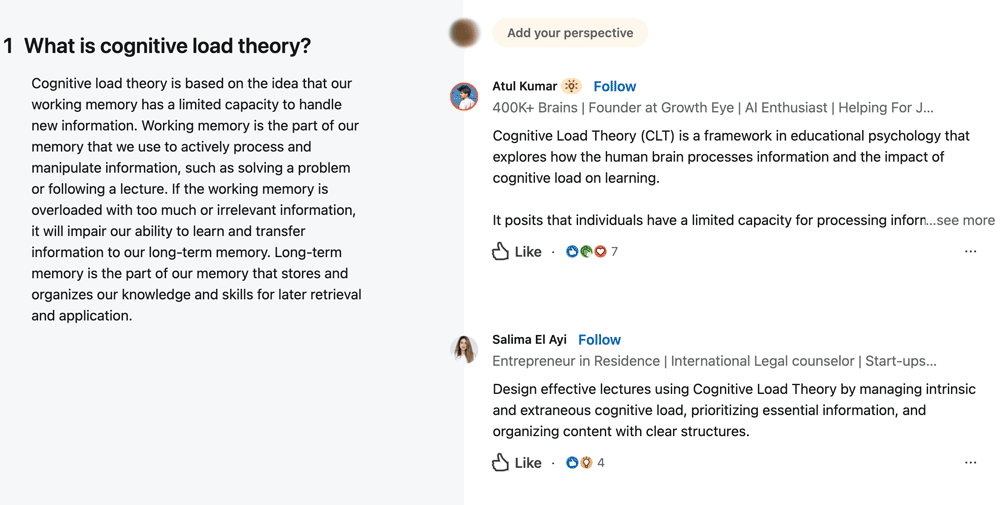
LinkedIn’s Collaborative Articles are one of the platform’s most quietly powerful features right now. LinkedIn uses AI to generate article prompts on professional topics, then invites subject matter experts to contribute their insights directly within the article.
Source: https://www.writing-skills.com/knowledge-hub/your-linkedin-content-strategy-8-post-types-and-the-smartest-ways-to-use-them/
Contributors who add valuable perspectives earn a ‘Top Voice’ badge in that subject area — one of the most credible signals of expertise on the platform.
For B2B brands and their teams, this is a low-effort, high-visibility opportunity that most competitors are still sleeping on.
Here’s why it deserves a place in your 2026 LinkedIn strategy:
- Credibility at speed: Contributing to Collaborative Articles positions your team members as recognised experts in their field — with LinkedIn’s own badge validating that expertise to their network.
- Algorithmic boost: LinkedIn actively promotes Collaborative Articles in feeds and search results, meaning your contribution gets surfaced to audiences far beyond your current followers.
- Zero content creation required: You’re not writing an article from scratch — you’re adding a paragraph of insight to a prompt that already exists. The barrier to entry is remarkably low.
- Compound authority: As your team members earn Top Voice badges across relevant topics, every piece of content they post gains more weight — creating a halo effect for your brand’s overall credibility.
A practical approach: identify 3–5 Collaborative Article topics directly relevant to your industry, assign team members to contribute weekly, and treat Top Voice badges as measurable authority KPIs. It costs nothing but a few minutes of focused expertise — and the credibility returns are disproportionate.
The future of LinkedIn marketing for B2B will be shaped by personalisation, authenticity, and strategic engagement. Businesses that embrace these trends early will be better positioned to strengthen relationships, enhance credibility, and achieve sustained growth.
LinkedIn has matured from a networking platform into a full-funnel B2B growth engine and the organisations that recognise this early hold a meaningful advantage. With the right strategy in place, it becomes a system for building brand authority, generating qualified leads, and nurturing the long-term relationships that drive sustainable revenue.
But strategy without execution is just planning. The framework, content principles, and measurement approach covered in this guide only create value when applied consistently over time.
Start with a simple audit: review your company page, define your 90-day objective, and commit to a content rhythm your team can sustain. From there, the compounding effect of LinkedIn begins to work in your favour.
The brands winning on LinkedIn aren’t the loudest. They’re the most consistent. That’s entirely within your control.