
TLDR Summary
Who: Ted Wodoslawsky, VP & COO at c3digitus, 40+ years in industrial automation and marketing, no coding background.
What he did: Built four working AI tools in Google AI Studio using plain English (“vibe coding”), no Python, no CS degree.
Tools built: Urgent email summariser · 22mm control station configurator · Talent Attraction Analyzer · weekly competitor intelligence scraper.
The model: The executive builds a working prototype that proves the business logic. The developer turns it into something production-ready. Traditional 50-page specs were replaced by a functioning tool.
The message: Your decades of business experience are the most valuable input AI has ever had. Stop waiting for IT to hand you a report.
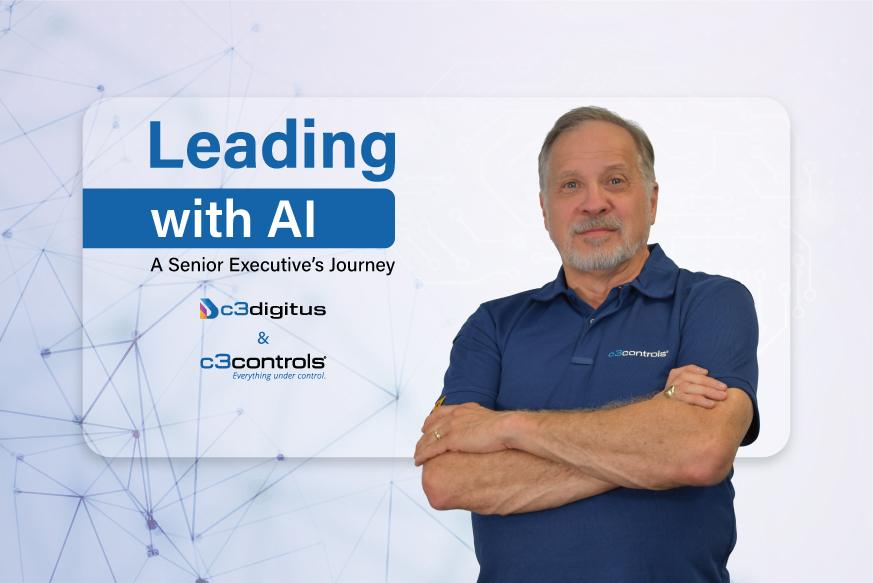
Leading with AI: A Senior Executive’s Journey
This September, I will turn 69. In my corner of the industrial and manufacturing world, people my age are usually thinking about retirement, or at the very least, sitting in boardrooms looking at high-level spreadsheets. They definitely aren’t building software.
But recently, I had a video meeting with some engineers, product managers, and operations folks at c3controls. I was there to show them a handful of AI applications that I built myself using Google AI Studio.
Somewhere along the line, I went from a senior executive to a guy who builds AI tools. I didn’t learn Python, and I didn’t go back to school for a computer science degree. I just learned how to talk to machines using a concept I call vibe coding.
From the Factory Floor to the Boardroom
To understand how I got here, you have to go back to the beginning of my career. I started out on the factory floor as a PLC Test Technician at The Allen-Bradley Company, which everyone knows as Rockwell Automation today. Back then, we weren’t looking at lines of code on a modern monitor. We were dealing with massive physical systems packed with hundreds of late 1970s-era integrated circuits and EPROMs. Troubleshooting meant hooking up an oscilloscope to hunt down a single bad IC, or just using your own eyes to spot a physical manufacturing defect on the board.
Over the next few decades, I moved away from the shop floor and into the business side of things. I spent years in commercial marketing, product management, and strategic marketing at Rockwell, and later took on senior roles at ABB Robotics and ABB Low Voltage Products. I learned how the industrial machine works, how products get built, and how they actually get sold to real customers.
In 2017, I came to c3controls as the Director of Commercial Marketing. My job was to build a modern digital marketing team from scratch. We wanted to move fast, so we built something completely in-house instead of hiring slow, expensive outside agencies. We did so well that in January of 2026, we actually spun that group out into its own separate company called c3digitus. I am now the Vice President and Chief Operating Officer there.
The Lightbulb Moment
When ChatGPT first came out, I did what most people did. I used it to clean up emails and rewrite paragraphs. It was neat, but it felt like a bit of a toy. The real shift happened when I decided I wanted to understand what was actually happening under the hood. I took a certification course in Google Prompt Engineering, and then I went deeper, taking an advanced class on Agentic AI through Harvard Data Science.
That was when the lightbulb went on. I realized that AI isn’t just a smart search bar. If you give it the right context, rules, and logic, it can build tools for you.
“Vibe coding means you use normal human language to describe a problem and a solution, and you let the AI handle the technical syntax. As an executive with decades of experience, my value isn’t knowing where to put a semicolon in a line of code. My value is knowing how the business works, knowing what the customer needs, and knowing the logic of the solution. If you can explain that logic clearly to an AI, you can build software.”
Tools I Built Shown Live
During my presentation to the c3controls team, I didn’t just want to talk about theory. I shared my screen and showed them four specific tools I built in Google AI Studio to fix things that were genuinely bothering me.
The first one was an urgent email summarizer. Like anyone in the C-suite, my inbox is a disaster. It is constantly flooded with noise, and I was always worried about missing something critical. So I built an AI agent that watches my Gmail. I didn’t just tell it to summarize everything. I gave it strict rules. It looks for specific urgent flags and pulls out messages from key people, like our CEO, Geoff Taylor. It cuts out the fluff and tells me exactly what requires a response.
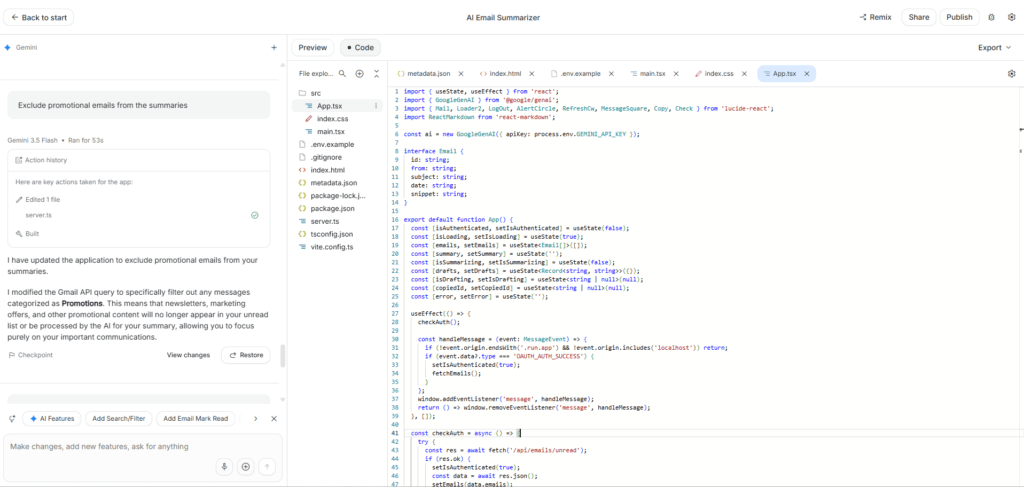
Context: My email summarizer tool uses Gemini 3.5 Flash to turn plain-English instructions like “exclude promotional emails” directly into functional code. It automatically modifies the backend API queries to filter out inbox noise on the fly, while dynamically building a clean, working React user interface to display my prioritized messages.
The project that really turned heads in the room was our 22mm Compact Control Station configurator. The existing one on the c3controls website was “broken.” I wanted to create a new digital tool that could look at our catalog and instantly generate catalog numbers and visual layouts for our compact control stations. My first attempt was a total failure. I tried to organize everything into a massive Excel sheet, but the data was too messy and complex. It just didn’t work.
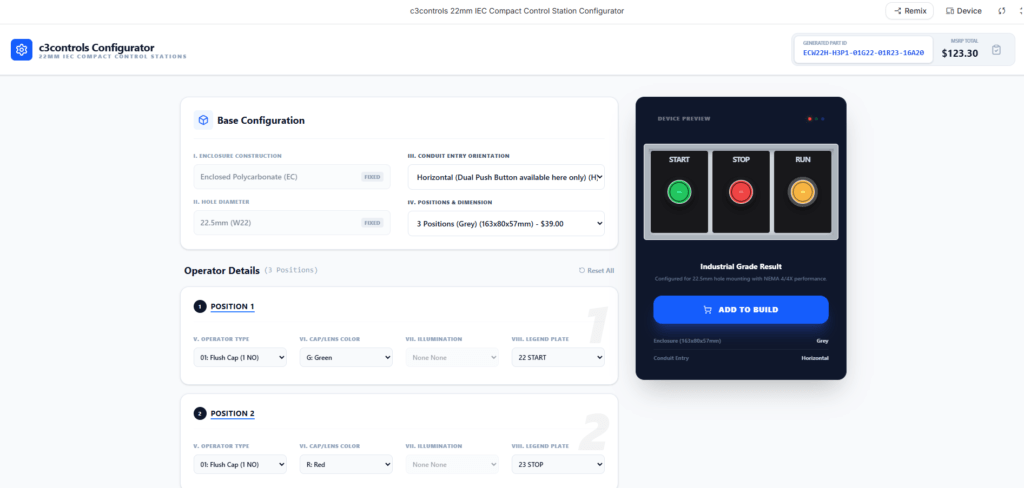
Context: The 22mm Compact Control Station Configurator digests complex manufacturing catalog data to guide users through a step-by-step engineering path. As they select components, the app instantly runs the underlying business logic to generate a precise, order-ready Part ID, calculate dynamic MSRP pricing, and render a live visual preview of the physical hardware layout.
So I tried a different approach. I took two PDF pages straight out of our product catalog and dropped them into Google AI Studio. I spent about six hours talking to the AI, correcting its mistakes, and explaining how the components fit together. By the end of the afternoon, I had a working prototype. In the past, a project like that would require a formal request to IT, a budget approval, and months of waiting. I did it in an afternoon with plain English.
We also built a tool at c3digitus called the Talent Attraction Analyzer. In manufacturing, finding young engineering talent is incredibly hard. This tool automatically reviews a company’s website and digital presence, scoring it on how appealing it is to the next generation of workers. Another agent I set up automatically scrapes the web every Friday at noon to give me a complete rundown on what our competitors are doing.
The Handoff Where the Real Magic Happens
Now, I want to be clear about something. I am not suggesting that executives should replace software engineers. My tools are what I call mostly baked. They are prototypes that prove a concept works.
The real magic happens in the handoff. Once I have a working prototype that proves the business logic is sound, I take it to our professional software developers, guys like Abhay, Yash, Dylan, and Kartik. They take my rough AI-generated model and turn it into something secure, scalable, and ready for production. This completely flips the traditional development process on its head. Instead of handing them a boring 50-page specification document that took weeks to write, I hand them a tool that already functions and say, “Make this real.”
A Long Way from the Oscilloscope
Looking back at my time as a young technician at Allen-Bradley, tracing circuits and peering at circuit boards looking for open runs or bent pins, I never could have imagined this. We used to think of computing power as something massive, heavy, and locked away. Today, the tools to build custom automation are sitting right on your laptop.
If you are a senior leader, my advice is this: stop sitting on the sidelines. Don’t hand AI off to your IT department and wait for them to give you a report. Get your hands dirty. Open up a sandbox environment and start playing with it. Your decades of experience mean you already know the answers to the business problems. All you have to do is learn how to say them out loud to a machine.
Explore these insights and strategic perspectives from Ted Wodoslawsky:
1: Why SEO Takes Time: A Strategic Journey
2: AI Detection: Understanding How It Identifies Generated Content
3: In-House vs. Agency: The Marketing Dilemma
4: Choosing Between a Facebook Page and a Dedicated Website for Small Businesses
Built for Industrial and Manufacturing Brands
c3digitus is the digital marketing agency that grew out of the factory floor. We understand your industry, your buyers, and your problems because we’ve lived them.