

An automotive supplier can spend hours filming a polished demonstration that earns views but produces no useful conversation. The problem is often not the camera or the editing. It is choosing a format without deciding what the viewer should do next.
For B2B brands, the practical answer is simple: use Reels to make a capability understandable to potential new audiences, and use Stories to help interested people evaluate, respond, or visit the right page. This is a format decision, not a promise that one type of post will always outperform the other.
Effective automotive industry social media marketing connects technical content to a buyer question. An engineer explaining an application, a controlled view of a production process, or a short customer-approved demonstration can help a relevant viewer decide whether to investigate further.
Within a B2B social media strategy, the format should follow the buyer task, not a trend. Instagram marketing can support awareness and evaluation, but it works best alongside a relevant technical page, a clear response path, and sales follow-up.
Instagram Reels vs Stories: The Difference That Changes the Plan
Instagram explains that different surfaces use different ranking signals. Reels can be recommended beyond accounts a person already follows. Stories are influenced more by viewing and interaction history, which makes them useful for continuing relationships with an existing audience. See Instagram’s explanation of how ranking works.
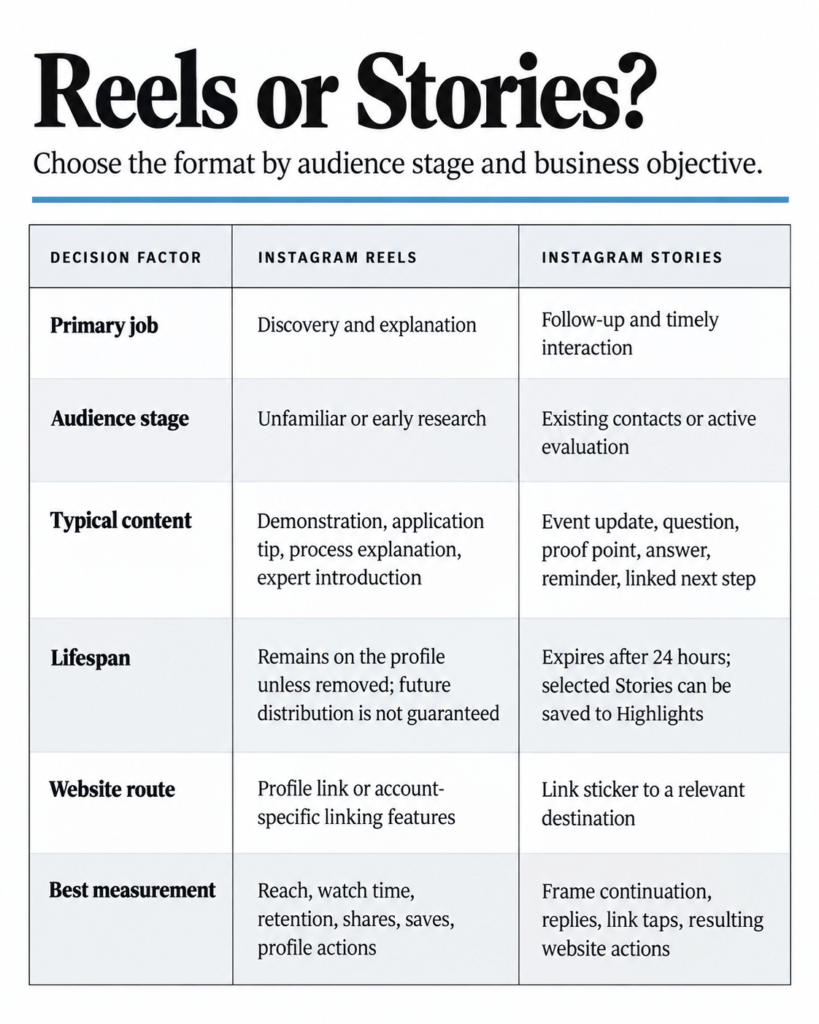
Instagram currently documents Reels of up to 20 minutes, while Reels longer than three minutes are not recommended to new audiences. Instagram also documents Story videos of up to 60 seconds as one clip. These are technical limits, not a reason to make every B2B video longer. Check the current Reels guidance and Stories guidance before production.
When Automotive and B2B Brands Should Use Reels
Choose a Reel when motion or a short explanation helps someone understand a capability without a sales call.
Good subjects include:
- A component operating in an approved demonstration assembly
- An engineer explaining how an application is evaluated
- A short comparison between two product options
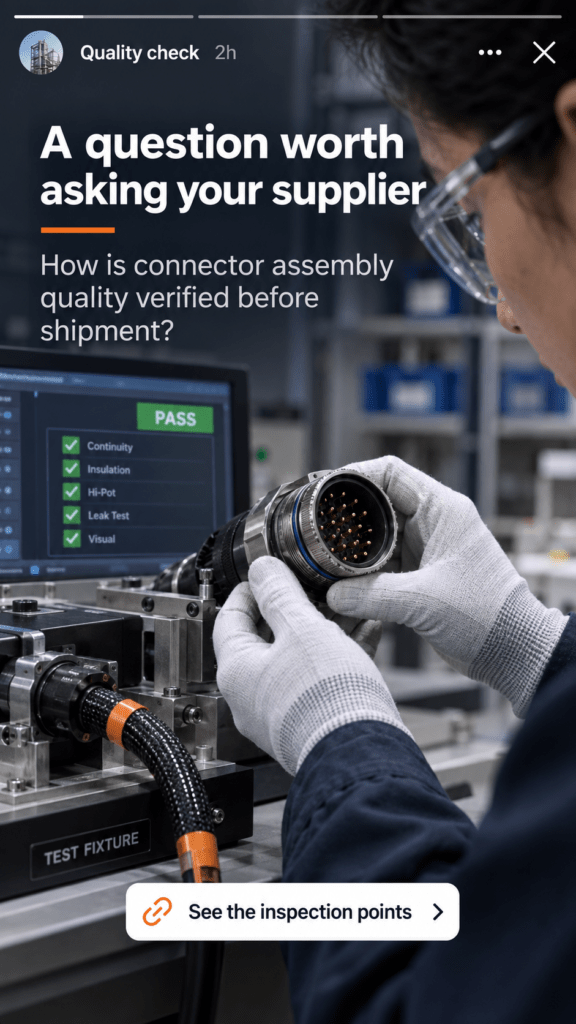
- A controlled view of inspection, testing, or assembly
- A technical employee answering a recurring buyer question
- A customer-approved result connected to a complete case study
Factory floor video content needs interpretation. A machine running proves that the machine is running. It does not, by itself, prove a certification, tolerance, delivery performance, or suitability for every application. Explain what the viewer is seeing and what the footage does not establish.
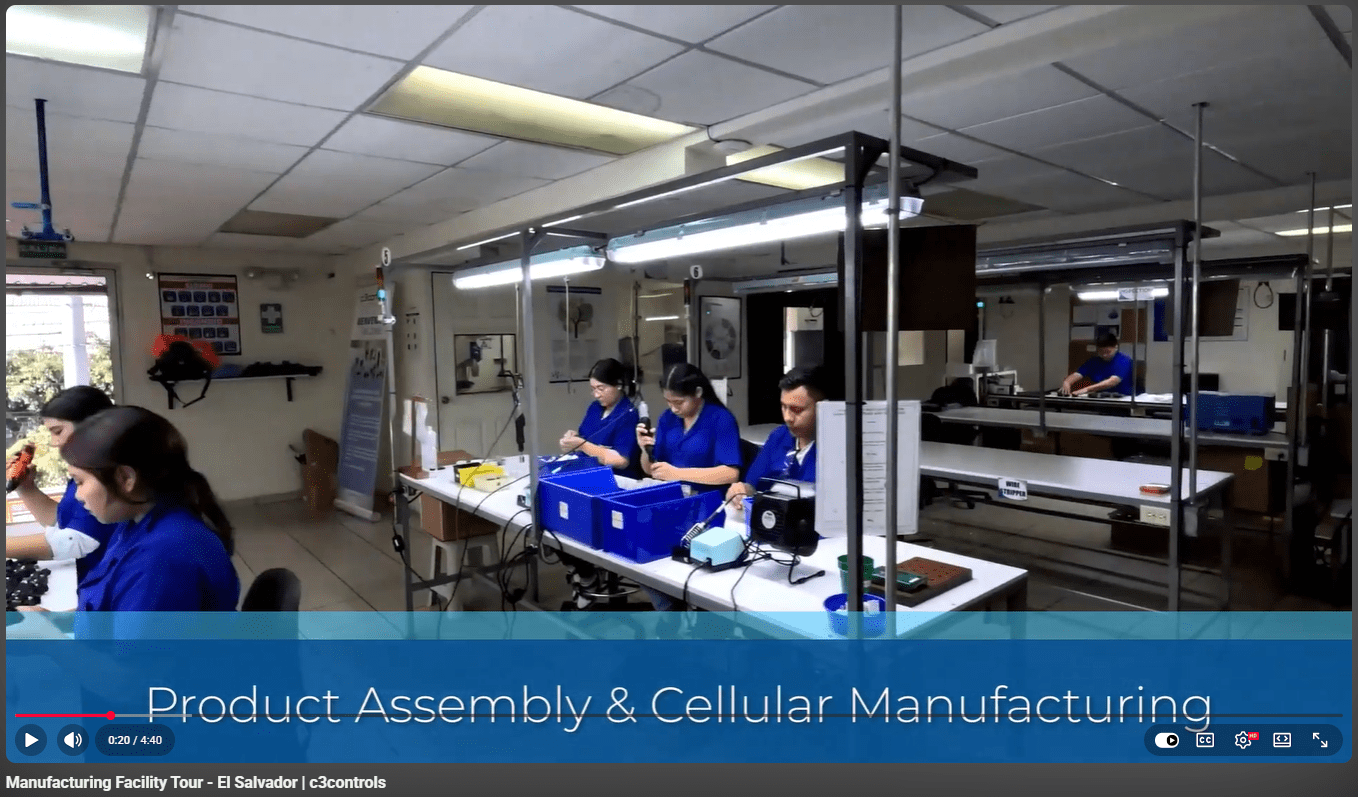
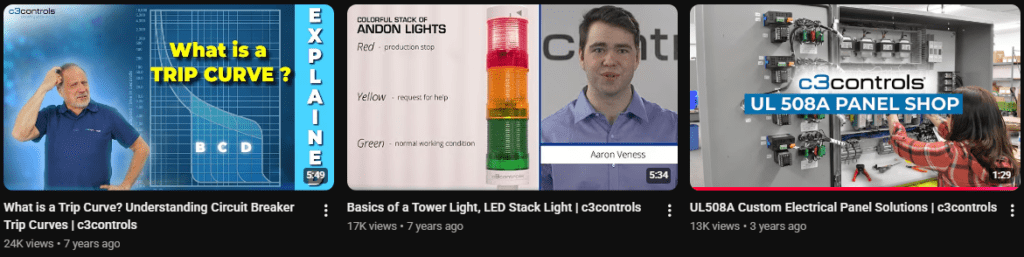
Use an opening such as “What we check before connector assemblies ship” instead of a general claim such as “Precision you can trust.” Specific language is easier for engineers, sourcing teams, and executives to evaluate.
Reels can also support recruitment by introducing skilled employees and technical roles. Keep the destination and measurement separate from demand-generation reporting. A careers application is not an RFQ.
When Industrial Companies Should Use Stories
Use Stories when the viewer benefits from an update, answer, or direct route to more information.
An industrial company can use a Story sequence to:
- Share a trade show demonstration time and meeting instructions
- Answer a product or application question
- Introduce the engineer attending an event
- Show an approved behind-the-scenes step
- Point distributors to an updated resource
- Connect a customer proof point to a detailed case study
- Remind an interested viewer about a consultation or technical download
Build each sequence around one task. A three-frame event sequence might show the demonstration, explain who should attend, and link to the meeting page. A product sequence might state the question, show the approved answer, and link to specifications.
Stories can include a link sticker. Instagram announced that link stickers were expanded to all accounts in its official announcement. Account features can change, so confirm the publishing options available to your team.
Do not send every viewer to the home page. Send a product viewer to the relevant product or application page, an event viewer to registration details, and a technical question to the resource or contact path that can answer it.
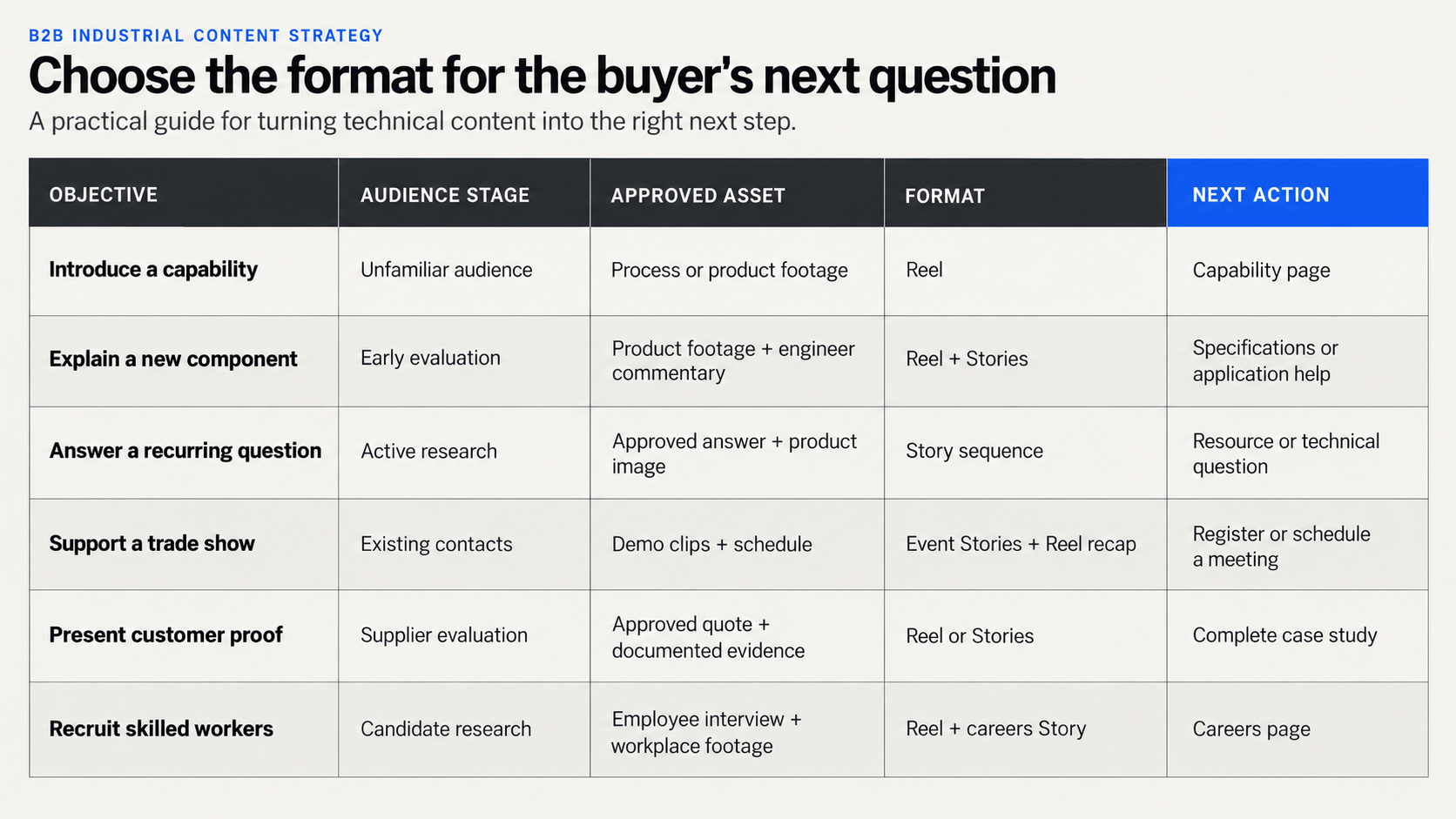
Decision Matrix: Which Format Fits the Job?
If the evidence shows that your buyers are not using Instagram for the decision you need to influence, start with choosing the right social media platforms for your target audience. Format optimization cannot correct a channel mismatch.
For a separate decision about Reels, carousels, and static posts, use c3digitus’ format comparison. For duration planning, see the short-form versus long-form video guide.
A Repeatable Workflow for an Automotive Supplier
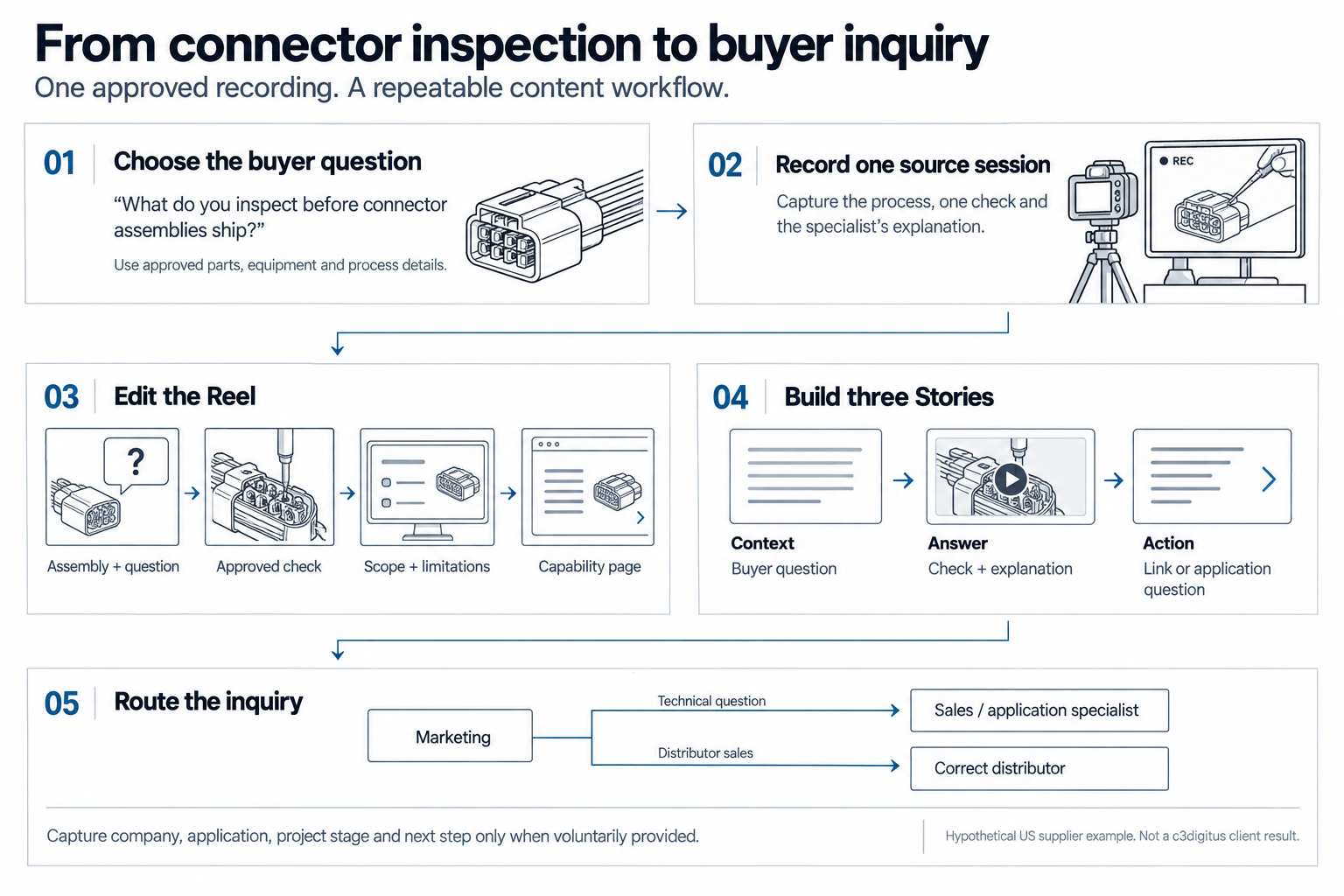
Hypothetical example: A US component supplier wants engineering and sourcing teams to understand one part of its connector inspection process. This example is illustrative and is not a c3digitus client result.
1. Select one buyer question
Start with a question sales or engineering hears often: “What do you inspect before connector assemblies ship?” Select only approved parts, equipment, screens, and process details.
2. Record one source session
Capture the process overview, one relevant check, and a short explanation from the responsible specialist. Marketing can later create a Reel, Story frames, a website clip, and a sales follow-up asset from the same approved material.
3. Edit the Reel for discovery
Use this storyboard:
- Opening: Show the assembly and state the inspection question.
- Demonstration: Show the approved check with readable labels.
- Explanation: Clarify what the check establishes and its limitations.
- Next step: Direct viewers to the relevant capability or application page.
4. Build the supporting Stories
Use three frames:
- Context: “Evaluating a connector assembly supplier? Here is one inspection question to ask.”
- Answer: Show the check and the engineer’s approved explanation.
- Action: Link to the inspection capability page or invite a specific application question.
5. Route the response
Marketing can handle the initial response and send technical questions to sales or an application specialist. Capture company, application, project stage, and requested next step only when the person chooses to provide them. If the supplier sells through distributors, route the inquiry to the correct partner rather than promising a direct quote.
Production Checks for Technical Credibility
Social media content creation for technical industries needs a defined review process.
Treat content creation for social media as a source-to-asset system. One approved recording can become a Reel, Story sequence, website clip, sales email, and distributor asset, with each version assigned a different job.
- Format: Produce a vertical 9:16 master and preview it in both Reels and Stories so interface elements do not cover labels or CTAs.
- Clarity: Add captions and readable on-screen labels. Review automated captions for product names, units, and technical terms.
- Audio: Prioritize intelligible speech. Business accounts may have restrictions on music-library access; review Instagram’s licensed-music guidance.
- Confidentiality: Check backgrounds for drawings, screens, serial numbers, work orders, prototypes, and unreleased products.
- Approval: Assign marketing, technical, and customer or legal reviewers where disclosure requires permission.
- Evidence: Keep claims within documented specifications, certifications, test conditions, and approved customer language.
One approved recording session can support repeatable video production for manufacturing social media. Reusing source footage is efficient; publishing the same edit everywhere without adapting the message is not a strategy.
Measure Qualified Progress, Not Only the Instagram Engagement Rate
An Instagram engagement rate can show that people interacted. It cannot confirm that the people were relevant buyers or that an opportunity was created.
Use social media engagement as a diagnostic, not the commercial outcome. If a post earns attention but no relevant questions, profile actions, resource views, or sales conversations, review the audience, message, proof, and destination. For a troubleshooting framework, see why Instagram posts may not be performing well.
Measurement layer | Track | Business question |
|---|---|---|
Attention | Reach, follower versus non-follower reach where available, watch time, retention | Did the explanation earn attention? |
Useful response | Substantive questions, target-account interactions, saves, shares, and replies | Did the content help the right audience? |
Next action | Profile actions, Story link taps, tagged website visits, and resource views | Did viewers move to a relevant destination? |
Commercial outcome | Qualified inquiries, sales-accepted opportunities, and documented assisted influence | Did the activity support a buying conversation? |
Instagram’s Reels insights documentation includes watch time and viewers. Views can include replays, so do not treat views as unique people or use average watch time as a perfect completion rate.
Use separate reporting for organic social, paid social, and employee advocacy. A promoted Story and an organic Reel do not provide a clean format comparison. Employee participation should add useful expertise and remain voluntary.
For website links, use consistent campaign parameters such as utm_source=instagram, utm_medium=social, and utm_campaign=connector_inspection. Use utm_content=story_inspection_cta for the Story link and utm_content=profile_inspection for a profile route. Google explains these fields in its campaign URL guidance.
UTM data will not capture every forwarded link, later branded search, phone call, or sales conversation. Review social activity with CRM and sales feedback across the actual B2B buying cycle.
What Public B2B Examples Can and Cannot Prove
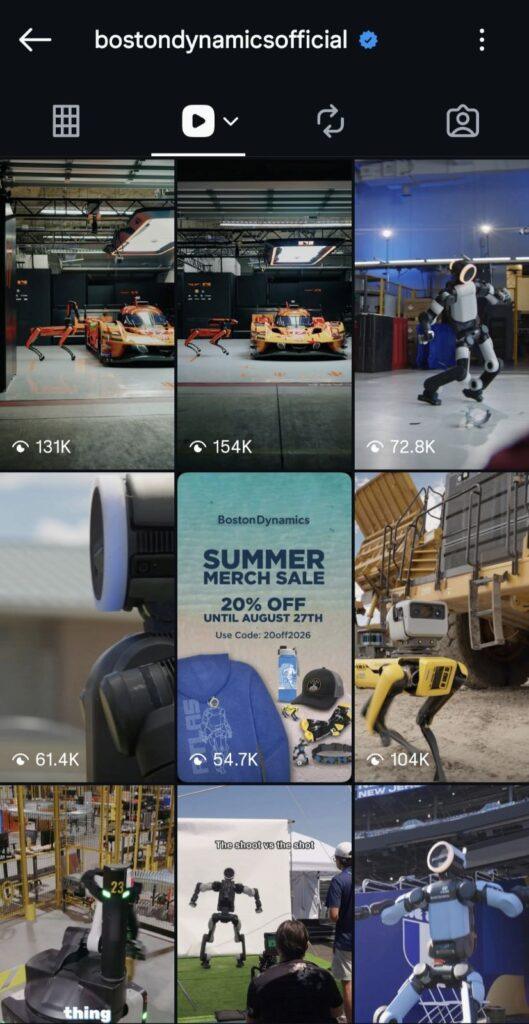
Public industrial accounts such as Bosch Rexroth and Schaeffler provide useful qualitative examples of technical demonstrations, employee stories, and event content. Their public profiles can illustrate subject and format choices.
They do not disclose the full audience mix, paid distribution, Story retention, link taps, or qualified pipeline. Therefore, public examples support creative direction, not a claim that Reels or Stories generated a particular result. Use your own approved account data to make performance decisions.