

If you've been using AI tools like ChatGPT, Jasper, or Claude to create blog content, you've probably asked yourself this question:
“Is Google going to penalize my website for using AI-generated content?”
It's a fair concern.
Ever since AI writing tools exploded in popularity, SEO forums have been filled with debates. Some people say AI content is dangerous. Others say it's the future of content marketing.
So what's the truth?
Let me break it down in simple terms.
Google does not penalize AI-generated content just because it's written by AI.
What Google penalizes is low-quality content.
And honestly, that's always been the case.
Let's unpack what that actually means and how you can use AI content without hurting your rankings.
The Big Question: Does Google Penalize AI-Generated Content?
AI tools are everywhere now.
From bloggers to SaaS companies to media publications, AI-assisted writing is quickly becoming part of everyday workflows.
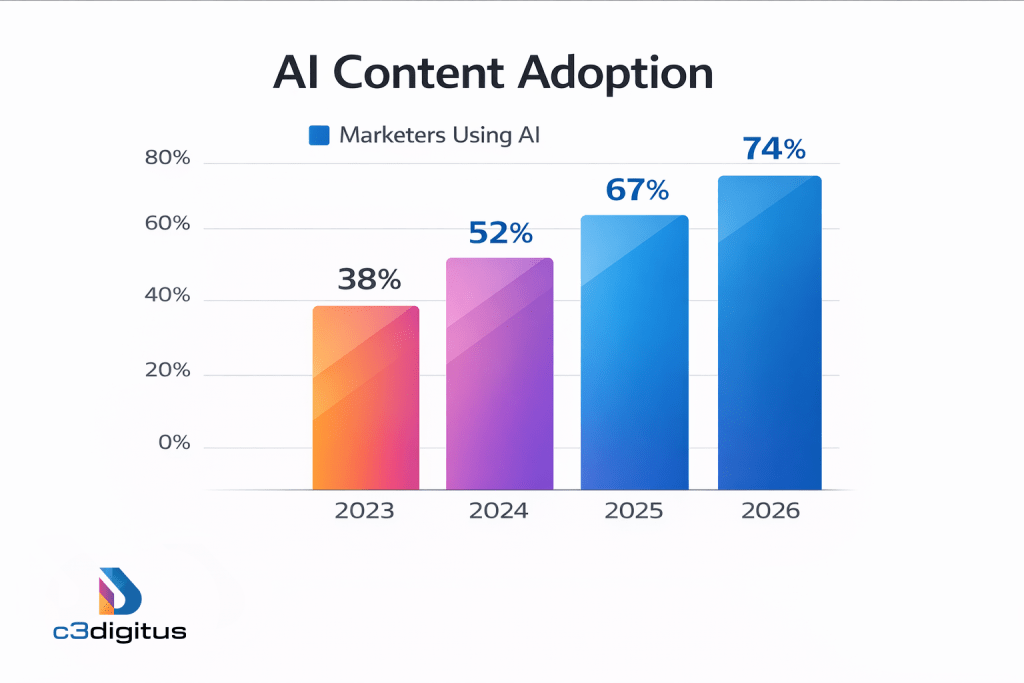
In fact, 67% of marketers reported using AI to help produce content in 2025 (Source: HubSpot AI Marketing Report 2025).
So naturally, people worry about Google's stance.
Why This Question Is Everywhere Right Now
Two things happened recently:
- AI writing tools became insanely powerful.
- Google rolled out multiple Helpful Content updates.
When those two trends collided, marketers started asking:
“Will Google start banning AI content?”The short answer: No.
Google's Official Position on AI Content
Google has addressed this directly.
Their stance is simple:
Content quality matters more than how the content is created.
If your content helps users, it can rank.
If it doesn't help users, it won't rank.
Google’s Search Central documentation even states that automation—including AI—has been used in publishing for years.
What they care about is helpfulness, originality, and expertise.
AI Content vs Spam Content
Here's where people get confused.
Some websites use AI responsibly.
Others generate 10,000 articles overnight with zero editing.
Guess which ones lose rankings?
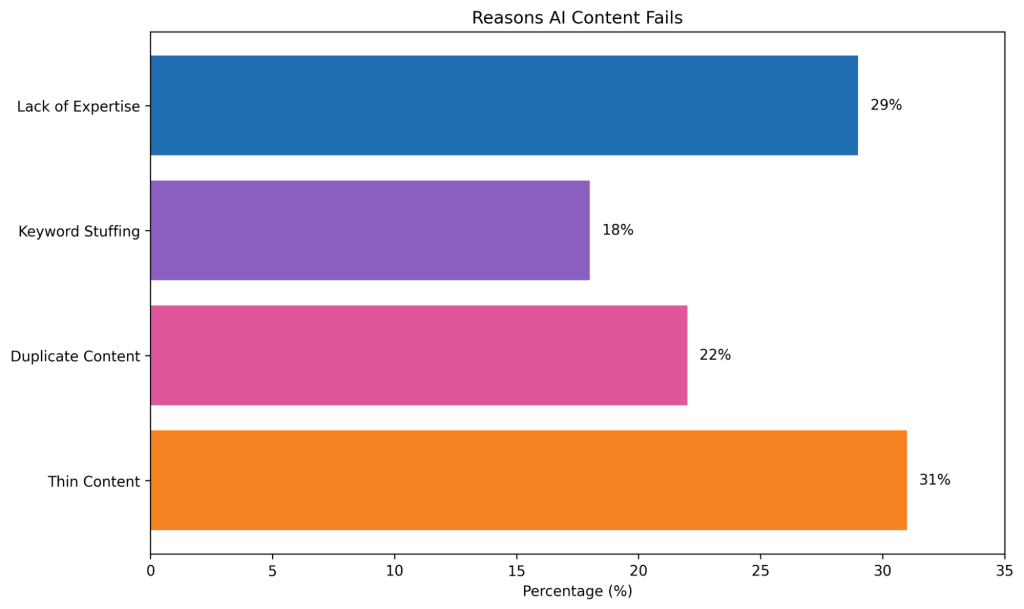
Spam signals include:
- Keyword stuffing
- Thin content
- Automated mass publishing
- Duplicate content
The problem isn't AI.
The problem is lazy publishing.
What the Data Shows
SEO research from Ahrefs and Semrush shows something interesting.
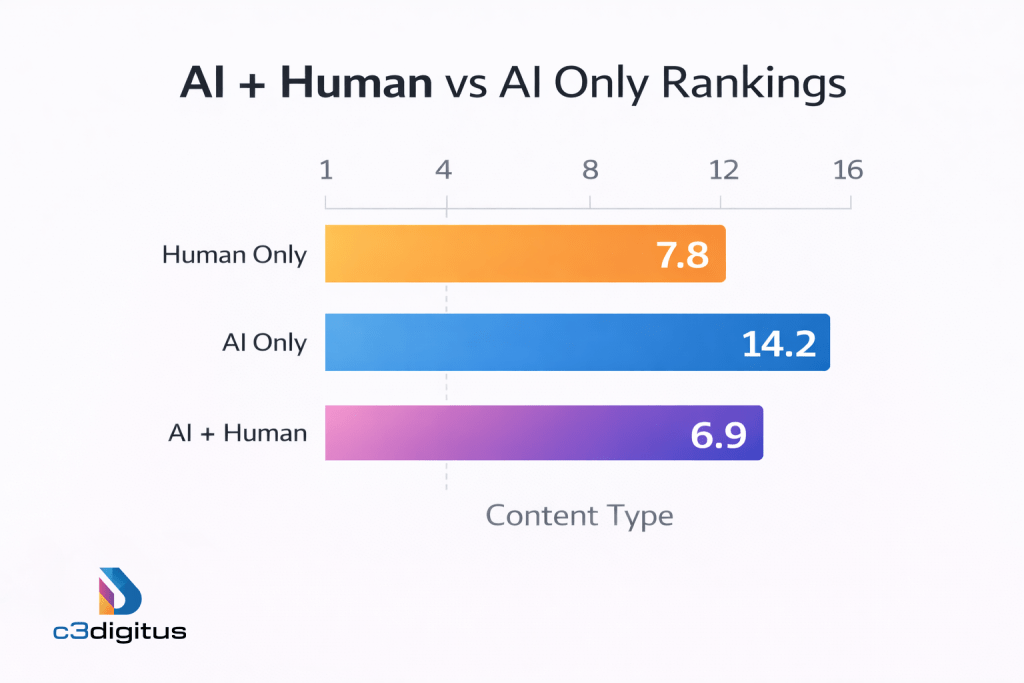
Websites using AI-assisted workflows with human editing perform similarly to human-written content.
And in some cases, they perform better.
Why?
Because AI helps marketers produce more helpful content faster.
But there's still a catch.
AI content can hurt your rankings if you use it the wrong way.
When AI-generated content can hurt your rankings
Let's be honest.
AI makes it easy to create content quickly.
Too easy.
And that's where people make mistakes.
Low-Quality Mass Content Production
Some sites publish hundreds of AI articles per week.
No editing.
No expertise.
Just raw output.
Google’s Helpful Content System can detect this pattern.
Think of it like a restaurant.
If the kitchen starts serving frozen microwave meals instead of fresh food, customers notice.
Google notices, too.
Lack of E-E-A-T Signals
Google evaluates content using E-E-A-T:
- Experience
- Expertise
- Authority
- Trust
AI struggles with real-world experience. For example, a medical article written by AI with no doctor review looks weak. This creates a paradox of perfection where AI-generated content might be grammatically flawless but lack the human authority needed to rank.
Keyword-Stuffed AI Articles
Some marketers prompt AI like this:
"Write an article using the keyword 30 times."
Bad idea.
Google's spam updates target unnatural keyword patterns.
AI can easily produce robotic text if the prompts are poorly written.
Duplicate and Rewritten Content
Another risky tactic is AI paraphrasing existing articles.
Search engines can detect semantic similarity.
And duplicate content rarely ranks.
According to a 2025 Originality.ai audit of 500,000 AI pages, about 31% showed thin-content signals.
That doesn't mean AI is bad.
It means AI without a strategy is bad.
The Real Advantage of AI-Generated Content for SEO
Now let's flip the perspective.
Used correctly, AI can actually improve your SEO performance.
Here's why.
Faster Content Production
AI drastically reduces research time. What used to take 6 hours might now take 90 minutes. This allows teams to build topical authority faster. And topical authority is one of the strongest ranking signals today. If you are looking to scale your brand's presence, a robust content marketing strategy can help you leverage these tools effectively.
Better Content Ideation
AI tools are fantastic for brainstorming:
- Blog topics
- Keyword clusters
- Content outlines
Instead of staring at a blank page, you start with a strong framework.
Content Refreshing at Scale
Old content kills SEO performance.
But updating hundreds of articles manually takes forever.
AI can help update:
- statistics
- examples
- explanations
- headings
This improves freshness signals.
Data-Driven Content Optimization
AI tools can also analyze search intent patterns.
This helps you identify:
- missing subtopics
- competitor content gaps
- questions users ask
According to the Content Marketing Institute 2025 Report, companies using AI-assisted workflows publish 2.3x more content on average.
And more high-quality content usually equals more organic traffic.
But here's the important part.
Publishing more content isn't enough.
Google's algorithm looks deeper.
How Google's Algorithms Actually Detect Low-Quality AI Content?
Many people assume Google has an AI detector.
That's not exactly how it works.
Google focuses on quality signals, not AI detection.
Let's break down the most important ones.
Helpful Content System
This system evaluates whether content is created for people or for search engines.
If your content exists purely to manipulate rankings, the algorithm notices.
Signs include:
- generic answers
- shallow explanations
- repetitive topics
E-E-A-T Signals
Google checks whether the content demonstrates expertise.
This includes:
- author bios
- references
- original insights
- real-world examples
Think of E-E-A-T like a professional license.
If you claim expertise but provide no proof, trust drops.
Natural Language Patterns
Contrary to popular belief, Google isn't scanning for AI fingerprints. Instead, it measures readability and value.
However, for those interested in the technical side, it is worth understanding how AI is used to detect AI-written content by third-party tools to ensure your drafts don't sound overly robotic.
User Engagement Signals
Google watches how users interact with your content.
Important signals include:
- time on page
- scroll depth
- return visits
- pogo sticking
If people quickly leave your page, rankings drop.
Technical SEO Signals
AI content still needs strong SEO foundations.
That means:
- internal linking
- schema markup
- topic clusters
- structured headings
As Rand Fishkin once said:
“Google doesn't care if humans or machines write content. It cares whether users find it valuable.”
And that's the key takeaway.
The Future of AI-Generated Content in SEO
AI is not going away.
If anything, it's becoming core infrastructure for marketing.
Here are a few trends shaping the future.
Google's AI-Powered Search
Google's Search Generative Experience is reshaping how information appears in search.
This means content must be:
- authoritative
- structured
- trustworthy
Thin content will disappear faster than ever.
Hybrid Human + AI Workflows
The winning model is clear.
AI handles:
- research
- structure
- drafts
Humans handle:
- insights
- storytelling
- expertise
Content Authenticity Signals
Expect stronger emphasis on:
- author profiles
- expert credentials
- original research
Authenticity will become a ranking advantage.
As I often say:
“AI doesn't replace marketers. It replaces bad marketers.”
Conclusion — Should You Use AI Content?
Let's wrap this up.
Google does not penalize AI-generated content.
But it absolutely penalizes bad content.
So the smart approach is simple.
Use AI for:
- outlines
- research
- drafts
Then add:
- expertise
- real examples
- data
- insights
This hybrid strategy gives you speed and quality.
And that's the formula for winning SEO in 2026.
Frequently Asked Questions (FAQs)
Does Google penalize AI-generated content?
No. Google does not penalize content for being AI-written. According to Google's Search Central documentation, what matters is whether content is helpful, original, and demonstrates expertise — not the method of production. AI content that genuinely serves users can rank as well as human-written content.
How does Google detect AI-generated content?
No. AI content becomes bad for SEO only when it is low-quality, duplicated, or created purely for rankings. High-quality AI-assisted content with human editing can perform very well in search results.
Can AI content rank on Google?
Google does not use a direct AI detector. Instead, it evaluates quality signals: helpfulness, originality, E-E-A-T indicators, user engagement metrics (time-on-page, pogo-sticking), and whether content was created primarily for people or to manipulate rankings. A page can fail these signals regardless of whether a human or AI wrote it.
Should I disclose AI-generated content?
It's not required, but transparency can improve trust. Many websites disclose AI-assisted writing combined with human editing to maintain credibility.
How should marketers use AI for SEO?
The best workflow includes:
AI for research and outlines
Writers for structure and storytelling
Experts for insights and validation
This hybrid model produces the strongest content.
Will Google ban AI content in the future?
Very unlikely. AI is already integrated into many publishing workflows. Instead of banning it, Google will continue focusing on content usefulness and expertise signals.