TLDR:
The generative AI tools market hit $43.6B in industrial AI alone in 2024. There are 4,000+ tools. Most lists recycle 8 of them.
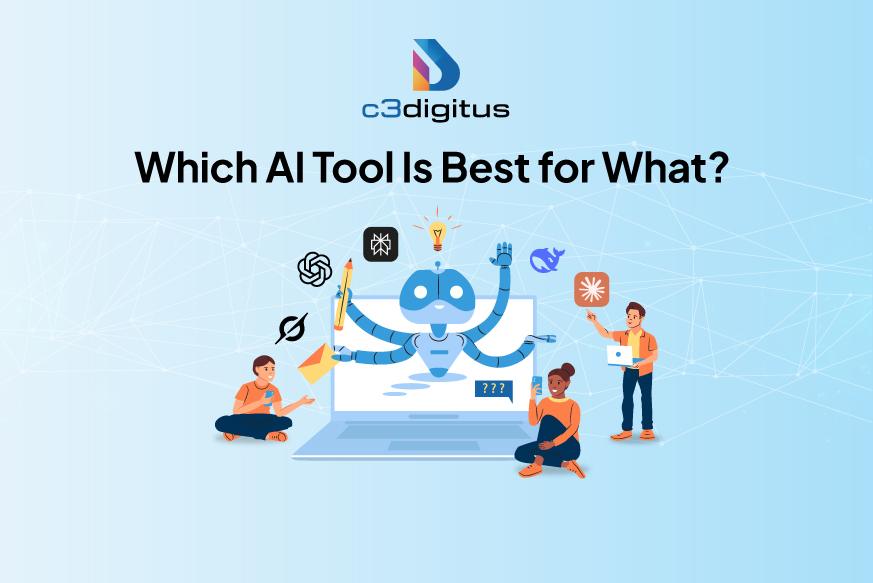
Here’s what actually matters by job:
| Task | Best Tool Right Now |
|---|---|
| General writing & reasoning | Claude |
| All-purpose/versatile | ChatGPT |
| Research with citations | Perplexity AI |
| Real-time information | Grok |
| Google ecosystem + huge docs | Gemini |
| AI video creation | Runway ML + Opus Clip |
| AI voice | ElevenLabs |
| Images with readable text | Ideogram |
| Pro vector images | Recraft V3 |
| B2B prospecting | Clay |
| Workflow automation | Gumloop |
| Meeting notes | Fathom or Granola |
| Industrial predictive maintenance | Siemens AI / IBM Maximo |
| Manufacturing content gap | Claude + Perplexity |
| Budget coding | DeepSeek |
| Full codebase AI IDE | Cursor |
Worth paying for? Claude Pro or ChatGPT Plus (~$20/month) for most people. Cursor for developers. Perplexity Pro for researchers.
Most underrated tools nobody talks about: Napkin.ai, NotebookLM, Goblin Tools, Gumloop, AudioPen, Recraft V3, Wispr Flow.
Most environmentally responsible AI companies: Ecosia, Google DeepMind, Hugging Face, Crusoe.
The one thing AI cannot do: Think for you. Your domain knowledge is still the only thing that separates useful output from confident nonsense.
If you’re looking for an honest generative AI tools list, one that actually tells you which gen AI platform does what, which is worth paying for, and which ones quietly outperform the famous ones, you’re in the right place. This is a full AI platform comparison built around tasks, not hype: the best AI to use right now for manufacturing, content creation, marketing, coding, video, writing, and daily productivity.
PART 1 AI for the People Who Build the Real World
Manufacturers, Industrial Suppliers, and B2B Companies
Let’s start here because this is where the gap between “AI hype” and “AI that actually does something” is widest.
The global industrial AI market hit $43.6 billion in 2024 and is projected to reach $153.9 billion by 2030. Manufacturers deploying AI are cutting unplanned downtime by 47% and achieving 95–99% defect detection accuracy versus 60–80% for manual inspection. Those aren’t demo numbers, as they’re from deployed facilities.
Here’s the honest problem: only 29% of manufacturers have deployed AI/ML at the facility level, and just 24% have deployed generative AI at scale. The gap isn’t the technology. It’s deployment strategy. Most vendors sell you an “AI platform” when what you actually need is a specific, high-ROI use case with a clear payback timeline.
QUALITY CONTROL & VISUAL INSPECTION
AI Computer Vision
Best tools: Mech-Mind Robotics / NVIDIA Metropolis / AWS SageMaker
AI computer vision inspects every unit on a production line at full throughput, classifying defects in milliseconds. Unlike rule-based machine vision, deep-learning models improve continuously. The accuracy gap is real: AI achieves 97–99% detection, compared with 70–80% for manual sampling.
General-purpose AI like ChatGPT or Claude cannot do this. You need purpose-built computer vision infrastructure. Don’t let a generic chatbot convince you otherwise.
PREDICTIVE MAINTENANCE
Industrial Predictive AI
Best tools: IBM Maximo AI / GE Vernova Proficy / Siemens Industrial AI
Siemens has implemented AI-driven predictive maintenance across its manufacturing facilities, analyzing sensor data to predict failures before they occur, reducing downtime and maintenance costs.
If you’re a mid-sized manufacturer still scheduling maintenance on a calendar instead of data signals, this is the highest-ROI AI investment available to you right now.
DIGITAL TWINS & PRODUCTION SIMULATION
Factory Simulation AI
Best tools: NVIDIA Omniverse / Dassault Systèmes 3DEXPERIENCE / Kongsberg Kognitwin
Before spending millions building out a new production line, you can run it as a digital twin first. AI-powered simulations let you test thousands of production scenarios in hours. Companies have identified $600,000+ in equipment configuration mistakes before a single bolt was turned.
Dassault Systèmes demonstrates how virtual twin experiences built on physical AI libraries enable software-defined production that adapts before problems reach the floor.
SUPPLY CHAIN INTELLIGENCE
Supply Chain AI
Best tools: Vessel Scale / o3 (OpenAI) / Custom LLM Agents on AWS
The highest-value supply chain tools provide real-time visibility into supplier networks, geopolitical risks, and material availability, all unified.
For US manufacturers dealing with volatile input costs in 2026, AI-driven procurement optimization isn’t a nice-to-have. It’s margin recovery.
B2B MARKETING CONTENT: THE OVERLOOKED GAP THAT’S COSTING YOU
Generative AI for B2B Content
Best tools: Claude + Perplexity + Custom Workflow
Most manufacturers publish full marketing content on only 30–50% of their SKUs. The other half lives buried in PIM/ERP systems and never reaches the marketing surface,e no organic traffic, no AI-search answer cards, no distributor-channel conversion. That is a catastrophic, silent content gap. And it’s exactly what generative AI can fix.
Claude handles long-form technical writing better than any mainstream model. It doesn’t pad, it doesn’t hallucinate spec details, and it holds complex product context across a long document. For translating engineering specs into readable, rankable marketing copy, it’s the strongest tool available.
Perplexity is non-negotiable for research. Every claim cites a real source. When you’re making assertions on a spec sheet or a technical blog post, accuracy matters more than speed.
The honest caveat: knowing which tool to use is only half the game. Knowing what to say, who to say it to, and how to differentiate in a market where every competitor now has the same tools, that’s strategy, not software.
PART 2 AI for Everyone Else Creators, Marketers, Builders
AI Platform Comparison: Who Actually Does What
People ask, “Is any AI better than ChatGPT?” all the time. The honest answer: it depends entirely on the task. Here’s a direct comparison of the top AI assistants in 2026, the best AI programs for general use, each with a clear lane.
Best for: General versatility | Best for: Writing quality & reasoning |
| Most versatile. Most plugins. Most tested. The benchmark against which everything is measured. Best for brainstorming, business writing, research drafts, and multi-step reasoning. The best all-in-one AI platform for most people starting. | The best ChatGPT alternative for long-form writing and nuanced reasoning. Least likely to give you hollow, filler-heavy output. For B2B and professional work, most people who try it don’t go back. |
Best for: Google ecosystem & large docs Largest context window of any mainstream model (2M tokens). Tight integration with Gmail, Docs, and Sheets. Default formatting is skimmable and clean. | Best for: Real-time information Unique X (Twitter) data integration. Best for tracking live market sentiment, breaking industry news, and anything where right now matters more than depth. |
Best for: Research with citations Not a chatbot, a research engine that explains itself. Every response links to real sources. One of the most accurate AI assistants available for fact-sensitive work. | Best for: Budget coding tasks Cheapest serious option for coding and technical tasks. Slower. Worth using if the budget is tight. One of the better free generative AI programs if you can trade speed for cost. |
Which AI is worth paying for? Claude Pro and ChatGPT Plus are both around $20/month and worth it for daily professional use. Claude Code Max ($100/month) is for developers living in the terminal. Perplexity Pro adds multi-model search.
The best AI subscription is the one built around your actual workflow. Any honest generative AI software comparison ends with the same caveat: the tool is only as good as the thinking behind how you use it.
The Underrated Generative AI Tools Nobody Puts on Their List
These are the gen AI programs that travel person to person, not banner to banner. The people who use them tend to guard them like a cheat code. No sponsorships. No affiliate links. Just tools that earn their place.| Napkin.aiTurn text into professional visuals instantlyPaste any text, a strategy doc, a product overview, or a process explanation, and Napkin generates professional diagrams, flowcharts, and infographics automatically. Not templates. Actual structured visuals built from your content. It reads the hierarchy, picks the right format, and gives you six options in seconds. Exportable to PNG, SVG, PDF, and directly to PowerPoint. The free tier is genuinely functional. |
| NotebookLM (Google)Think with your own documentsUpload PDFs, reports, research papers, and transcripts. NotebookLM answers questions, generates summaries, and synthesizes across sources with citations pointing back to exactly where in your documents the answer came from. Zero hallucinations, because it has no information beyond what you’ve given it. Free with a Google account. For manufacturers: upload your technical docs, competitor spec sheets, and customer feedback. Ask it questions across all of them simultaneously. |
| GumloopAI-native workflow automation without codeZapier handles automation. Gumloop goes further; it’s an AI-native drag-and-drop workflow building where the nodes themselves are AI-powered. Used by teams at Shopify, Instacart, and Webflow, quietly. One marketing agency automated its entire lead scoring process and saved 40+ hours per month at $1.62 per automated run. |
| ClayB2B sales prospecting that doesn’t feel like spamClay pulls data from LinkedIn, Crunchbase, and dozens of other sources, then uses AI to draft hyper-personalized outreach emails for each prospect. You set the filters; it handles the research, list-building, and first draft. It can detect website visitors, qualify them automatically, and trigger outreach within minutes. |
| Goblin ToolsTask breakdown for overwhelmed humansBreaks down vague goals into granular, timed, actionable steps. Rewrites messages to match your intended tone. Estimates realistic time frames. Completely free. No ads, no paywalls. One user described it as “helps me exist as a functional human.” That’s not marketing copy, that’s a real quote that spread because it’s true. |
| IdeogramAI image generation where text actually renders correctlyEvery other image-generation model renders text within images as gibberish. Ideogram doesn’t. It’s the go-to for social media graphics, poster design, thumbnail text, and product mockups, anything where you need readable words inside a visual. Free daily generation limits. |
| Recraft V3AI image generation → real SVG vectorsThe only AI image generation tool that produces real SVG vectors, exportable directly to Illustrator, Figma, or print in CMYK. Midjourney and DALL-E cannot do this. If you’re a designer who needs AI-generated assets that aren’t rasterized PNGs and you can’t resize without destroying them, this is currently your only option. |
| AudioPenVoice-to-structured thoughtYou speak into it loosely, the way you’d think out loud. It cleans up the rambling, organizes the ideas, and turns your voice memo into structured, readable notes. Not transcription transformation. For people who think better out loud than they type. |
| Wispr FlowHands-free drafting everywhereReal-time, cross-application voice dictation that works inside whatever app you’re already in:n Email, Notion, Slack, Google Docs. You speak, it writes. Quietly saves an hour a day for people who commit to it. |
| Suno & AIVAOriginal music without production skillsSuno generates full songs with vocals and instrumentation from a text prompt. AIVA is the composition-oriented alternative to cinematic scores and background instrumentals for games, films, and ads. If you need music and you’re still using stock tracks, there’s no reason to. |
| GensparkAutonomous research that actually goes somewhereOrchestrates multiple specialized AI agents to handle a research assignment, end-to-end web search, data analysis, presentation generation, spreadsheet creation, and full reports. Also has a “Call For Me” function that makes phone calls using a realistic AI voice for business inquiries. |
| BardeenEliminate the boring browser workChrome extension that automates repetitive tasks across web apps, copying data between tools, updating CRMs, and sending follow-ups. The kind of thing you do a hundred times a week and never think to automate. Bardeen makes it two clicks. |
For YouTube Creators: How to Use AI to Make Videos
People search “how to create AI videos,” “how to make AI videos for free,” and “what AI do people use to make videos,” and they get listicles that never explain the workflow. Here’s the actual stack.Starting a YouTube channel in 2026 sounds easy because the AI-powered video editing tools work. That’s exactly the problem: everyone has access to the same tools, which means tools alone won’t make you stand out.| Scripts | Claude for voice and quality. ChatGPT for volume and iteration. Both are top AI writing tools for creators who need to produce consistently. |
| Long → Short clips | Opus Clip. Feed it for 20 minutes and get 8–10 clip candidates with auto-captions. Creators report saving ~3 hours per long-form video. One of the best AI video generators for repurposing. |
| Captions | Submagic when quality matters. Opus Clip’s captions are fine; Submagic is polished. |
| Voice-over | ElevenLabs. Best AI for realistic voice generation and voice cloning. Noticeably ahead of alternatives. |
| Video creation | Runway ML. Best for cinematic generation and AI-powered video editing tools. If you want to learn how to use AI to create videos from scratch, this is where serious creators start. |
| Screen recording | Tight. studio. Auto-adds captions, voiceovers, and zoom punches. Good for demos and explainers. |
| Thumbnails | Midjourney for the concept image. Pair it with your face in Canva. |
For Social Media & Marketing: Best AI Writing Tools and More
| Writing copy | Claude or ChatGPT. Claude writes less generically; ChatGPT handles volume. For how to use AI for writing at scale without it reading like a robot: use AI for the draft, use your brain for the edit. Every time. |
| Images | Midjourney (quality), Canva AI (speed), Adobe Firefly (brand-safe, commercially licensed). |
| Text inside images | Ideogram. No other AI image generator does this reliably. |
| Workflow & scheduling | Zapier AI / Make / n8n. n8n is open-source and powerful. Make is fast and visual. Zapier is the most connected. |
| Presentations | Gamma. Turns notes into full branded decks in minutes. Not a template, a designed document built from your content. |
| AI image detection | AI or Not / Hive Moderation. Best AI image detector and AI art checker tools. Catch AI-generated patterns human eyes miss. |
| AI search optimization | Surfer SEO + Claude. Among the most effective AI search optimization tools for businesses. Surfer for structure, Claude for voice. |
| Brand campaigns | Jasper. Better than general LLMs for maintaining a consistent voice across a team of writers. |
For Coding & Development
| Full project work | Cursor. Best AI-native IDE. Works across your entire codebase. Developers who switch rarely go back. |
| Terminal coding | Claude Code. Strong context-handling for complex debugging and reasoning through technical problems. |
| IDE autocomplete | GitHub Copilot. Best for real-time suggestions without switching environments. |
| Enterprise/compliance | Windsurf (formerly Codeium). FedRAMP compliant, on-premise deployment, 40+ IDE plugins. |
For Task Management & Productivity: AI in Daily Life That Actually Works
People searching “how can AI help me” or “what do people use AI for” usually get theoretical answers. Here are the AI tools people actually use every day, real examples of AI in everyday life that save real time.| Meeting notes | Fathom or Granola. Neither drops a bot into your call. Both give you transcripts and action items. Fathom is more polished; Granola is lighter. |
| Document research | NotebookLM. Upload, ask, get cited answers from your own docs. Still the best thing in this category. |
| Calendar & tasks | Motion or Reclaim. Both auto-schedule your task list around deadlines and meetings. One of the best AI assistant apps for small businesses. |
| Project management | Notion AI. The AI features are genuinely integrated, not cosmetic additions. |
| Overwhelmed/stuck | Goblin Tools. Free, no ads, no paywalls. Everyone should know this exists. |
A note nobody says: All of this sounds doable. The free generative AI tools are functional, and the learning curve for most of them is measured in hours. But knowing which AI to use is still only the beginning. Knowing what to say with it, who to say it to, and how to stand out in an environment where your competitor is running the same stack as the actual job. The research, the positioning, the strategy that makes content worth reading,g none of that comes from a tool. It comes from someone who understands your industry and your audience deeply enough to make real choices.
PART 3 The Most Advanced AI Companies Worth Respecting
People searching “what is the most advanced AI right now” usually get answers ranked by benchmark scores. Here’s another lens: which companies are building powerful AI and taking their environmental impact seriously?
In 2025, the AI boom generated roughly the same CO₂ emissions as New York City. Training a single large model can consume the energy of a small town over several months. The most intelligent AI companies aren’t just the ones with the best benchmarks; they’re the ones building systems that last.
| Google / DeepMind Targeting 100% carbon-free energy 24/7 by 2030. Achieved 66% across all data centers in 2024 and signed contracts for over 8 GW of clean energy. DeepMind has also optimized AI workloads to reduce cooling energy needs. | Microsoft (Azure/Copilot) Leading corporate buyer in the carbon removal market. Their shift away from unbundled renewable energy certificates toward actual carbon removal is a structural change, not a PR move. Powers OpenAI’s infrastructure. |
| NVIDIA Designs GPUs that deliver more compute per watt hardware efficiency improvements with compounding impact across the entire AI ecosystem. Every efficiency gain propagates to every model that runs on their chips. | Hugging Face Radical transparency over claims. Built tools that make the energy and carbon cost of AI models publicly visible. In an industry full of greenwashing, making the numbers public is its own form of accountability. |
| Ecosia AI Generates more renewable energy than its models consume. 100% of profits go to climate action. Over 250 million trees planted. A legitimate alternative for basic chat tasks that costs you nothing in capability. | Crusoe Built from the ground up on an energy-first approach, renewable and stranded energy sources, rather than pulling from the grid. Named one of Fast Company’s Most Innovative Companies in 2026. |
Clean-energy investment grew 31% to $14.4 billion in 2025, driven substantially by AI’s energy demand. The same industry creating the problem is partially, imperfectly, and unevenly funding the solution.
PART 4 AI Only Peaks When Humans Think
None of these tools knows what they’re doing. Humans do.
This isn’t a soft disclaimer. It’s the most operationally important thing in this article.
Every model in this piece, e.g., ChatGPT, Claude, Gemini, Grok, and Perplexity, all of them generate output based on patterns in training data and the quality of the prompt you give them. It does not understand your customer. It has not walked your factory floor.
It has not sat in a meeting where the deal almost fell through because of a miscommunication in a spec document. It has not felt the pressure of a quarterly number or the specific satisfaction of a product that finally worked right. It processes language. You carry context.
And here’s the thing about context: it’s the only thing that turns AI output from plausible to useful.
A vague prompt gets you a plausible answer. A specific, informed, well-reasoned prompt built by someone who actually understands the problem gets you something you can use. The gap between those two outputs is not a tool gap. It’s a thinking gap. It always has been.
Jensen Huang, speaking at Davos in January 2026, made this point more bluntly than most CEOs do. AI helps with tasks, he said, enabling people to fulfill their purpose and become more productive. The key question isn’t whether AI will automate your role. It’s: “What is the purpose of your job?” The people who answer that clearly and then use AI to serve that purpose rather than replace the thinking behind it are the ones who compound.
The people who lose ground are not the ones who refuse to use AI. They’re the ones who use it without thinking. Who let the tool set the strategy, define the voice, and choose the angle? Those who treat “AI wrote it” as the end of the process rather than the beginning of the edit.
Here’s the test: if you couldn’t tell whether the AI output was wrong, you’re not yet qualified to use it at full speed. Domain knowledge is what allows you to catch the confident error, the plausible-sounding hallucination, the technically accurate but commercially useless answer, the recommendation that would be reasonable for a generic company but is wrong for yours.
The most dangerous AI errors are not the obvious ones. They’re the confident ones.
Well-formatted, source-citing, reasonable-sounding outputs that look correct until someone with actual expertise reads them. In manufacturing, that’s a defect rate you don’t catch until after shipping. In marketing, it’s a message that sounds professional and goes wrong. In coding, it’s logical that it compiles and fails in production.
The solution isn’t to use AI less. It’s to know your domain well enough to know when it’s right.
Which Human Skills Are Irreplaceable in the Age of AI?
Jensen Huang, the person who literally builds the chips running most of the AI in this article, said it clearly at the IEEE Medal of Honor ceremony in January 2026: “Engineers ultimately are the ones that take an invention and advance it in such a way that it’s safe, beneficial, ultimately transformative to society.”
Replace “engineers” with your profession. The principle holds for every field.
According to research on which human skills remain most valuable in the age of AI, what compounds in value as AI becomes ubiquitous isn’t speed of recall or ability to execute routine tasks. It’s the things AI structurally cannot do:
First-Principles Thinking AI applies patterns. It recognizes what has worked before and recombines it. What it can’t do is look at a problem from scratch, question the assumptions baked into the question, and reason toward an answer that doesn’t exist in any training data. Huang cited this as central to what engineering taught him: “Reason about it from first principles… Once I could see it in my head, as far as I’m concerned, it might as well be real.” That internal clarity is not something you can prompt for. |
Contextual Judgment Knowing when the AI output is wrong requires knowing what right looks like. That knowledge is earned through experience, through failure, through customer feedback, through years inside an industry. It cannot be downloaded. It cannot be prompted. It is why a 25-year machinist can look at an AI-generated maintenance schedule and immediately see what it missed, while someone without that background might implement it and be surprised by the outcome. |
Genuine Communication Not writing connecting. The ability to take an idea, understand the specific person across from you, and make them believe it. Trust is built in moments AI cannot manufacture: the specific reference that shows you were paying attention, the acknowledgment of a risk that everyone else was avoiding, the admission that you don’t know something and will find out. These moments require presence, not processing power. |
Creative Problem Definition AI is very good at solving clearly stated problems. It is very bad at figuring out what the real problem is. Most business problems aren’t clearly stated; they’re symptoms with multiple possible root causes. The ability to sit in ambiguity, ask better questions, and reframe the problem before solving it is one of the rarest and most valuable skills in any organization. It is also entirely human. |
Ethical Reasoning Under Uncertainty Understanding what you should do when the data is incomplete, when second-order effects aren’t visible yet, and when the right answer requires weighing values that can’t be quantified. AI will give you an answer. It won’t feel the weight of it. That weight is information. The people who carry it and reason through it carefully are making better decisions than the ones optimizing for what the model recommends. |
Taste Not aesthetic preference, but the ability to know which of a thousand good ideas is the right one. To eliminate noise. To say no to what’s acceptable and hold out for what’s right. AI can generate infinite options. It cannot tell you which one is true to your brand, true to your customer’s actual need, or true to what the moment calls for. That discrimination is built from experience, failure, and deep knowledge. |
Character Built From Real Stakes Huang said something at the IEEE ceremony that doesn’t fit in a listicle but might be the most important thing in this section: “Greatness comes from character. Character comes from people who have suffered.” AI has processed every book about loss, failure, and resilience. It has never experienced any of it. Your scar tissue, the deal you lost, the product that failed, the team you let down, and then rebuilt, is not a liability. It is the foundation of judgment that no model has, and no prompt can simulate. It is what makes your opinion worth something. |
The tools in this article are genuinely excellent. Some will save you hours every week. Some will unlock capabilities that would have required an entire department five years ago. Use them fully, seriously, without apology.
But here is the thing that doesn’t change: AI is not the strategy. It’s not the taste. It’s not the judgment. It’s not the relationship. It is a very powerful tool in the hands of someone who already knows what they’re doing. In the hands of someone who doesn’t know how to use AI output as an accelerant for thinking rather than a substitute for it, it produces more volume of the same mediocrity, faster.
The best prompt you’ll ever write starts with you actually understanding the problem. The best output you’ll ever get from a model is 20% tool and 80% the quality of thinking you brought to it.
In a world where everyone has the same tools, the only durable advantage is still you specifically, a version of you that keeps learning, keeps developing judgment, and refuses to outsource the part of the work that actually matters.
That’s not an argument against AI. It’s the argument for developing yourself alongside it.
Built for B2B Manufacturing. Not Everyone.
c3 Digitus is a digital marketing agency that works exclusively with B2B manufacturing companies. We don’t just know the tools, we know your industry. AI-powered content and strategy that reflects your expertise, not a generic version of it.
Sources:
- Industrial AI Market Size ($43.6B → $153.9B by 2030) IoT Analytics Industrial AI Market Report 2025–2030 https://iot-analytics.com/industrial-ai-market-insights-how-ai-is-transforming-manufacturing/
- AI Defect Detection: 95–99% vs 60–80% manual inspection. Opsio AI Defect Detection in Manufacturing 2026 Guide (cites 2024 NIST study: manual catches 80%, AI achieves 99.5%)
Supporting source iFactory (steel): 95–99.5% vs 60–70% manual, dropping to 40–50% on night shifts https://ifactoryapp.com/industries/steel-plant/ai-vision-steel-coil-defect-detection-study
- AI Predictive Maintenance: 47% reduction in unplanned downtime IBM Think Insights https://www.ibm.com/think/insights/ai-in-predictive-maintenance
Supporting source Deloitte via Netguru: 35–45% downtime reduction, 70–75% elimination of unexpected breakdowns https://www.netguru.com/blog/ai-predictive-maintenance
- Only 24% of companies have deployed generative AI at scale, PwC 2025 CEO Survey (via Datagrid): 44% see efficiency gains, but only 24% see measurable profit impact https://datagrid.com/blog/ai-agent-statistics
Menlo Ventures State of Generative AI in the Enterprise 2024 https://menlovc.com/2024-the-state-of-generative-ai-in-the-enterprise/
- McKinsey: 65% of organizations now regularly use generative AI (nearly doubled from 33% in 2023) McKinsey Global Survey on AI, 2024 https://www.mckinsey.com/capabilities/quantumblack/our-insights/the-state-of-ai-2024
- Google: 66% carbon-free energy, 8GW clean energy contracts signed in 2024. Google Sustainability official page https://ai.google/sustainability/
Google Environmental Report 2025 (official blog) https://blog.google/company-news/outreach-and-initiatives/sustainability/environmental-report-2025/
- Ecosia: 250 million trees planted, all profits to climate action. Ecosia official blog April 2026 https://blog.ecosia.org/250-million-trees/
- Jensen Huang, “The purpose of a job and the task of a job are related but not the same,” World Economic Forum, Davos 2026 https://www.weforum.org/stories/2026/01/nvidia-ceo-jensen-huang-on-the-future-of-ai/
NVIDIA Blog Davos 2026 full transcript https://blogs.nvidia.com/blog/davos-wef-blackrock-ceo-larry-fink-jensen-huang/
- Global energy transition investment hit $2.3 trillion in 2025, BloombergNEF Pioneers 2026 https://www.bloomberg.com/features/2026-green-tech-startups-bnef-pioneer-award-winners/
- Which human skills are valuable in the age of AI? Jensen Huang Spiceworks Community https://community.spiceworks.com/t/which-human-skills-are-valuable-in-the-age-of-ai-according-to-nvidia-ceo-jensen-huang/1252379
- Bain: 95% of US companies now use generative AI, Bain Generative AI Survey, December 2024 https://www.bain.com/insights/survey-generative-ai-uptake-is-unprecedented-despite-roadblocks/
- Unplanned downtime costs manufacturers $260,000/hour, according to Alphabold / Deloitte research cited https://www.alphabold.com/ai-powered-predictive-maintenance-in-manufacturing/
Frequently Asked Questions
1. Which AI tool is best right now in 2026?
Depends entirely on the task. Claude leads for writing quality and long-form reasoning. ChatGPT leads for general versatility and breadth of integrations. Perplexity leads for research accuracy with cited sources. Gemini leads when you're inside the Google ecosystem or working with large documents. There is no single best generative AI platform the answer is always: best for what?
2. Is any AI better than ChatGPT?
Yes, for specific jobs. Claude outperforms ChatGPT on nuanced writing, technical documentation, and anything requiring careful, non-padded reasoning. Perplexity outperforms it on research accuracy. Grok outperforms it on real-time information. "Better than ChatGPT" is the wrong frame. "Better for your specific use case" is the right one.
3. What are the best free generative AI tools?
NotebookLM (Google) is free, has no hallucinations, and works with your own documents. Goblin Tools is free, has no ads, and breaks down overwhelming tasks into actionable steps. Ideogram free daily credits for AI image generation, where text actually renders correctly. Perplexity free tier includes cited web search. Claude and ChatGPT both have functional free tiers for basic use.
4. Which AI is worth paying for?
Claude Pro and ChatGPT Plus are both ~$20/month and worth it for anyone using AI more than an hour a day for work. Cursor ($20/month) is the right call for developers. Perplexity Pro adds multi-model search. The worst AI subscription is the one you pay for and underuse. The best one is built around your actual daily workflow.
5. What AI tools do manufacturers actually use?
Industrial AI splits into a different category from general-purpose LLMs. Quality control uses computer vision platforms like NVIDIA Metropolis and Mech-Mind. Predictive maintenance runs on IBM Maximo AI, GE Vernova Proficy, and Siemens Industrial AI. Digital twin simulation uses NVIDIA Omniverse and Dassault Systèmes. For content and marketing, Claude + Perplexity is the most effective pairing for technical B2B copy that ranks. Most manufacturers are underusing all of it; only 24% have deployed generative AI at scale.
6. How do I use AI to make videos for free?
Runway ML has a free tier for AI video generation. Opus Clip offers free short-clip generation from long-form video. CapCut AI handles basic AI-powered editing at no cost. ElevenLabs has a free voice tier. For scripts, Claude and ChatGPT both have free tiers. A complete zero-cost AI video workflow is possible; the limitation isn't the tools, it's the strategy and creative direction you bring to them.
7. How can I tell if an image is AI-generated?
The two most reliable AI image detector tools right now are AI or Not and Hive Moderation. Both analyze pixel-level patterns that AI image generators leave behind, compression artifacts, texture inconsistencies, and structural tells that human eyes miss but algorithms catch. Neither is 100% accurate, particularly as generation models improve, but both are significantly better than visual inspection alone.
8. What are the best AI tools for small businesses?
Motion or Reclaim for calendar and task scheduling. Fathom or Granola for meeting notes without a bot joining your call. NotebookLM for making sense of your own documents. Clay for B2B outreach and prospecting. Gumloop for building automated workflows without code. Claude or ChatGPT for content and communications. The most important thing for small businesses isn't picking the most advanced AI, it's picking the smallest number of tools that cover the highest-friction parts of your workflow.
9. Which AI companies are the most eco-friendly?
Ecosia AI generates more renewable energy than its models consume and directs 100% of profits to climate action. Google DeepMind achieved 66% carbon-free energy across all data centers in 2024 and is targeting 100% by 2030. Hugging Face publishes energy and carbon data for its models publicly. Crusoe builds AI infrastructure entirely on renewable and stranded energy. Microsoft is the largest corporate buyer in the carbon removal market.
10. Can AI replace human thinking?
No, and the distinction matters. AI generates output based on patterns in training data. It cannot define the right problem, exercise judgment under uncertainty, build trust through genuine communication, or apply experience-based intuition. What it can do is accelerate execution once a human with domain knowledge has done the actual thinking. The people losing ground to AI aren't the ones who refuse to use it, they're the ones using it as a substitute for thinking rather than an accelerant for it. Your expertise, your judgment, and your scar tissue from real-world experience are the only things that make AI output useful rather than just plausible.