TLDR
What is CRM: Customer Relationship Management. A system that organises every customer interaction, from first contact to long-term loyalty, in one place.
Market size: The global CRM market is projected at $126.17 billion in 2026, growing to $320.99 billion by 2034. It is the largest enterprise software category in the world.
Adoption: 91% of companies with 10 or more employees use a CRM. Only 50% of businesses with fewer than 10 employees do.
ROI: Businesses using CRM see a 300% increase in lead conversions and a 27% improvement in customer retention.
Who needs one: Any business that has customers and wants to grow. Solo founders to enterprise sales teams.
Think about the last time you walked into a store and the owner remembered your name, knew what you usually buy, and even suggested something you actually needed. Felt good, right?
That is exactly what a CRM does — but for your entire business, at scale.
As businesses grow, keeping track of every customer, every conversation, every follow-up becomes almost impossible to do manually. You start losing leads. Emails fall through the cracks. Your sales team forgets to follow up. Customers feel ignored. And slowly, your growth stops.
This is where Customer Relationship Management — or simply CRM — comes in.
In this guide, we will break down what CRM really means, how it works, and why your business — no matter how big or small — truly needs one in 2026.
What Is CRM? (Customer Relationship Management Defined)
CRM stands for Customer Relationship Management. In simple words, it is a system that helps businesses manage all their interactions and relationships with customers and potential customers — all in one place.
Instead of saving customer details in Excel sheets, sticky notes, or scattered emails, a CRM brings everything together. You get a complete picture of who your customer is, what they need, where they are in the buying journey, and how your team has been talking to them.
A CRM is not just software. It is a strategy. It is the way your business thinks about and treats every customer — from the first time they visit your website to the moment they become a loyal buyer.
Some of the most popular CRM platforms in the world today include Salesforce, HubSpot, Zoho CRM, Pipedrive, and Microsoft Dynamics. Each one is designed to help businesses of different sizes manage their customer relationships better.
By the numbers: The global CRM software market is projected to reach $126.17 billion in 2026 and grow to $320.99 billion by 2034, making it the largest enterprise software category in the world, ahead of ERP, supply chain, and HR technology. Source: Fortune Business Insights, 2026.
The Core Purpose of a CRM System
At its heart, a CRM system exists for one simple reason — to help you build better relationships with your customers.
But what does that actually look like in practice?
The core purpose of a CRM is to collect, organize, and use customer data in a smart way. It keeps a full history of every interaction — calls, emails, meetings, purchases, complaints — so that anyone in your team can pick up the conversation right where it left off.
It also helps your sales, marketing, and customer service teams work together instead of in separate bubbles. When these three teams are aligned and sharing the same customer information, the customer experience becomes smoother, faster, and more personal.
In short, the purpose of a CRM is to make sure no customer ever feels forgotten or ignored.
Why this matters: 68% of customers leave a business due to perceived indifference — the feeling that the company simply does not care about them. A CRM is specifically designed to eliminate that through systematic, data-driven relationship maintenance. Source: Aberdeen Group via shno.co.
How CRM Works — From Lead to Loyalty
Here is how a CRM typically works in a real business:
Step 1 — Capture the Lead
Someone visits your website, fills a form, or sends an inquiry. The CRM automatically captures this information and creates a new contact record.
Step 2 — Track the Journey
As the lead interacts with your business — opens your emails, attends a demo, asks questions — the CRM tracks all of it. Your sales team always knows exactly where each person stands.
Step 3 — Nurture the Relationship
The CRM helps your team follow up at the right time, with the right message. It can even send automated emails or reminders so no lead goes cold.
Step 4 — Close the Deal
When the lead is ready to buy, your sales team has all the information they need to close the deal quickly and confidently.
Step 5 — Retain and Grow
After the sale, the CRM continues to track the customer. It helps your team offer support, send renewal reminders, upsell relevant products, and keep the relationship warm.
The conversion impact: Businesses using CRM software experience a 300% increase in lead conversion rates compared to businesses managing customer data manually. CRM users also see a 17% increase in lead conversions, a 16% boost in customer retention, and a 21% rise in agent productivity. Source: DemandSage, 2026.
Key Features of Modern CRM Systems
Not all CRM platforms are the same, but most of the best CRM software solutions offer these core features:
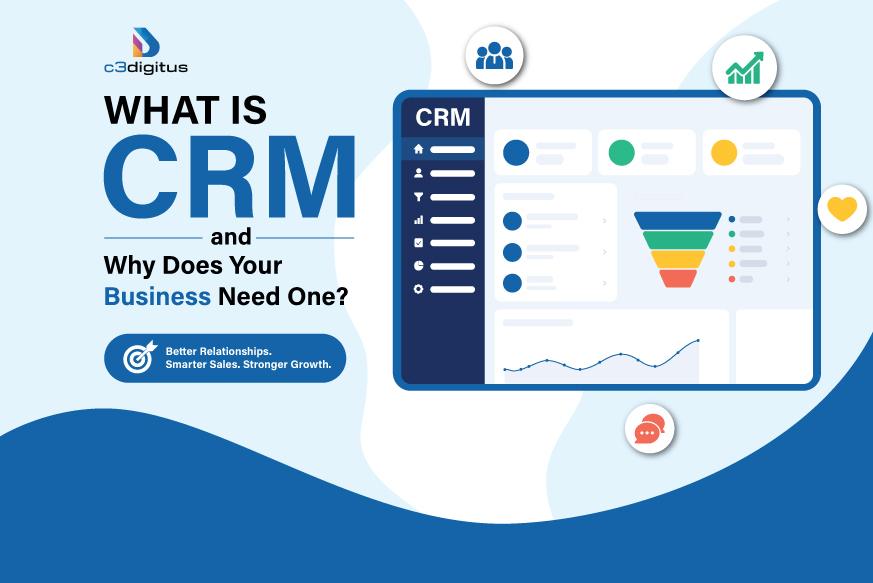
- Contact Management: Store all customer information in one organized place. Name, email, phone, company, past purchases, conversations — everything visible at a glance.
- Sales Pipeline Management: See where every deal stands. Which leads are new? Which ones are almost ready to close? A CRM makes your entire sales pipeline visual and easy to manage.
- Task and Activity Tracking: Set reminders, assign tasks to team members, and track follow-ups so nothing is missed.
- Email Integration: Connect your email directly to the CRM and log all communication automatically.
- Reporting and Analytics: Get clear reports on sales performance, team activity, lead conversion rates, and more. Make business decisions based on real data, not guesses.
- Automation: Automate repetitive tasks like sending welcome emails, follow-up messages, or moving leads from one stage to another based on their actions.
- Mobile Access: Access your CRM from your phone so your sales team can stay connected even when they are on the move.
2026 fact: 87% of CRM systems are now cloud-based. 81% of CRM users access their system from multiple devices. And 80% of CRM users actively use AI features such as chatbots, automated responses, and loyalty programs. Source: DemandSage and Folk, 2026.
Real-World Examples: How Businesses Use CRM Effectively
CRM is not a concept limited to large corporations. Businesses of every size use it differently based on their needs.| Business Type | How They Use CRM | Result |
|---|---|---|
| Small e-commerce store | Tracks purchase history, sends automated cart abandonment emails, personalises follow-up offers | Higher repeat purchase rate, less manual follow-up time |
| B2B manufacturing company | Manages long sales cycles, tracks every touchpoint with procurement teams, forecasts quarterly revenue | Shorter sales cycles, better forecast accuracy |
| Service-based business | Logs every client conversation, automates renewal reminders, flags at-risk accounts before churn | Higher retention, fewer surprise cancellations |
| Sales team of 10+ reps | Centralises all lead data, assigns follow-up tasks automatically, gives managers a live pipeline view | 21% increase in rep productivity, cleaner forecasting |
The Business Benefits of CRM
If you are still wondering whether a CRM is worth it, here are the real benefits that businesses experience after implementing one:- Better Customer Experience: When your team knows a customer’s full history, every interaction feels personal and thoughtful. Customers notice this, and it builds trust.
- More Sales, Faster: A CRM helps your sales team focus on the right leads at the right time. It removes the guesswork and makes the entire sales process faster and more efficient.
- Stronger Team Collaboration: Sales, marketing, and support teams work from the same data. No more miscommunication or duplicate work.
- Higher Customer Retention: CRM systems improve customer retention by up to 27%. Businesses with strong retention also report 47% higher customer satisfaction rates after adopting CRM.
- Smarter Business Decisions: With detailed reports and analytics, business owners can see what is working and what is not — and adjust their strategy accordingly.
- Time Saved on Admin Work: Automation handles the repetitive stuff. Salesforce’s 2026 State of Sales report found that reps spend only 40% of the workweek actually selling. CRM automation reclaims that lost time.
ROI context: The most widely cited CRM ROI benchmark is $8.71 returned for every $1 spent, from a 2014 Nucleus Research study. Nucleus Research’s own 2023 update puts the figure closer to $3.10 per $1 as the market has matured. Both figures represent a meaningful positive return. The right way to frame CRM ROI is not a single number but a combination of measurable outcomes: 29% increase in sales, 34% improvement in sales productivity, and 42% increase in sales forecast accuracy. Source: Grand View Research via shno.co.
Common Challenges Businesses Face Without CRM
Many businesses still run without a proper CRM, and they pay for it in ways they do not always realize.
Without a CRM, customer data is scattered across emails, spreadsheets, and people’s memories. When a team member leaves, that knowledge walks out the door with them.
Sales teams end up calling the same lead twice or forgetting to follow up at all. Marketing sends irrelevant campaigns because they do not have clean customer data. Customer service representatives have no history of past interactions, so customers have to repeat themselves every single time.
The result? Lost deals, frustrated customers, and a business that struggles to scale.
A number that puts this in perspective: 76% of CRM users say less than half of their organisation’s CRM data is accurate and complete — and that is among businesses that already have a CRM. For businesses without one, the data problem is worse. 37% of businesses report losing revenue directly due to poor data quality. Source: Validity via Cyntexa, 2026.
Choosing the Right CRM for Your Business
With so many CRM platforms out there, choosing the right one can feel overwhelming. Here is a simple way to think about it:| Business Size / Type | Recommended CRM | Why |
|---|---|---|
| Small businesses and startups | HubSpot CRM (free tier), Zoho CRM | Easy to set up, affordable, strong free options. HubSpot holds 62% of SMB CRM installations. |
| Growing sales-focused teams | Pipedrive, Salesforce | Pipedrive is purpose-built for sales pipelines. Salesforce leads overall market at 20% share per IDC 2026. |
| Service-based businesses | Freshsales, Zoho CRM | Strong automation, email integration, and customer support features built in. |
| Large enterprises | Salesforce, Microsoft Dynamics, SAP | Built for complex sales processes, deep integrations, and enterprise-level data requirements. |
Future of CRM — Where It Is Headed in 2026 and Beyond
CRM is not staying still. In 2026, CRM platforms are getting smarter, faster, and more powerful — mostly thanks to Artificial Intelligence.AI-powered CRM tools can now predict which leads are most likely to convert, suggest the best time to reach out, automatically summarize customer conversations, and even write follow-up emails on your behalf.Voice and chat integration is also becoming common. CRMs can now pull data from WhatsApp messages, chatbot conversations, and even phone call transcripts — giving businesses a truly complete view of every customer interaction.Another big trend is hyper-personalization. Future CRM systems will help businesses offer deeply personalized experiences at every single touchpoint — not just in email, but across every channel the customer uses.2026 AI adoption data: 83% of companies using AI in their CRM are more likely to exceed their sales goals. 79% of CRM users say AI is important to their sales tools. Businesses using generative AI in CRM are projected to generate over $1.1 trillion in additional revenue globally according to Salesforce estimates. Source: Kixie and Salesforce, 2026.
In short, CRM is becoming the backbone of digital marketing and business growth — and the businesses that invest in it early will be the ones that lead their industries.
How to Implement CRM Successfully
Buying a CRM is the easy part. Getting your team to actually use it is where most businesses struggle.
Worth knowing before you start: Roughly 70% of CRM implementations fail to meet their goals — not because of the software, but because of cross-functional misalignment between sales and marketing teams, poor data quality, and low user adoption. Source: Integrate.io via DemandSage. The steps below are specifically designed to avoid these failure points.
- Define your goal first: What specific problem are you solving? Faster follow-up? Better reporting? Cleaner lead tracking? One clear goal makes implementation far simpler.
- Get leadership committed: CRM success is directly correlated with how seriously leadership takes it. Assign an owner and a roadmap before you touch the software.
- Start with clean data: Import only what you need. Bad data in means bad data out. Clean your existing contacts before migrating them.
- Train your team properly: The average CRM user adoption rate among sales professionals is 72%. That means 28% of reps with CRM access are not using it consistently. Training and internal champions make the difference.
- Start small and expand: Pick one workflow to automate first. Prove it works. Then expand to the next one.
- Measure and adjust: Set clear metrics from day one. Review them monthly. CRM is not a set-and-forget tool.
Conclusion — CRM Is Not a Tool, It Is a Growth Mindset
At the end of the day, a CRM is not just software you install and forget about. It is a reflection of how seriously you take your customers.
When your business commits to knowing its customers better, following up faster, and delivering more personal experiences — that is when growth really happens. That is what Customer Relationship Management is truly about.
Whether you are a solo entrepreneur managing your first 50 clients, or a growing company with a full sales team, a CRM will help you work smarter, build stronger relationships, and close more deals.
The question is not whether you need a CRM. The question is: how much longer can you afford to run without one?
Frequently Asked Questions
1. What does CRM mean?
CRM stands for Customer Relationship Management. It refers to both a business strategy and a category of software tools designed to help businesses manage all interactions with current and potential customers. The goal of CRM management is to improve customer relationships, increase sales, and retain more customers over time.
2. What is CRM software used for?
CRM software is used to store and organize customer contact information, track communications and sales activity, manage sales pipelines, automate follow-up tasks, generate reports on sales performance, and improve collaboration between sales, marketing, and customer service teams. The use of CRM software helps businesses convert more leads and keep existing customers longer.
3. What are the best CRM platforms in 2026?
The most widely used CRM platforms in 2026 are Salesforce (market leader with 20% global share per IDC), HubSpot (dominant in small business with 62% of SMB installations), Zoho CRM, Pipedrive, and Microsoft Dynamics. The best CRM software for your business depends on your team size, budget, and whether you need advanced automation, sales pipeline management, or customer service features.
4. How much does CRM software cost?
CRM software ranges from free, such as HubSpot's free tier and Zoho's basic plan, to hundreds of dollars per user per month for enterprise platforms like Salesforce. The average spend per employee in the CRM software market is projected at $28.60 in 2026 per SellersCommerce data. Most small businesses can start with a free or low-cost plan and upgrade as they grow.
5. What is the ROI of CRM software?
The most widely cited CRM ROI benchmark is $8.71 returned for every $1 spent, from a 2014 Nucleus Research study. Nucleus's own 2023 update puts the current figure closer to $3.10 per $1 as the market has matured. Businesses using CRM report a 29% increase in sales, a 34% improvement in sales productivity, a 42% increase in forecast accuracy, and a 27% improvement in customer retention. ROI depends significantly on user adoption and data quality.
6. Do small businesses need a CRM?
Yes. 71% of small businesses have already adopted CRM systems, with 65% implementing one within their first five years. Even solo entrepreneurs benefit from a basic CRM to track contacts, follow-ups, and deals. HubSpot's free CRM is purpose-built for small teams and requires no technical setup. The question is not whether a small business needs CRM management, but which platform fits their current size and budget.
7. What is the difference between CRM and digital marketing?
CRM and digital marketing are closely connected but serve different functions. Digital marketing is how you attract and reach potential customers through channels like search, social media, and email. CRM management is how you track, nurture, and convert those prospects after they engage with your brand. In 2026, the two are increasingly integrated: most modern CRM platforms include digital marketing automation tools, and Google's search and AI systems are rewarding businesses that connect their CRM data to their content and customer experience strategy.
Sources
- Salesforce: What Is CRM? (Official Definition)
- Oracle: What Is CRM and Why Is It Important?
- Pipeline CRM: What Is the Role of a CRM?
- Fortune Business Insights: CRM Market Size and Forecast 2026-2034
- DemandSage: 42 CRM Statistics 2026
- Wave Connect: CRM Statistics 2026 — 80+ Facts and Data
- SellersCommerce: Key CRM Statistics for 2026
- Cyntexa: CRM Statistics and Market Insights 2026
- Digital Applied: CRM Statistics 2026 — Market, Adoption and ROI Data Reference
- Kixie: CRM Statistics and Market Insights for 2026
- Unanet: What Is a CRM and Why Is It Important for Your Business?
- B2B Rocket: Why CRM Software Is a Must-Have for Your Business
Your Customers Deserve Better Than a Spreadsheet.
c3digitus helps B2B and industrial businesses build the digital infrastructure to attract, convert, and retain the right customers. CRM strategy, content, and digital marketing — all connected.